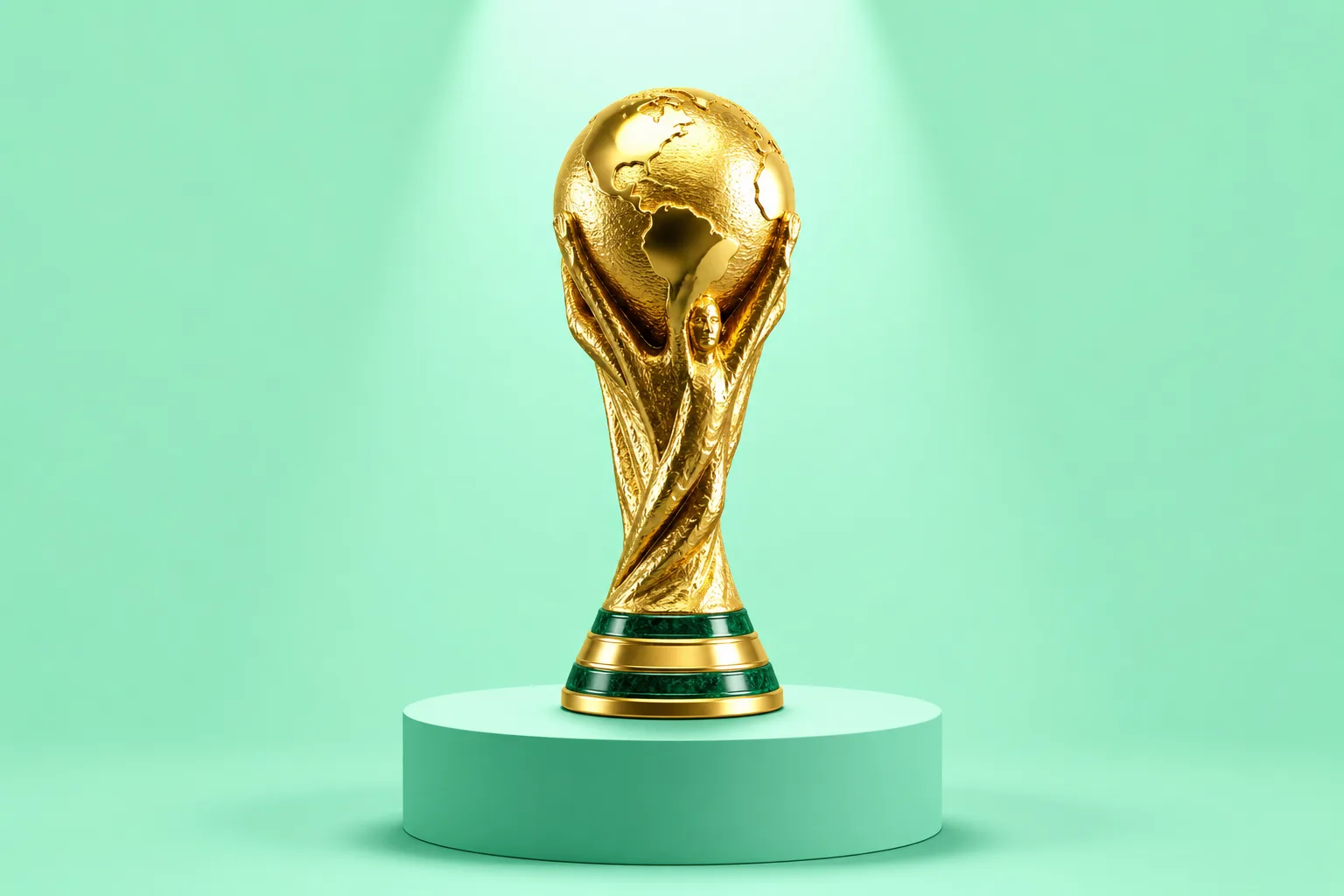
The 2026 FIFA World Cup prize money reached a record $655 million, underscoring how sharply the economics of the tournament have expanded alongside its global audience. For national federations, each round carried meaningful financial consequences, with payouts rising at every stage of the competition.
Spain lifted the trophy and collected the tournament’s largest single payment, $50 million, after defeating Argentina 1-0 after extra time in the final. The result capped a competition in which sporting success and financial rewards were tightly linked from the group stage onward.
The size of the 2026 FIFA World Cup prize money pool also reflects the impact of the expanded 48-team format. More countries participated in the revenue distribution, but the steep progression in payouts ensured that late-stage advancement remained especially lucrative.
Key Facts
- The 2026 FIFA World Cup awarded $655 million in performance prize money, up from $440 million in 2022.
- Spain earned $50 million as champion, while runner-up Argentina received $33 million.
- England collected $29 million for finishing third, and France took home $27 million for fourth place.
- Quarterfinalists received $19 million each, Round of 16 teams earned $15 million, and Round of 32 teams got $11 million.
- Teams eliminated in the group stage still received $9 million under the expanded 48-team tournament structure.
2026 FIFA World Cup Prize Money
The 2026 FIFA World Cup prize money structure shows how aggressively the tournament’s financial model has scaled. A near-50% increase from the $440 million distributed in 2022 signals stronger commercial confidence around media rights, sponsorship demand, and the wider monetization of the event. In practical terms, it means national associations have more direct incentive than ever to invest in player development, coaching, and tournament preparation.
Spain’s $50 million winner’s payout sits at the top of that ladder, with Argentina’s $33 million runner-up prize illustrating the substantial financial gap between first and second. The progression remains steep through the rest of the field: third place was worth $29 million, fourth place $27 million, and a quarterfinal run $19 million. For many federations, those differences can influence budgets for years, especially in countries where national-team revenues feed directly into grassroots football, infrastructure, and academy systems.
The expanded format matters as much as the headline figure. With 48 teams sharing in the pool, the World Cup’s rewards are reaching a broader set of countries, not just traditional football powers. Even a group-stage exit generated $9 million, while reaching the Round of 32 raised that to $11 million. That broader distribution can strengthen smaller federations financially, but the biggest gains still accrue to teams that string together knockout victories.
The 2026 World Cup turned every knockout match into a higher-stakes financial event, with each win unlocking a materially larger payout.
How the payout ladder shapes competition
The payout schedule created a clear economic staircase. Teams reaching the Round of 16 earned $15 million, then jumped to $19 million for a quarterfinal appearance. From there, the rewards accelerated sharply, with semifinalists and medal-place finishers collecting far larger sums. This structure reinforces the value of marginal on-field success: a single extra win can translate into millions of dollars in additional federation income.
That dynamic was evident throughout the knockout bracket. England’s third-place finish brought in $29 million after a 6-4 win over France, while France earned $27 million in fourth. The quarterfinal losers, including Morocco, Belgium, Norway, and Switzerland, each exited with $19 million. Those outcomes highlight how competitive results and financial returns can diverge by only one match, even when overall tournament performance appears similar.
Implications for Investors
For investors, the record 2026 FIFA World Cup prize money pool is another data point supporting the long-term commercial strength of premium global sports properties. Rising payouts generally imply confidence in the tournament’s revenue engine, including sponsorships, licensing, hospitality, and broadcasting. Companies with exposure to sports media, event infrastructure, apparel, payments, and travel can benefit when marquee competitions command larger economics.
The expanded tournament also broadens the set of countries and organizations participating in the financial upside. That can create downstream effects beyond football itself, from increased consumer spending tied to national-team success to higher investment in sports facilities and youth development. Brands aligned with national teams or football federations may see longer-term value if larger payouts improve competitive sustainability and fan engagement.
At the same time, investors should separate the growth of headline prize money from profitability at the organizational level. Bigger distributions are positive for the ecosystem, but they also raise expectations around cost control, commercial execution, and return on investment. The key watch-point is whether rising tournament revenues continue to outpace operating and rights-related expenses across the broader sports business landscape.
Looking ahead, the 2026 World Cup’s $655 million prize pool sets a new benchmark for international football economics. If commercial demand remains strong, future tournaments could push payouts even higher, making global sports rights an area investors will continue to watch closely.