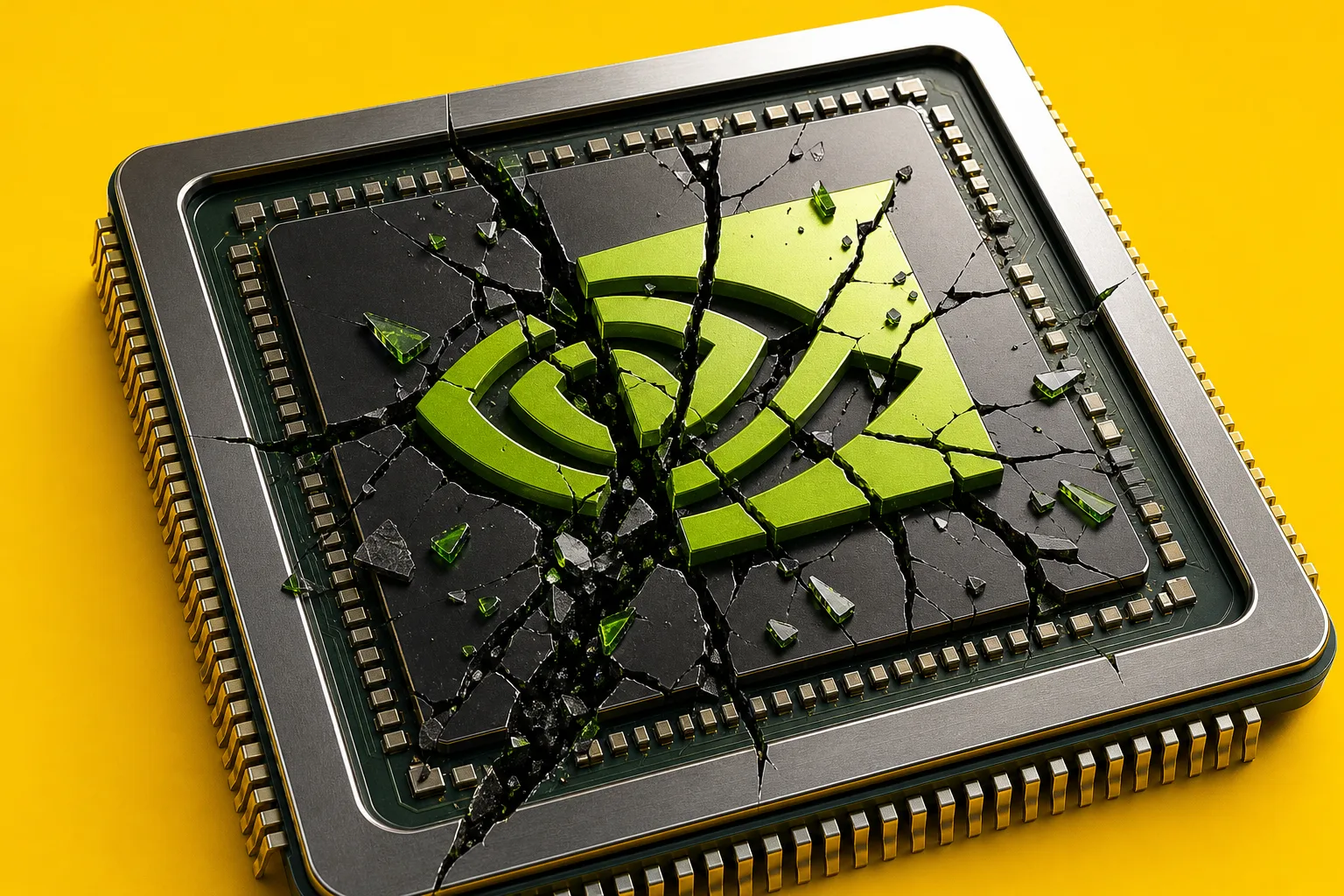
The 3x Short Nvidia ETP suffered a near-total wipeout on November 23, 2026 after Nvidia shares jumped as much as 34% following the board’s decision to reinstate Jensen Huang as president, chief executive and board member, effective immediately. The move erased weeks of gains in the inverse product within minutes and triggered exchange suspensions tied to tolerance limits.
At its intraday low, the U.S. dollar-denominated line traded near $0.30, down 91.37% from a prior close of $3.475. A euro-denominated line also fell sharply, dropping from about €3.17 to as low as €0.39, highlighting how quickly single-stock leveraged products can unravel when the underlying gaps higher.
For investors, the episode is a vivid reminder that a daily-reset inverse ETP is not simply a bearish stock position with extra torque. It is a path-dependent trading instrument that can break down abruptly when a headline hits outside normal market hours and the issuer has little room to rebalance.
Key Facts
- Nvidia shares rose as much as 34% on November 23, 2026 after Jensen Huang was reinstated as CEO, adding roughly $1.1 trillion in market value at the peak move.
- The Europe-listed 3x short Nvidia ETP’s U.S. dollar line fell 91.37% to about $0.30 from $3.475.
- The euro line dropped to roughly €0.39 from a prior close near €3.17, implying a decline of about 88%.
- As of the prior week’s NAV, the product held about $3.5 million in assets and short exposure equivalent to roughly 72,731 Nvidia shares.
- The issuer’s intraday rebalance mechanism is designed to trigger after a 16.67% underlying move, but Nvidia’s gap exceeded that threshold almost immediately.
3x Short Nvidia ETP
The collapse in the 3x Short Nvidia ETP was mechanical as much as it was dramatic. A product offering minus three times the daily return of Nvidia is designed to lose 3% for every 1% gain in the stock over a single session. When Nvidia surged around 30% to 34% on the headline, the math left little margin for survival. At a 30% rise, the implied daily loss approaches 90%; at the high end of the move, the losses edge toward complete capital destruction.
The timing made the event more severe. Nvidia’s jump came in premarket trading after the board reversed course and reinstated Huang, citing input from senior levels of the U.S. government. Because the move happened outside the deepest part of regular-session liquidity, the ETP’s hedging and rebalance tools were far less effective. Exchange notices referencing an automatic suspension after a breach of tolerance level illustrated the limits of risk controls once the underlying has already gapped through them.
The product had also become a tactical vehicle for investors betting that Nvidia would remain under pressure after leadership turmoil. From November 9 to the previous Friday, the ETP had nearly doubled, rising from about $1.75 to $3.48. That performance likely drew in late momentum buyers just before the reversal. When the board reinstated Huang, those investors were exposed not just to a losing trade, but to a structure that magnifies overnight and headline risk in a way conventional short positions do not.
A 3x inverse single-stock product can survive ordinary volatility, but a 30%-plus overnight jump in the underlying is exactly the kind of move that can reduce it to little more than a shell.
Why the structure failed so quickly
Single-stock leveraged and inverse ETPs reset daily, which means their returns are calibrated to one session, not to a longer holding period. That distinction matters. Over several days, performance can drift materially from what many retail investors expect, especially when volatility is high. In a sharp one-day move, however, the danger is more direct: the leverage multiplies losses instantly and can push a product toward a practical zero before rebalancing can stabilize exposure.
The episode also revived comparisons to the collapse of inverse volatility products in February 2018. The better-known precedent was much larger and had broader market consequences, but the common thread is clear: a crowded trade, a daily-reset inverse structure, and an abrupt gap that overwhelms built-in safeguards. The Nvidia-linked product was far smaller and not systemically important, yet the loss profile for holders was similarly unforgiving.
Implications for Investors
For portfolio managers and self-directed traders, the main takeaway is that single-stock leveraged ETPs are trading tools, not core holdings. They can be useful for very short-term tactical positioning, but they are especially vulnerable around binary corporate events, management changes, regulatory developments and politically charged headlines. Holding a 3x inverse product over a weekend in a stock as liquid and news-sensitive as Nvidia can introduce gap risk that is impossible to hedge perfectly.
The event also matters because leveraged ETF and ETP activity has expanded rapidly. Recent flows into levered products have remained elevated during market swings, and semiconductor-linked trading has been a major part of that activity. As more capital enters these structures, investors should watch not just direction but also market plumbing: liquidity in the underlying, trading hours, issuer hedging constraints and the exact reset mechanics described in the prospectus.
Nvidia itself remains a focal point for both equity and options markets. The sharp rebound following Huang’s return may force a reset in positioning among short sellers, momentum traders and volatility funds. Investors evaluating Nvidia or related instruments should monitor whether the share-price surge is confirmed by broader semiconductor demand, enterprise AI spending, and credit conditions tied to data-center buildouts. If the stock stabilizes, the immediate squeeze may fade; if volatility remains elevated, more leveraged products on either side of the trade could come under pressure.
The broader lesson is simple: leverage can amplify conviction, but it also compresses reaction time. In single-stock products, one unexpected headline can turn a profitable theme into a near-total loss before most holders have a chance to respond.