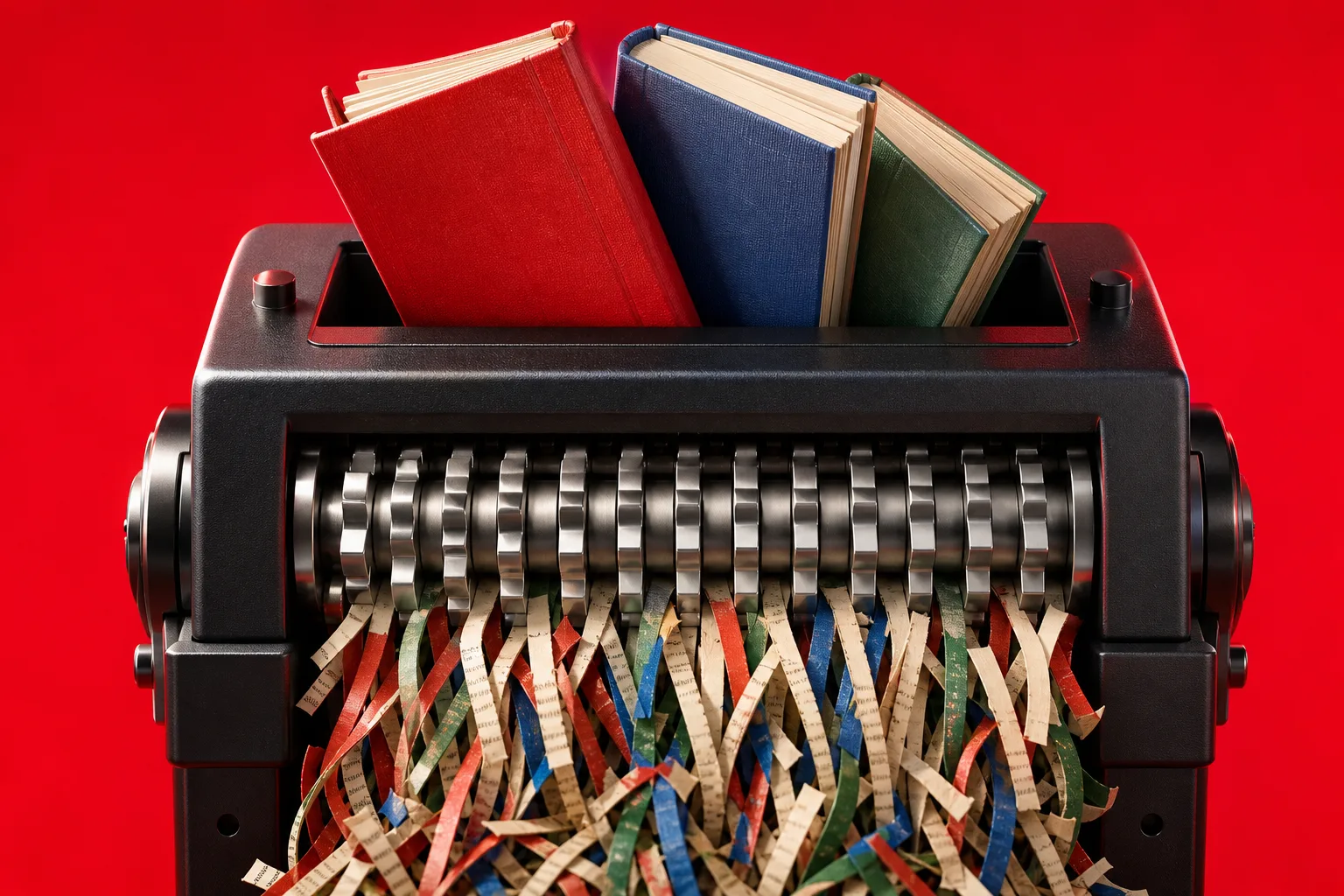
AI book shredding has emerged as a flashpoint in the debate over how large language models are built. The most consequential detail is scale: court filings tied to a 2025 dispute showed that millions of printed books were purchased, scanned into datasets, and then destroyed as part of an AI training program.
For booksellers, the issue is not only copyright or technology. It is also about market distortion, supply chains, and the cultural value embedded in physical books, even when those volumes are neither rare nor especially expensive.
The concern intensified in 2026 as independent dealers described unusual buying patterns, including bulk orders concentrated with a single purchaser. That has sharpened attention on who is sourcing print inventory for AI developers and what the practice could mean for publishers, resellers, and investors tracking the AI supply chain.
Key Facts
- Court documents unsealed in January 2026 described an AI project that bought millions of printed books, scanned them, and destroyed the originals.
- The initiative, called Project Panama, was described internally as part of a plan to build a central library intended to retain digital copies permanently.
- Independent bookseller Charlie Becker said 95 of his last 100 book orders came from the same buyer during a sudden sales surge in April 2026.
- Becker’s family bookstore in Houston was founded in 1993 and maintains warehouse inventory of about 300,000 titles.
- The Antiquarian Booksellers’ Association of America, founded in 1949, has warned that destructive scanning touches a deep public concern over the loss of printed culture.
AI Book Shredding
At the center of the controversy is a simple but unsettling workflow: legally purchase physical books, remove the bindings, scan every page for machine-readable training data, and dispose of the originals. A federal judge ruled that this form of scanning qualified as transformative fair use because the books were altered for a new purpose. That legal finding gave the practice a measure of protection, but it did not settle the public backlash.
What makes the issue commercially important is that print books are becoming a raw input for AI development. That turns secondhand inventory into a form of data infrastructure. Sellers who once served readers, collectors, libraries, and specialist buyers may now find themselves supplying model developers, often without knowing the end use. In a fragmented resale market, unusual bulk demand can ripple through pricing, availability, and sourcing behavior.
The impact extends beyond rare-book circles. Dealers themselves stress that many of the books reportedly used for scanning were common titles, manuals, or out-of-print but not scarce works. Even so, critics argue that a book is more than its text file. Condition, edition, annotations, design, and physical survival all contribute to value. Once destroyed, those attributes cannot be recovered, even if the words live on in digital form.
Millions of books may be legally turned into AI training data, but legality does not answer the market and cultural question of what is lost when physical copies become disposable inputs.
Why transparency has become the next battleground
A major obstacle for the book trade is visibility. Dealers say it is not standard practice to ask customers why they are buying books, and in some cases large transactions may involve confidentiality provisions. That leaves independent sellers trying to infer demand patterns from order flow rather than from explicit disclosures.
The issue gained another layer in July 2026 when attention turned to a book database company that had advertised sourcing services for AI language model dataset needs while emphasizing buyer confidentiality. The company later changed the wording on its site and said it had pivoted away from that direction. Even so, the episode underscored how little standardized reporting exists around print-book procurement for AI.
Implications for Investors
For investors, AI book shredding matters less as a cultural controversy and more as a signal about data acquisition economics. Large AI developers need enormous volumes of training material, and licensed digital content remains expensive, legally complex, or both. Physical book acquisition offers one route around those constraints, particularly when titles can be bought in bulk through secondary markets. If that route remains legally viable, it could modestly lower certain data input costs for model builders.
At the same time, the reputational and regulatory risks are rising. Public discomfort over destroying books may not immediately alter court outcomes, but it can influence legislative scrutiny, publishing-industry lobbying, and future licensing negotiations. Investors following AI infrastructure and application companies should watch whether this controversy accelerates demand for cleaner, fully licensed datasets. That would favor businesses with established content rights, archival assets, and compliance-heavy enterprise offerings.
There are also implications for adjacent markets. Used-book marketplaces, distributors, and specialty resellers could see intermittent demand spikes if AI buyers continue sourcing through secondary channels. That may support short-term sales volumes, but it can also create inventory distortions and raise sourcing costs for traditional customers. For publishers and rights holders, the episode reinforces the strategic value of owning digitization pipelines and negotiating directly with AI firms rather than leaving data capture to the resale market.
Investors should also separate symbolism from materiality. The destruction of common books is unlikely, by itself, to move broad public company earnings in the near term. But it highlights a larger investment theme: control of legally defensible, high-quality training data is becoming as important as compute and chips. Companies that can prove provenance and rights may command a premium as the AI stack matures.
The next phase will likely hinge on disclosure, licensing, and the balance between fair use and negotiated access. Until those rules become clearer, AI book shredding will remain a small but revealing test of how far the data economy can reshape legacy markets.