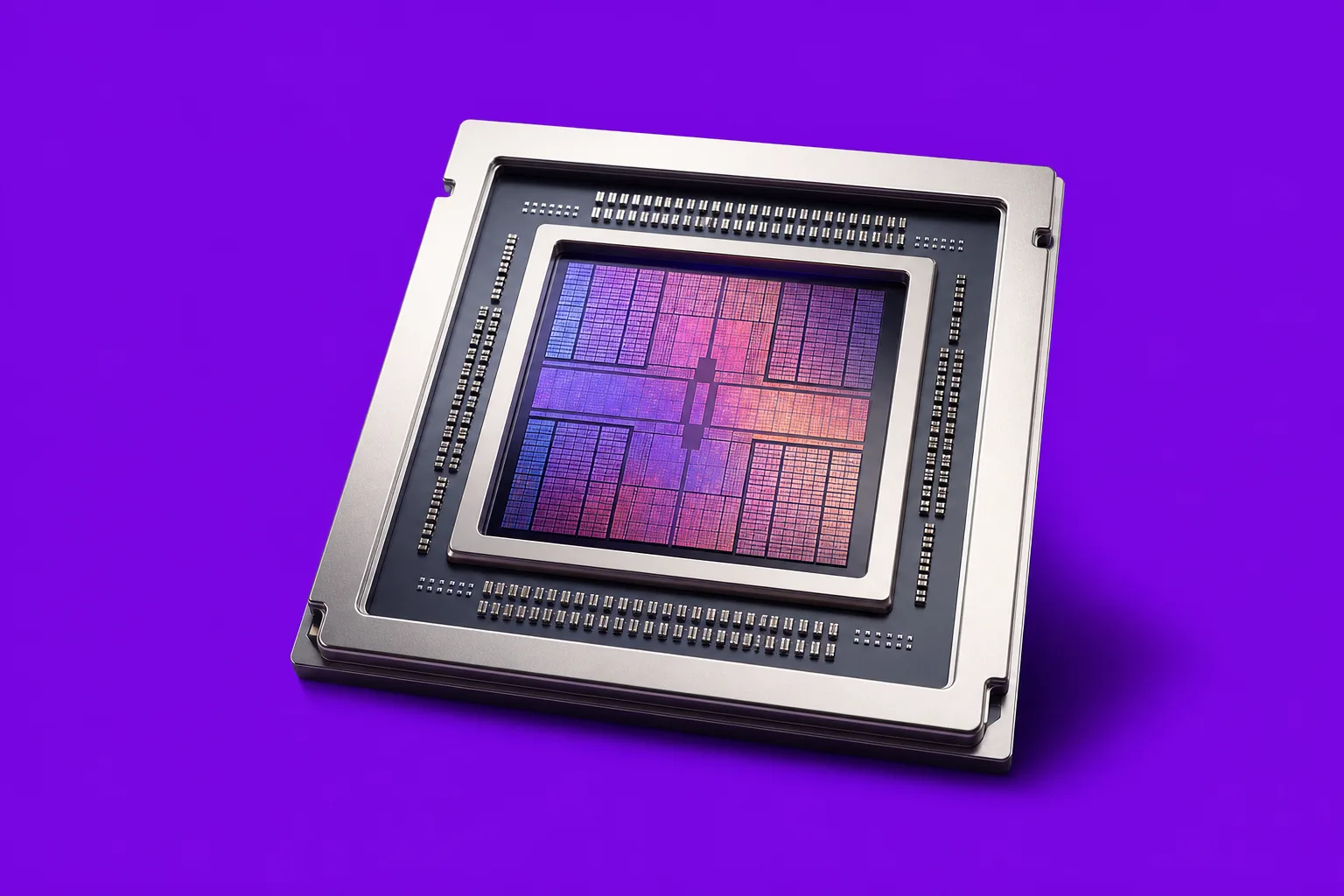
AMD stock is trading near record highs after a rapid revaluation tied to its expanding artificial intelligence business, with shares around $548.80 on June 16 and an intraday range of $530.14 to $558.37. The move has pushed the company’s market capitalization to roughly $890 billion, putting the $1 trillion milestone within sight.
The sharp advance follows a series of catalysts, led by a four-year AI infrastructure partnership with Meta centered on custom MI450 chips. That agreement, combined with strong quarterly results, analyst target increases, and a new acquisition in memory optimization, has turned AMD into one of the market’s most closely watched AI beneficiaries.
The challenge now is valuation. After a roughly 131% year-to-date gain, AMD is being priced for several years of successful execution, leaving investors to weigh whether future AI revenue can keep pace with the stock’s ascent.
Key Facts
- AMD shares traded near $548.80 on June 16 after reaching a record $547.26 in the prior session and touching as high as $558.37 intraday.
- The company’s market capitalization has climbed to about $890 billion, up from roughly $338 billion in early April.
- AMD has gained about 131% year to date, rising from a close of $216.35 on April 2 to the high-$540s in mid-June.
- The Meta partnership covers 6 gigawatts of AI infrastructure over four years and includes a warrant for 160 million AMD shares.
- AMD is trading at roughly 68 times forward earnings and more than 150 times trailing earnings, underscoring the market’s aggressive growth expectations.
AMD stock and the Meta AI deal
The central driver behind the latest AMD stock rally is the market’s growing confidence that the company is becoming a serious second source in AI accelerators for hyperscale customers. The most important evidence is its large-scale partnership with Meta, which is built around custom Instinct MI450 chips and is expected to begin ramping with an initial 1-gigawatt tranche in the second half of 2026 and into 2027.
The scale of that arrangement matters because it gives investors a clearer line of sight into future AI revenue. Estimates tied to the deal suggest that each gigawatt of deployed capacity could translate into about $15 billion in revenue, implying a potential revenue foundation of around $90 billion over the life of the partnership. That is why the market has started to treat AMD less like a traditional CPU company and more like a major AI infrastructure platform with a rapidly expanding GPU business.
The story reaches beyond one customer. AMD’s MI300 series has already established traction in data centers, while the MI325X, MI400 family and MI450 roadmap suggest a multiyear product cycle aimed at both training and inference workloads. The company is also extending its reach into rack-scale systems through Helios, broadening its role from chip supplier to platform provider. For investors, that shift is crucial because platform exposure generally supports larger contract values, deeper customer integration and potentially higher long-term margins.
AMD’s rise toward a $1 trillion valuation is no longer just a momentum story; it is a market bet that the Meta AI deal will convert into tens of billions of dollars in real revenue.
Why the market repriced AMD so quickly
The pace of the move reflects how several catalysts arrived in close succession. In early May, AMD reported quarterly data-center revenue of $5.8 billion and guided for about $11.2 billion in second-quarter revenue, implying 46% year-over-year growth. Management also pointed to gross margin expansion toward 56%, reinforcing the view that AI growth can be both large and profitable.
That earnings momentum was followed by a significant analyst upgrade on June 12, with a price target raised to $575 from $460, and then by AMD’s June 15 acquisition of MEXT, a memory-optimization specialist. The MEXT deal added another layer to the thesis by addressing one of AI infrastructure’s key bottlenecks: memory performance and efficiency. Each event strengthened the perception that AMD is building a fuller stack to compete more directly in high-performance AI systems.
Implications for Investors
For investors, AMD offers a combination of real operational momentum and unusually high expectations. On the bullish side, the company now has a clearer AI roadmap, visible hyperscaler demand, a growing platform strategy and a still-relevant CPU franchise through EPYC. That dual exposure matters because it gives AMD more than one engine of growth, unlike companies whose valuations depend almost entirely on one product category.
The risk is that the stock already discounts much of that upside. A forward earnings multiple near 68 and a trailing multiple above 150 indicate that investors are paying now for revenue and profit that may not fully materialize until 2027 or 2028. If the MI450 launch slips, if Meta scales more slowly than expected, if software adoption lags, or if manufacturing capacity tightens, the shares could face outsized volatility. In highly valued semiconductor names, even a small miss can lead to a large reset.
Investors should also watch competitive and policy factors. Nvidia remains the dominant force in AI accelerators, with a strong software ecosystem and rapid product cadence. AMD must continue improving its ROCm software stack and secure enough foundry capacity to meet future demand. Export controls, especially those affecting advanced chips and global AI infrastructure spending, remain another variable that could shape the size and timing of the addressable market.
Even so, AMD’s rally is grounded in more than speculation. The market is rewarding evidence that the company can pair CPU share gains with a meaningful GPU expansion, and that combination is rare in large-cap semiconductors. For portfolio managers, AMD may remain attractive as an AI growth holding, but position sizing and valuation discipline are becoming more important as the stock approaches historic market-cap territory.
The next major test will come from execution milestones: product ramps, customer deployments and future earnings prints that show whether projected AI demand is converting into sustained revenue. If AMD delivers on the Meta-linked roadmap, the trillion-dollar threshold may become a question of timing rather than possibility.