Applied Optoelectronics surged to $146.94 on September 2, gaining $16.86, or 12.96%, by mid-afternoon after climbing as high as $149.46 in the session. The sharp move added roughly $920 million in market value and stood out against a muted backdrop for technology stocks.
The rebound puts fresh attention on Applied Optoelectronics as one of the market’s most volatile AI infrastructure trades. Investors are weighing record revenue growth and strong demand for optical interconnects against lower margins, widening GAAP losses, and a $600 million at-the-market stock offering that has raised dilution concerns.
The core debate is straightforward: demand appears strong enough to support a major production ramp, but the company still needs to prove it can convert that demand into durable profits without repeatedly tapping equity markets.
Key Facts
- Applied Optoelectronics stock rose 12.96% to $146.94 on September 2 after touching an intraday high of $149.46.
- Second-quarter fiscal 2026 revenue reached a record $191.9 million, up 86% year over year and 27% sequentially.
- The company guided third-quarter revenue to $255 million to $290 million, implying about 130% annual growth at the midpoint.
- Applied Optoelectronics has targeted approximately $1.1 billion in full-year 2026 revenue versus $455.72 million in 2025.
- A $600 million at-the-market equity program announced on August 21 triggered a steep selloff and remains a key overhang for the stock.
Applied Optoelectronics
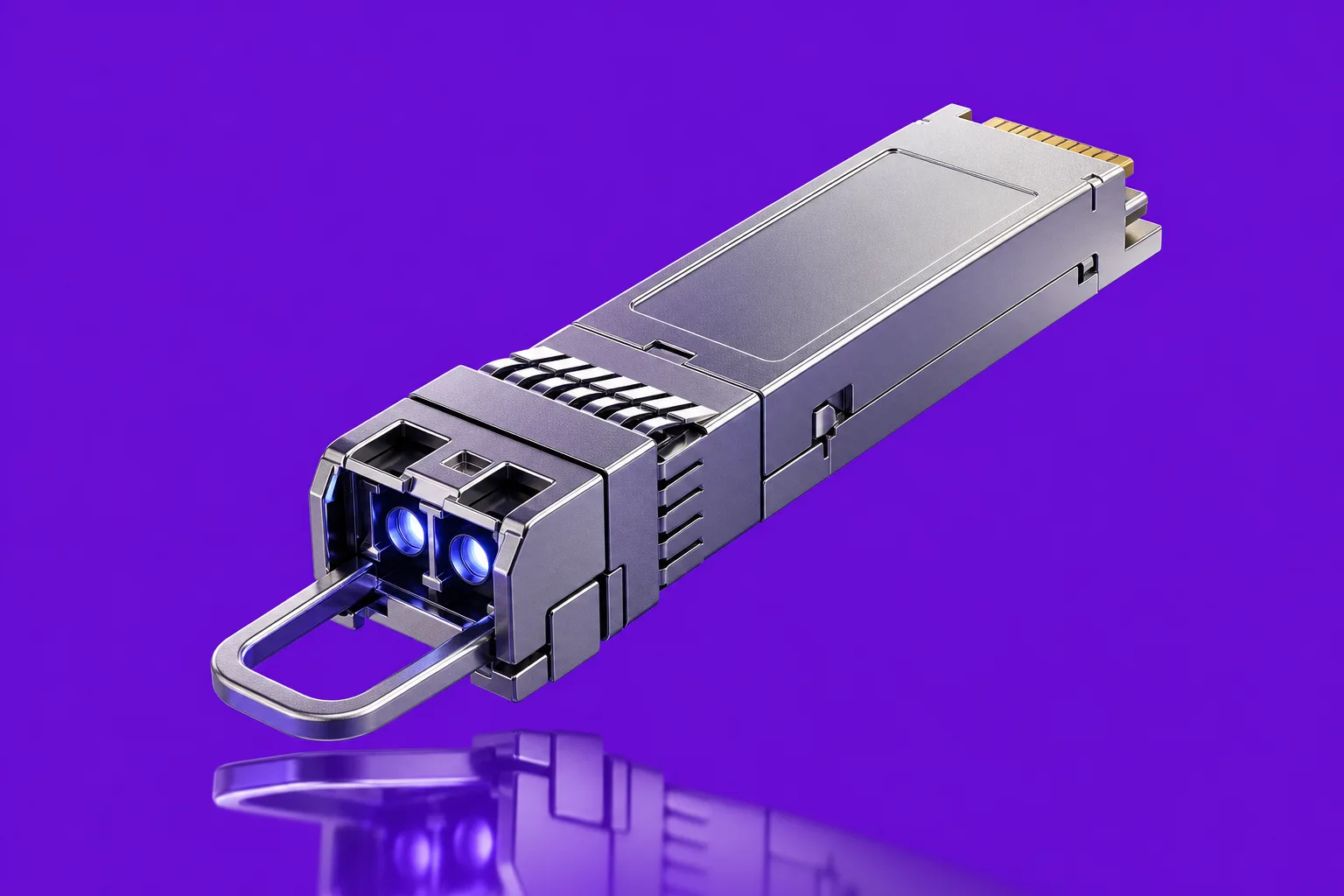
The latest rally reflects how tightly Applied Optoelectronics is tied to AI data-center spending. Optical transceivers are essential components in high-performance server and networking systems, and investor enthusiasm accelerated after fresh signals that AI server demand remains exceptionally strong across the infrastructure stack.
That read-through matters because Applied Optoelectronics is viewed as a relatively pure public-market play on rising optical interconnect demand. Its recent results support that narrative. The company posted its fifth consecutive record quarter on August 6, with revenue of $191.92 million and non-GAAP earnings per share of $0.06, ahead of consensus expectations. Guidance for the current quarter also topped revenue forecasts, even if earnings guidance fell short.
Who is affected goes beyond AAOI shareholders. Hyperscale customers, networking equipment makers, semiconductor suppliers, and optical component peers all sit within the same capital-spending chain. If AI cluster buildouts remain aggressive, Applied Optoelectronics could benefit from sustained orders for 800G and eventually 1.6T products. If supply bottlenecks or slower deployments emerge, the stock’s elevated valuation leaves little room for error.
Applied Optoelectronics is being valued less as a traditional communications supplier and more as a leveraged bet on AI data-center buildouts.
Why margins and dilution still matter
The bullish case rests on capacity constraints rather than weak demand. Management has indicated that manufacturing output, not customer interest, is the main limiter on growth. That distinction is important because it suggests revenue can keep rising if new capacity comes online as planned.
But margin pressure complicates the story. Third-quarter non-GAAP EPS guidance of $0.11 to $0.26 trailed a $0.28 consensus estimate, even as revenue guidance modestly beat expectations. Gross margin is projected at 29% to 30.5%, signaling that the company is still absorbing the costs of scaling production. At the same time, GAAP net loss widened to $22.78 million in the most recent quarter, underscoring the gap between fast top-line growth and fully profitable operations.
The funding side is equally important. Applied Optoelectronics had already raised substantial capital before unveiling a new $600 million ATM program. Investors reacted quickly because issuing new shares into strength can cap upside and dilute existing holders. At recent prices, the program could translate into roughly mid-single-digit to high-single-digit percentage dilution, depending on execution levels.
Implications for Investors
For investors, Applied Optoelectronics offers unusually high exposure to one of the market’s strongest themes: AI infrastructure demand. The company’s revenue trajectory is impressive, with quarterly sales rising from $151.14 million in the first quarter to $191.92 million in the second, and management guiding to as much as $290 million in the third. If those targets are met and capacity expands smoothly, the stock may continue to command a premium sales multiple.
However, risk remains elevated. The stock has already experienced repeated double-digit moves in both directions, including a drawdown of roughly 45% from its peak above $200 to the $110 area before rebounding. That volatility is being driven by a mix of momentum trading, high expectations, and unresolved concerns about profitability. Investors should watch three metrics closely in future quarters: gross margin, the pace of new capacity coming online, and the extent of equity issuance under the ATM program.
There is also a broader sector signal to monitor. Recent trading in AI connectivity names has shown that revenue beats alone are no longer enough; the market is increasingly focused on margin quality and operating leverage. For Applied Optoelectronics, that means future earnings reports may be judged less on whether sales keep climbing and more on whether the business model scales efficiently.
Looking ahead, the next phase for Applied Optoelectronics will hinge on execution rather than narrative. Strong optical demand has revived the rally, but sustaining it will require proof that revenue growth can outpace dilution and translate into healthier margins.