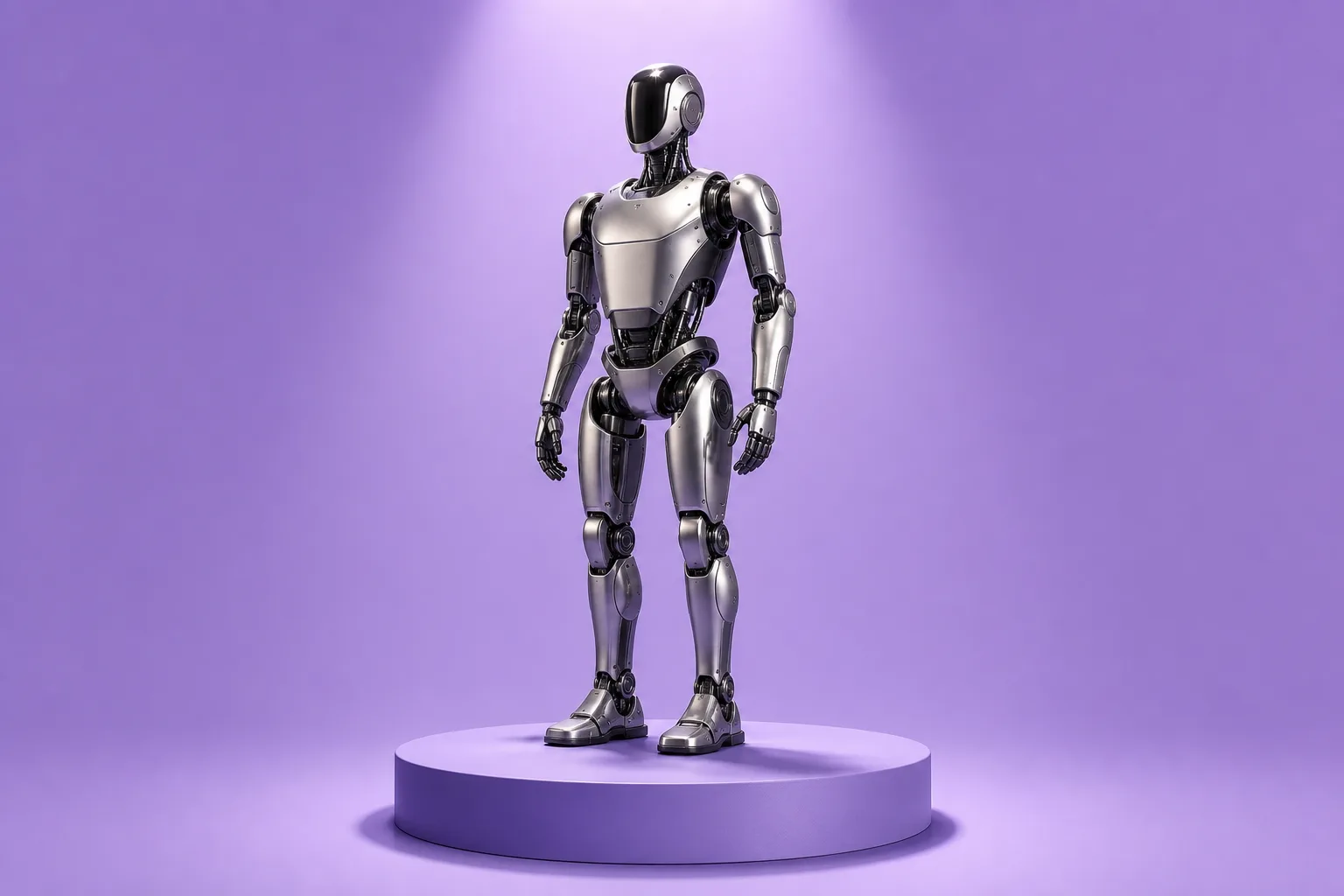
BMW has introduced Figure 03 humanoid robots on the factory floor at its Spartanburg, South Carolina plant, extending the automaker’s push into physical AI inside one of its most important U.S. manufacturing hubs.
The deployment matters beyond a single factory pilot. Spartanburg is central to BMW’s $1.7 billion investment in South Carolina and to its plan to begin assembling the fully electric iX5 before the end of 2026, making the site a key test case for how humanoid robots may fit into next-generation vehicle production.
For investors, the bigger signal is that humanoid robotics is moving from concept videos and prototype demos into live industrial workflows, where labor efficiency, throughput and capital spending can be measured against real production targets.
Key Facts
- BMW deployed Figure 03 humanoid robots in Hall 52 at Plant Spartanburg after a prior Figure 02 assembly-line deployment in 2025.
- Plant Spartanburg is part of BMW’s $1.7 billion investment program in South Carolina tied to future U.S. electric-vehicle production.
- BMW plans to start assembling the fully electric iX5 in Spartanburg before the end of 2026.
- The automaker aims to produce at least six fully electric models in the U.S. by 2030.
- One 2026 forecast projects global humanoid robot shipments near 50,000 units, rising to about 700,500 by 2030.
BMW humanoid robots
The latest rollout places Figure AI’s humanoid machines inside an active manufacturing and logistics environment, where they are being used for material transport, component handling and parts organization. These are practical, repetitive tasks that sit close to the economic core of industrial automation: moving things, staging parts and supporting line-side operations without redesigning every process around fixed machinery.
That distinction is important. Traditional factory automation has long depended on purpose-built robots, conveyors and structured work cells. Humanoid robots promise something different: machines that can navigate spaces already designed for people. If they can operate safely and consistently in mixed human environments, manufacturers may gain a more flexible automation layer without fully rebuilding facilities.
For BMW, Spartanburg offers an ideal proving ground. The plant is a major U.S. production center, and its future EV ramp gives management a reason to test new workflows before electric output expands. If humanoid robots can reduce bottlenecks, absorb physically demanding work and improve internal logistics, the payoff could extend beyond labor substitution to faster changeovers and better production resilience.
Humanoid robots are beginning to move from experimental technology into measurable factory tools, and BMW’s Spartanburg plant is becoming an early benchmark for that transition.
Why Spartanburg matters
BMW’s South Carolina site is not a fringe operation. It sits at the center of the company’s U.S. manufacturing strategy and its next wave of EV production. Starting the fully electric iX5 there before the end of 2026 ties robotics adoption directly to a period when automakers are under pressure to improve efficiency, control costs and manage increasingly complex model mixes.
The use of humanoids in assembly and logistics also reflects a broader industry pattern. Automakers are testing multiple routes into physical AI: some are partnering with specialist robotics companies, while others are developing humanoid platforms internally. The strategic logic is straightforward. Electric vehicles and robots share overlapping supply chains in motors, power electronics, sensors, batteries and control systems.
Implications for Investors
For investors, the immediate takeaway is not that humanoids will transform auto manufacturing overnight. The near-term question is whether deployments like BMW’s can show measurable gains in uptime, labor allocation, ergonomics and warehouse efficiency. Pilot programs become financially meaningful only when they scale across shifts, plants and model programs.
Still, the market backdrop is becoming more supportive. Forecasts for the humanoid robot sector have been revised sharply higher, with expectations for global shipments to approach 50,000 units in 2026, versus an earlier baseline of 17,500 in 2025, before climbing toward 700,500 by 2030. Those figures remain speculative, but they illustrate rising confidence that industrial use cases may arrive sooner than many had assumed.
That has implications across several sectors. Automakers could benefit if humanoids improve plant productivity or create future software and hardware revenue streams. Robotics developers stand to gain from early enterprise validation. Suppliers of actuators, batteries, semiconductors, machine vision and industrial AI systems may also see demand if pilot deployments convert into broader procurement cycles. On the risk side, investors should watch for slower-than-expected scaling, high unit economics, integration challenges and any safety or regulatory setbacks that could delay adoption.
BMW’s Spartanburg deployment does not settle the long-term economics of humanoid robots, but it marks a tangible step in bringing physical AI into real manufacturing environments. The next milestones to watch are production performance, rollout beyond pilot areas and whether 2026 EV launches coincide with broader robotic integration across the plant.