Butterfly Network stock surged 17.81% to $9.58 on September 22, pushing the medical imaging company to within $0.47 of its 52-week high of $10.05. The move followed new bullish coverage and sharpened investor focus on a key transition inside the business: licensing and software are growing much faster than hardware.
That change is showing up clearly in the numbers. In the second quarter, software and other services revenue climbed 150% to $16.89 million, overtaking product revenue of $15.72 million. Gross margin expanded to 71.4%, underscoring why the market is starting to value Butterfly less like a handheld ultrasound vendor and more like a higher-margin platform company.
The rerating has been dramatic. From a 52-week low of $1.81, BFLY has rallied 429%, lifting its market value to about $2.53 billion. For investors, the central question is whether Embedded licensing can support that valuation through 2026 and beyond.
Key Facts
- Butterfly Network shares rose 17.81% to $9.58 on September 22, near the 52-week high of $10.05.
- Second-quarter revenue increased 39% to a record $32.6 million, above the company’s prior guidance range of $27 million to $31 million.
- Software and other services revenue jumped 150% to $16.89 million, while product revenue fell 5.4% to $15.72 million.
- Gross margin reached 71.4%, up 770 basis points year over year, while adjusted EBITDA loss narrowed 78% to $1.4 million.
- At roughly $9.58 per share, Butterfly trades at about 19.9 times the midpoint of its 2026 revenue guidance of $121 million.
Butterfly Network Stock
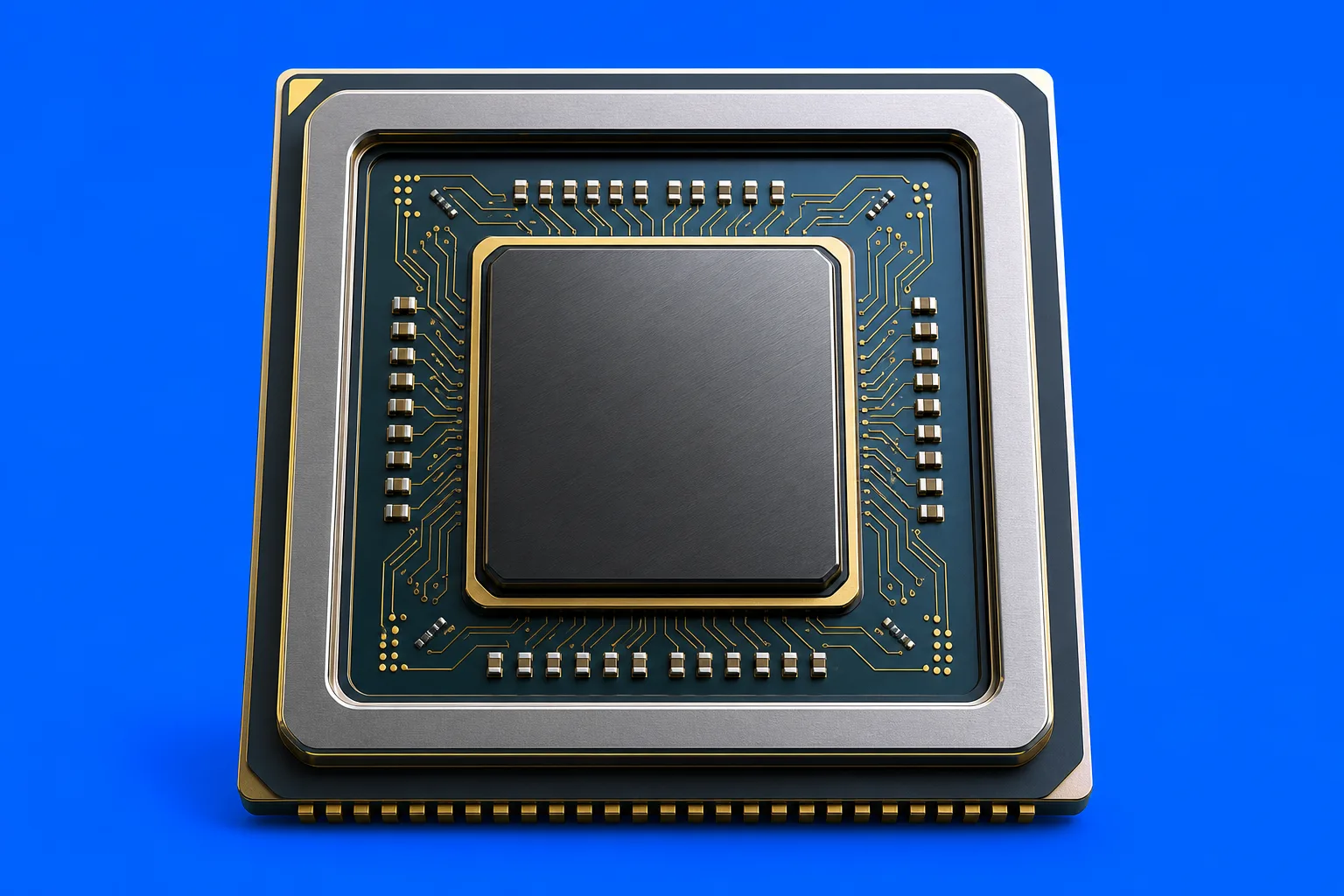
The market reaction reflects more than a one-day momentum move. Investors are responding to a deeper shift in Butterfly’s business model, especially the expansion of Butterfly Embedded, which allows partners to build products on the company’s ultrasound-on-chip technology and software stack. That approach can generate co-development fees, chip sales, licensing revenue and potentially recurring revenue shares, all of which tend to carry better economics than selling probes alone.
Butterfly’s second-quarter results gave that narrative real support. Total revenue reached $32.6 million, up from $23.4 million a year earlier, with U.S. revenue rising 57% to $27.6 million. More importantly, the revenue mix changed meaningfully. Services and licensing revenue became the larger part of the business for the first time, helping gross profit rise to $23.3 million and lifting margins to a level more commonly associated with software or semiconductor platforms than traditional medical devices.
That matters because valuation follows business mix. A hardware-heavy healthcare equipment company usually commands a modest sales multiple. A company with proprietary silicon, software economics and licensing optionality can trade much richer. Butterfly now sits between those categories, which explains both the stock’s sharp revaluation and the market’s sensitivity to every new Embedded partnership, guidance update and margin signal.
Butterfly is being valued less as a handheld ultrasound maker and more as a chip-and-software platform whose future depends on turning Embedded partnerships into durable, high-margin revenue.
Why Embedded revenue is driving the rerating
Butterfly Embedded has become the core of the bull case. The company ended the quarter with 11 partners after adding two more during the period. Management-linked disclosures around partner activity suggest growing interest in using Butterfly’s semiconductor-based ultrasound architecture in applications beyond traditional point-of-care imaging. That broader use case is central to the argument that Butterfly can expand into markets that are larger and structurally different from handheld probe sales.
There is, however, a mechanical issue investors need to watch closely: Embedded revenue can be uneven. Some of it depends on development milestones and revenue recognition timing rather than steady end-market demand. That helps explain why third-quarter guidance of $26 million to $30 million sits below the second quarter’s $32.6 million. It also means the market will be looking for proof that revenue growth can remain strong even when milestone timing becomes less favorable.
Implications for Investors
For growth investors, Butterfly offers a rare combination of strong top-line acceleration, expanding gross margins and a differentiated technology story. The company raised full-year 2026 revenue guidance to $119 million to $123 million and improved its adjusted EBITDA outlook to a loss of $19 million to $23 million. If Embedded converts from co-development into commercial deployments, the business could become significantly more scalable.
But the stock now embeds high expectations. With enterprise value around $2.41 billion and cash of $124.7 million, the shares are trading near 20 times 2026 sales. That is a demanding multiple for a company that remains unprofitable, burned $30.2 million in operating cash in the first half, and still relies on a mix of recurring and lumpy revenue sources. Any slowdown in partner conversions, margin expansion or fourth-quarter execution could pressure the valuation quickly.
Technical levels also matter after such a fast move. The first major upside test is a daily close above $10.05, which would mark a new 52-week high and could open a path toward $11.00. On the downside, $8.20 stands out as the key support level because it marks the top of the prior range and the gap area created by the September 22 rally. A break below that zone would suggest the breakout has failed and that momentum buyers are exiting.
Beyond the chart, investors should watch the next earnings update, expected on October 29, for three signals: whether third-quarter revenue lands near the top of the guided range, whether Embedded remains the primary growth engine, and whether cash burn begins to moderate. Those factors will likely determine whether Butterfly can sustain its new platform-style valuation.
Butterfly has clearly captured market attention, but the story is shifting from discovery to proof. The next phase for BFLY will depend less on narrative and more on whether licensing-led growth can keep outrunning the valuation attached to it.