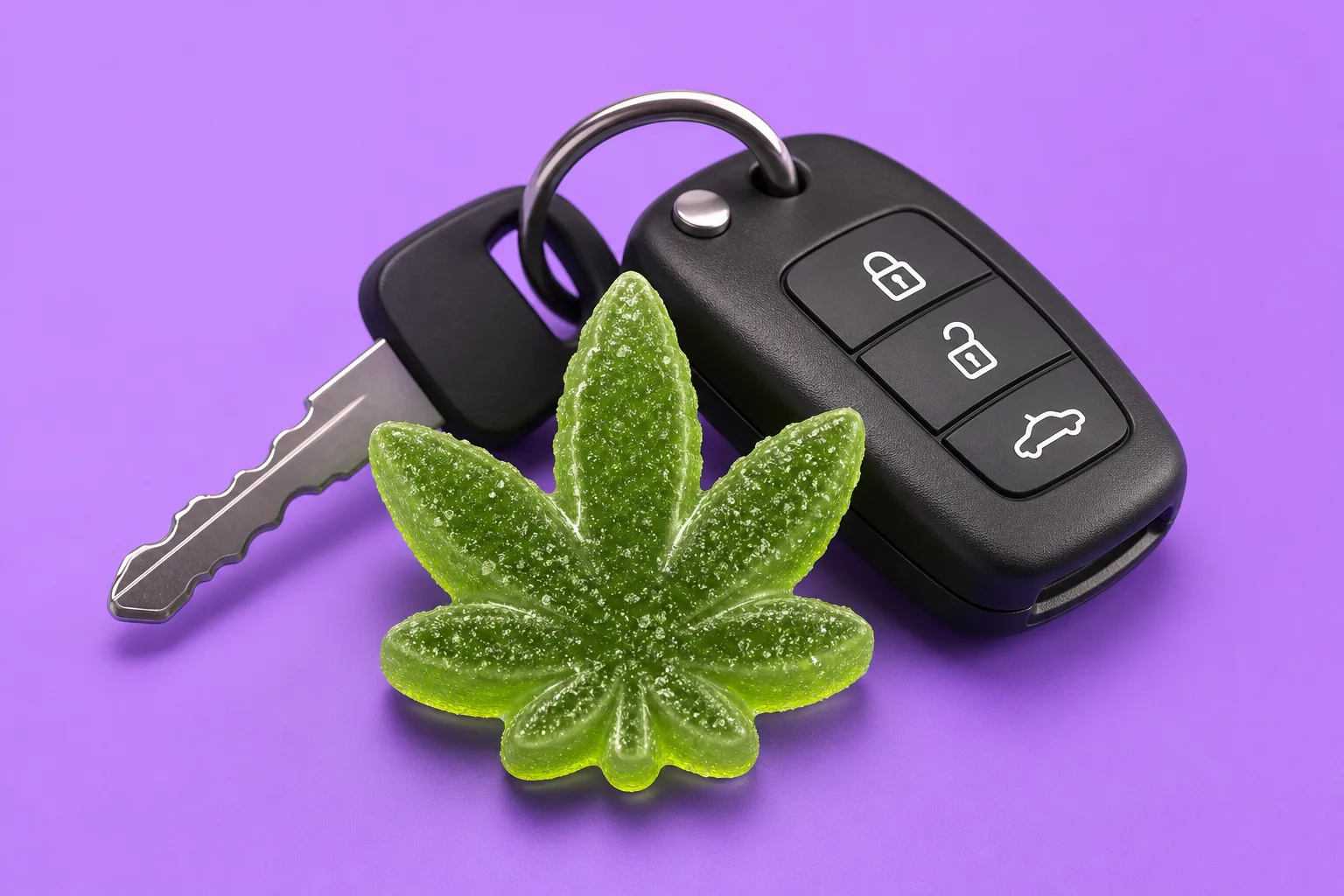
Cannabis gummies may impair driving far longer than many consumers expect. A peer-reviewed study published on August 31 found that commercially available THC edibles worsened simulated driving performance at 10 mg and 20 mg doses, with measurable effects still present five hours after consumption.
The study is notable for one reason in particular: peak blood THC levels remained below or near legal thresholds used in some U.S. jurisdictions, even when participants showed signs of impaired lane control and slower reactions. That gap between impairment and enforcement standards could become a critical issue for regulators, employers, and investors.
As cannabis policy evolves in North America, the findings sharpen the debate over product safety, labeling, workplace rules, and roadside testing. They also add a fresh layer of scrutiny for cannabis companies expanding in the edibles category, one of the industry’s most commercially important segments.
Key Facts
- A study of 40 adults aged 19 to 45 tested THC gummy doses of 0 mg, 2 mg, 10 mg, and 20 mg in a simulated driving setting.
- Driving performance, measured by standard deviation of lateral position, was significantly worse at 10 mg and 20 mg doses at both two and five hours after consumption.
- Reaction time and standard deviation of speed were negatively affected after THC exposure in the simulator tests.
- At the 20 mg dose, peak whole-blood THC concentration reached 3.4 ng/mL, below or near legal roadside limits of 1 to 5 ng/mL used in some U.S. states.
- The study was published in JAMA Network Open on August 31 and was conducted in a Canadian hospital setting.
Cannabis Gummies and Driving Safety
The central finding is straightforward: edible cannabis can impair critical driving functions for hours, and the impact may not be obvious from blood THC levels alone. Researchers evaluated lane control using the standard deviation of lateral position, a widely used measure in driving-safety research. Higher deviation suggests a greater struggle to maintain stable lane position, a core marker of impairment.
In the trial, participants who consumed 10 mg or 20 mg THC gummies showed significantly worse lane control at both the two-hour and five-hour marks versus placebo. The study also recorded poorer reaction times and more variable speed control. Those effects matter because lane instability and delayed responses are directly tied to crash risk, particularly on highways and in traffic situations that demand constant correction.
The broader significance extends beyond individual consumer behavior. Edibles have become a major growth category because they are discreet, easy to dose, and often perceived as safer or more manageable than inhaled cannabis. But the pharmacology of edibles is different. Onset is slower, effects can last longer, and consumers may misjudge when they are fit to drive. For companies in the legal cannabis market, that raises questions about packaging, dose education, warning labels, and liability exposure.
Commonly consumed THC gummy doses can impair driving skills for up to five hours, even when blood THC levels sit near or below legal enforcement thresholds.
Why the Legal Threshold Issue Matters
One of the most consequential details in the study is the mismatch between observed impairment and measured blood THC. At the highest 20 mg dose, whole-blood THC peaked at 3.4 ng/mL. That figure sits within the 1 to 5 ng/mL range used by some U.S. states as a benchmark for cannabis-impaired driving enforcement.
This suggests that blood THC concentration may not reliably capture real-time functional impairment after edible use. That challenge has major policy implications. Unlike alcohol, where blood alcohol concentration is closely linked to impairment, cannabis testing remains more ambiguous, especially for edibles, where delayed absorption and longer-lasting effects complicate roadside screening and workplace compliance.
The issue is becoming more pressing as the United States adjusts cannabis policy. On April 23, the Department of Justice and the Drug Enforcement Administration announced that some cannabis products would be placed under Schedule III of the Controlled Substances Act. The classification applies to cannabis items approved by the Food and Drug Administration or regulated by a state medical marijuana license. Supporters view the shift as a step toward broader normalization, but transportation and safety groups have warned that weaker testing authority or unclear standards could create new risks for safety-sensitive roles.
Implications for Investors
For investors, the study does not directly change cannabis sales trends, but it does affect the risk framework around the sector. Edibles are one of the industry’s more scalable product formats, often carrying higher margins than flower. Yet stronger evidence linking gummies to prolonged driving impairment could lead to tougher warning-label requirements, stricter dosage rules, or tighter marketing controls. Any of those changes could raise compliance costs or slow product expansion.
Investors should also watch how this evidence influences litigation and insurance dynamics. If impairment from standard-dose gummies becomes more firmly established in peer-reviewed research, product makers, distributors, and retailers may face greater scrutiny over consumer disclosures. Companies with strong quality control, conservative labeling, and robust regulatory engagement may be better positioned than operators relying heavily on aggressive growth in the recreational edibles segment.
There is also a policy angle beyond cannabis producers themselves. Transport, logistics, and workplace-safety companies may push for clearer impairment standards to protect drug-testing programs, especially in federally regulated or safety-sensitive jobs. That could create a more complex operating backdrop for cannabis businesses even as federal classification becomes less restrictive. Investors should monitor future rulemaking, state-level roadside enforcement changes, and any response from employers, insurers, and public safety agencies.
The next phase of the cannabis market will be shaped not only by legalization and rescheduling, but by how regulators address impairment, liability, and consumer protection. For now, the latest data suggest that cannabis gummies remain a promising commercial category with a growing policy overhang.