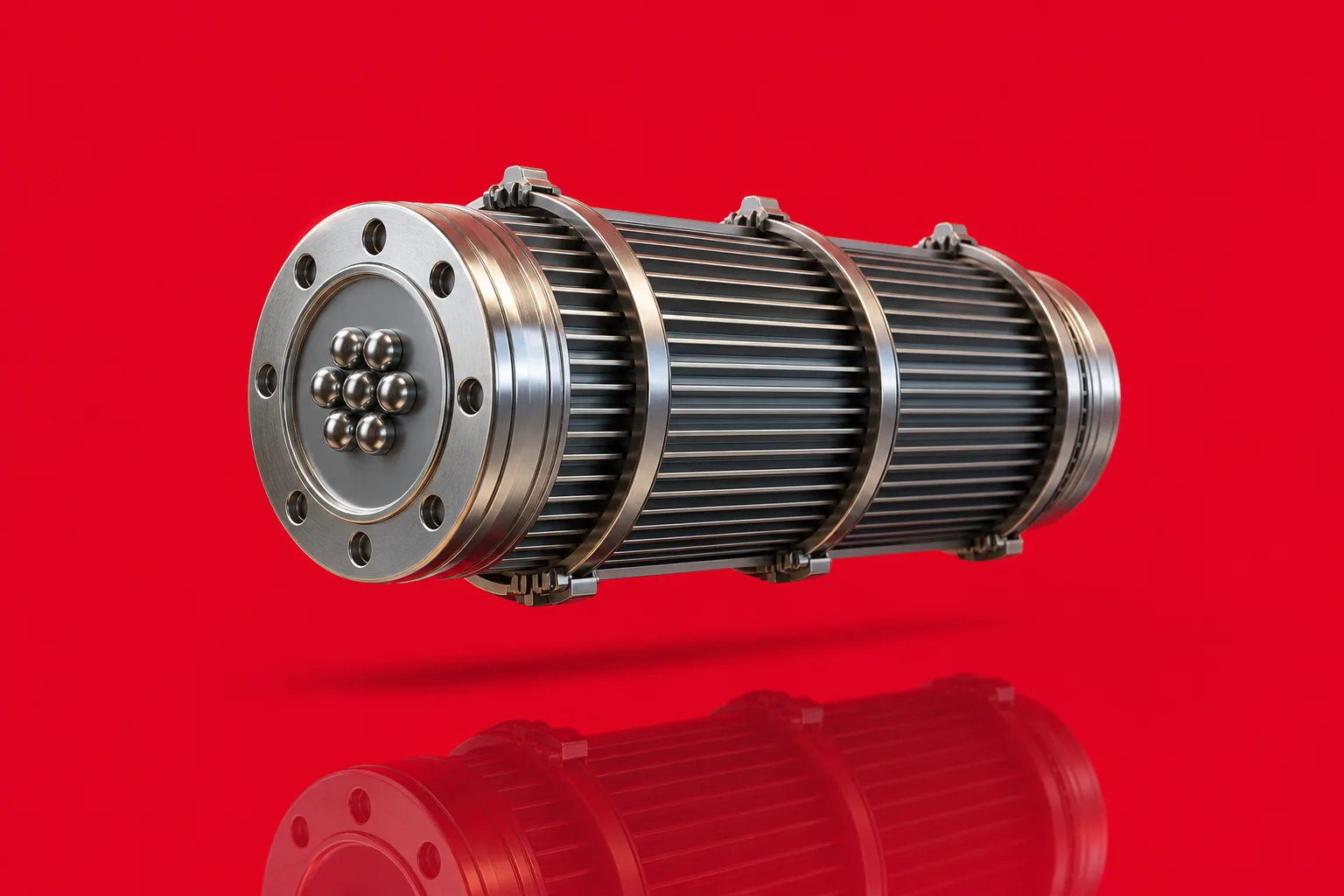
Centrus Energy shares closed at $194.78 on August 29, far below the stock’s 52-week high of $464.25 but still above the recent intraday low of $185.51. The move underscores how quickly sentiment can shift around one of the few U.S. companies tied directly to domestic uranium enrichment and future HALEU supply.
The debate around Centrus Energy is no longer just about nuclear momentum. It is about whether a $4.5 billion backlog, a $1.07 billion federal contract award, and a 2029 commercial production target justify a stock that has been trading at roughly 77 times earnings while profit margins compress.
For investors, the central question is whether the company’s long-dated strategic value can outweigh near-term volatility, dependence on policy support, and a multiyear build-out that will consume substantial capital before the next major revenue inflection arrives.
Key Facts
- Centrus reported second-quarter revenue of $176.1 million, up 14% year over year and well above consensus expectations near $149 million.
- The company’s backlog increased to $4.5 billion through 2040, including more than $3 billion of contracts that moved from conditional to firm commitments.
- A federal award announced on January 5, 2026 carries a base value of $900 million with options that can lift total value to $1.07 billion.
- Net income fell 42% year over year in the latest quarter to $16.8 million, reducing profit margin to 9.5% from 19%.
- The stock closed 58% below its 52-week high of $464.25 and short interest stood at 27.5% of float.
Centrus Energy Stock
Centrus sits in a rare position within the U.S. nuclear fuel chain. The company has an operating domestic enrichment platform and is trying to scale that capability into commercial HALEU production at Piketon, Ohio. That matters because HALEU is expected to be critical for advanced reactors under development, and the U.S. has been pushing to reduce reliance on foreign enrichment supply.
The investment case gained credibility in 2026 when the company converted a government-backed demonstration effort into a larger commercial-scale award. At the same time, Centrus added to its order book with agreements tied to future reactor demand, including enrichment commitments connected to X-energy and Oklo. Those deals helped lift backlog to $4.5 billion, a sizable figure relative to full-year revenue guidance of $450 million to $500 million.
Still, the market has been forced to reconcile strategic importance with harder financial realities. The latest quarter showed strong revenue but weaker profitability, as higher spending on hiring, manufacturing, engineering, and scale-up weighed on margins. That mismatch is central to the stock’s volatility: investors are being asked to pay for earnings power expected to emerge closer to 2029, not for the profit profile visible in current results.
Centrus is being valued less on what it earns now than on whether it can turn a strategic U.S. enrichment position into durable commercial cash flow by 2029.
Why 2029 Matters
The timeline is crucial. Commercial HALEU production from the expanded Piketon facility is targeted for 2029, and some major customer deliveries are also expected to begin then. That leaves several years in which Centrus must spend heavily on equipment, workforce, and industrial ramp-up before the broader commercial payoff is visible in reported financials.
This gap helps explain both the bull case and the bear case. Optimists see a scarce domestic asset with long-term contracted demand. Skeptics see a company facing three years of execution risk, uncertain timing in reactor deployment, and valuation sensitivity to interest rates and federal budget decisions.
Backlog, Contracts, and the Margin Question
The $4.5 billion backlog is the strongest fundamental support in the story. It suggests future demand is not purely theoretical, and the removal of financial contingencies from more than $3 billion of contracts improved the quality of that backlog. In practical terms, that means a larger share of the order book is tied to firmer delivery obligations rather than preliminary commitments.
One notable feature is customer support for future capacity. The X-energy agreement includes prepayments, a structure that can reduce financing pressure during the build-out phase. For a capital-intensive fuel business, prepaid offtake can be a meaningful advantage because it lowers reliance on fresh equity issuance or additional debt before plants begin shipping at scale.
Yet the income statement shows the cost of building ahead of revenue. Net income fell to $16.8 million even as sales rose, and full-year capital expenditure guidance of $350 million to $500 million is strikingly high relative to expected annual revenue. That dynamic does not necessarily signal deterioration, but it does mean investors should expect uneven earnings and continued margin pressure while the commercial expansion remains under construction.
Supply Chain and Policy Risks
Strategic positioning does not eliminate supply risk. Centrus has disclosed that a Russian state-owned entity remains a major supplier under a legacy arrangement, even as U.S. policy moves toward restricting Russian low-enriched uranium imports. Deliveries from Russia are set to end in 2028 under the current framework, creating a narrow window in which Centrus must manage existing obligations while ramping domestic capability.
That timing is one of the market’s biggest concerns. If export licenses are delayed, waivers become harder to secure, or federal support slows, the company could face operational and liquidity pressure before the Piketon expansion reaches commercial scale. Investors should also remember that optional periods under federal contracts remain subject to appropriations and policy priorities, not just industrial execution.
The result is a company tied to both market forces and government decisions. Centrus benefits from national security and energy policy tailwinds, but it is also exposed to the uncertainty that comes with public funding cycles, procurement decisions, and changing geopolitical constraints.
Implications for Investors
For portfolios, Centrus is best understood as a high-volatility strategic nuclear fuel name rather than a conventional value stock. The company offers exposure to domestic enrichment, HALEU development, and long-term reactor deployment themes that few public equities can match. That scarcity value helps explain why the market has tolerated a premium multiple despite weaker near-term profitability.
The risks are equally clear. Valuation remains demanding relative to current earnings, margin compression may persist during the build-out, and the path to large-scale commercial production depends on execution through 2029. In addition, the stock has been trading in sympathy with broader nuclear and uranium names, meaning even strong company-specific developments may be overshadowed temporarily by shifts in rate expectations or sector sentiment.
There is also a tactical angle. With short interest at 27.5% of float, the stock is vulnerable to sharp upside moves if a new contract, additional customer prepayment, or favorable federal decision changes the near-term narrative. That may appeal to aggressive investors, but it also amplifies downside if timelines slip or policy support weakens.
Centrus enters the next phase with real contracts, meaningful backlog, and a strategically important role in the U.S. nuclear fuel chain. The market now needs proof that those advantages can convert into scalable, profitable production on schedule, making the run-up to 2029 the defining period for the stock.