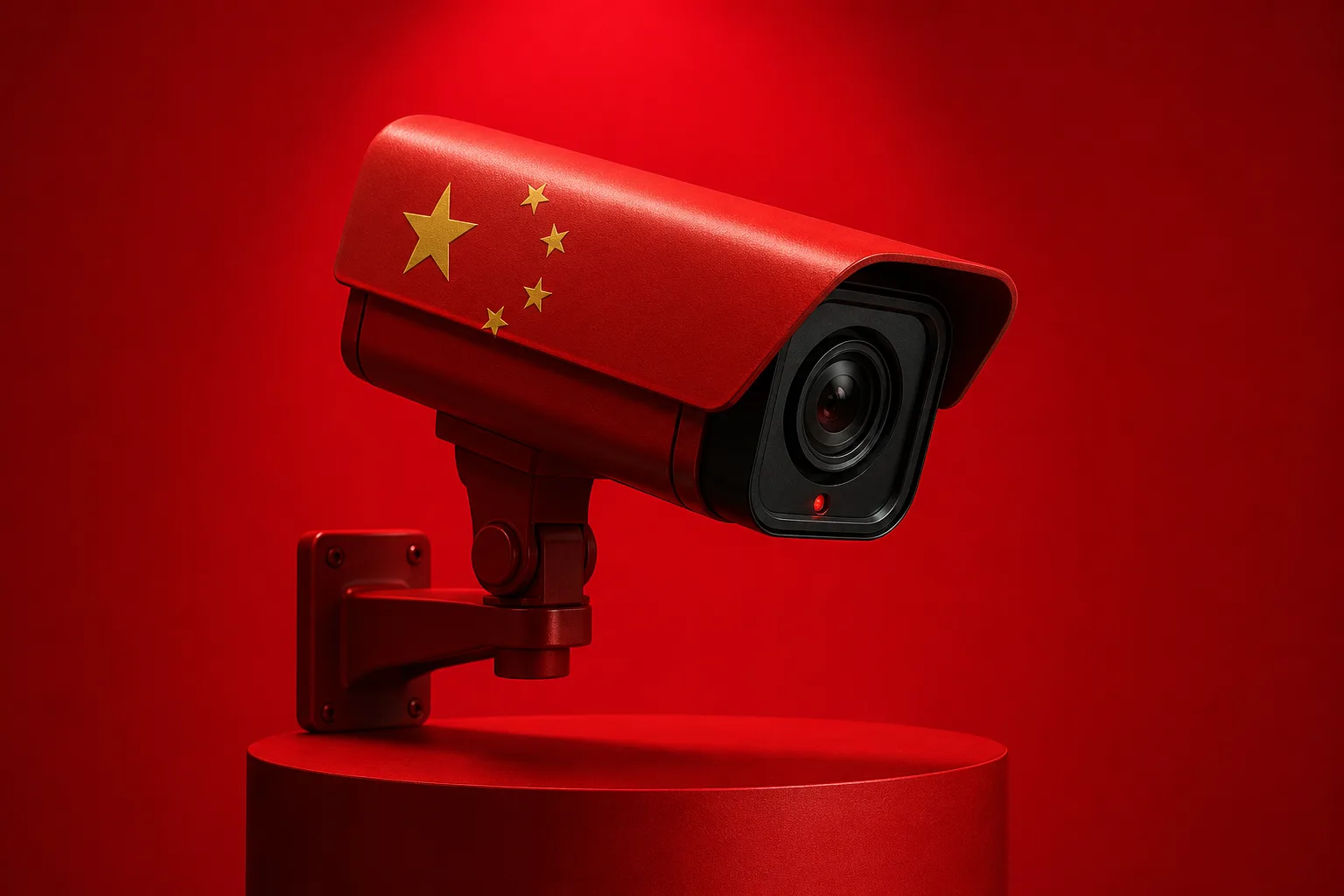
China surveillance exports are drawing growing scrutiny as Chinese technology groups sell integrated camera, telecom, cloud and artificial intelligence systems to governments across emerging markets. The core concern is not a single device, but a full-stack digital architecture that can identify, track and analyze populations at scale.
Turkey has emerged as a closely watched example. Huawei has built a substantial presence in the country, marketing AI-powered CCTV and Safe City systems while operating a local research and development center in Istanbul and employing roughly 1,500 people.
For investors, the issue extends beyond geopolitics. As surveillance platforms become embedded in public infrastructure, they can reshape regulatory risk, procurement trends, vendor lock-in dynamics and the operating environment for telecom, semiconductor, cybersecurity and smart-city suppliers.
Key Facts
- Huawei has operated in Turkey for decades and employs about 1,500 people there, including through an R&D center in Istanbul.
- Chinese surveillance export packages typically combine CCTV, facial recognition, license-plate recognition, cloud computing, AI analytics and centralized command systems.
- Huawei has marketed AI-powered CCTV and Safe City technologies in Turkey as part of a broader smart-city offering.
- Research cited in the underlying material describes Huawei Safe City agreements involving surveillance and command-center technologies in dozens of countries.
- Chinese vendors including Huawei, Hikvision and Dahua have become major global suppliers of surveillance hardware and software.
China Surveillance Exports
The strategic significance of China surveillance exports lies in how these systems are sold and deployed. Rather than offering stand-alone products, Chinese vendors can provide bundled ecosystems that connect cameras, 5G networks, internet-of-things sensors, cloud storage and AI-driven analytics. That integration can make urban services more efficient, but it can also give governments a far more powerful capacity to monitor residents in real time.
Turkey highlights why this matters. The country is not equivalent to China’s political model, yet its adoption of Chinese digital infrastructure shows how surveillance capability can expand through routine commercial deals. AI-enabled cameras do more than record events after the fact; they can automate identification, movement tracking and pattern analysis when linked to databases and network infrastructure. Once these systems are connected to telecom backbones and municipal command centers, surveillance becomes scalable.
The appeal for buyer nations is often financial rather than ideological. Middle-income countries may favor lower-cost, ready-made platforms over building domestic systems from scratch. That affordability can accelerate adoption, especially where governments are pursuing smart-city upgrades, public-security projects or digital modernization agendas. For foreign vendors, the result is recurring influence through maintenance, software upgrades, interoperability standards and long-term service relationships.
When surveillance technology is sold as a complete ecosystem, the biggest risk is not the camera itself but the dependence created once cities, networks and public databases run on the same platform.
Why vendor lock-in matters
Vendor lock-in is a central financial and policy issue. Once a country invests heavily in a particular surveillance and telecom ecosystem, the cost of replacement can become significant. Hardware swaps, software migration, staff retraining and downtime risks all raise exit barriers. That can preserve market share for incumbent suppliers even if political sentiment or national-security concerns later shift.
For listed companies and institutional investors, this creates a mixed picture. The model supports durable revenue for equipment makers and systems integrators, but it also heightens exposure to sanctions, export controls, compliance investigations and abrupt contract reviews. Companies tied to contested surveillance programs may face a higher political risk premium, especially in jurisdictions balancing security needs against privacy and civil-liberty concerns.
Implications for Investors
Investors should view China surveillance exports through three lenses: infrastructure dependency, regulation and competitive positioning. First, deeper integration of cameras, cloud systems and telecom networks can create long-duration revenue streams for vendors, component suppliers and software providers. Second, those same relationships may become politically sensitive, particularly where governments reconsider data sovereignty, foreign equipment use or public-sector procurement rules.
There are also sector-specific implications. Telecom operators and smart-city contractors could benefit from rising municipal digitization spending, but they may also face pressure to diversify suppliers. Cybersecurity firms, network-auditing providers and privacy-compliance specialists may see stronger demand as governments and enterprises seek safeguards around data access, system resilience and cross-border technology dependence. Semiconductor and optical component makers could also be affected if restrictions broaden to cover more surveillance-related equipment.
Portfolio managers should watch for several triggers: changes in export-control policy, new public procurement bans, contract disclosures tied to Safe City or smart-city projects, and national legislation on biometric data use. Another key signal is whether emerging-market governments continue to prioritize turnkey affordability over strategic autonomy. If cost remains the primary driver, Chinese vendors could preserve strong positioning in public-security and city-infrastructure tenders despite geopolitical headwinds.
Over the longer term, the contest is not only about individual companies but about competing digital governance models. Countries deciding how to build public networks, urban monitoring systems and data platforms will influence future demand across telecom equipment, AI analytics, cloud infrastructure and cybersecurity. Investors should expect this debate to remain active as more governments weigh the trade-off between rapid modernization and long-term control over critical digital infrastructure.