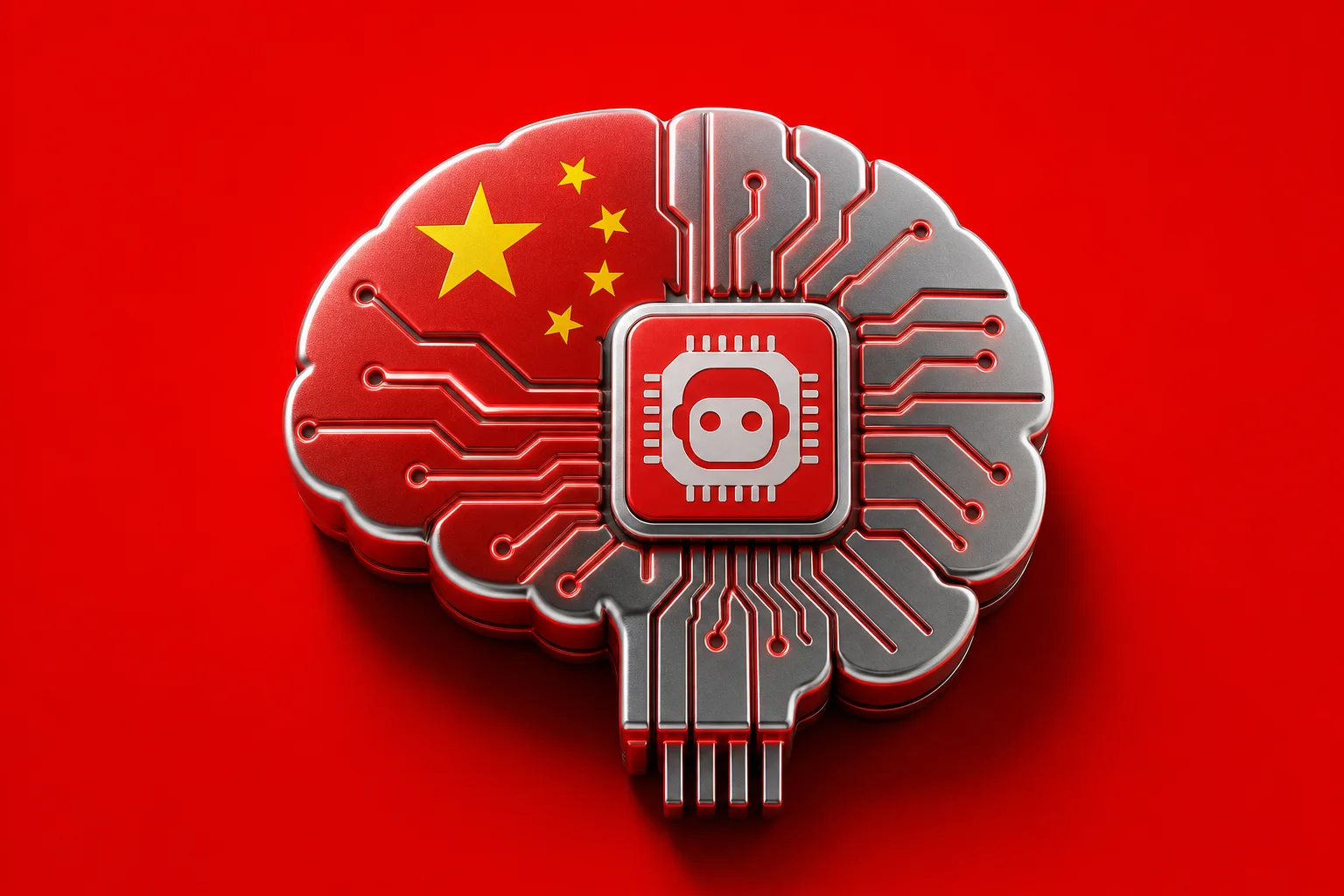
China’s planned Xinhua Yudian AI project is emerging as more than a domestic technology investment. Backed by more than 1.1 billion yuan, or about $162.38 million, the platform is designed to embed official ideology into an AI system intended for journalists, party officials, and the public.
For investors, the significance extends beyond China’s media sector. Analysts warn the initiative could deepen regulatory pressure on domestic AI developers, raise barriers for foreign firms seeking market access, and intensify concerns over censorship, data governance, and human-rights exposure in cross-border technology partnerships.
The project also highlights a broader market question: whether AI growth in China will increasingly be shaped by political mandates rather than commercial competition, with direct implications for software providers, semiconductor demand, cloud infrastructure, and multinational tech strategy.
Key Facts
- Xinhua plans to invest more than 1.1 billion yuan, equivalent to roughly $162.38 million, in the Xinhua Yudian AI platform.
- A feasibility study published on June 5 described the tool as a service for journalists, party cadres, and the general public.
- China’s 2023 generative AI rules require providers to uphold core socialist values and prohibit content deemed harmful to national security or the country’s image.
- The platform includes functions such as content inspection, traceability, correction, and guided documentation.
- Analysts say foreign technology companies integrating with state-run Chinese AI systems could face rising pressure to localize content controls and compliance standards.
Xinhua Yudian AI Project
The Xinhua Yudian AI project appears to be built as a state-directed generative AI agent with a distinctly political mission. Official descriptions indicate it will include features such as “Q&A on Xi’s Words” and a “Xi Study Guide,” framing the platform as a practical interface for applying official doctrine in news production, administration, and public information. That places ideology at the center of product design, not at the edge of content moderation.
This matters because generative AI systems become more influential as they move from chat interfaces to agentic functions such as drafting, summarizing, verifying, routing, and recommending. If those capabilities are tightly constrained by political red lines, the system can shape not just what users read, but how institutions produce knowledge. In practice, that can affect newsroom workflows, research outputs, education tools, enterprise software, and the wider developer ecosystem.
For China’s domestic technology sector, the risk is that innovation incentives become secondary to ideological compliance. Private AI firms may be pushed to align their models, moderation standards, and retrieval systems with state-backed benchmarks. That could narrow the range of permissible outputs, reduce experimentation in politically sensitive domains, and encourage what critics describe as extreme self-censorship. Over time, such pressures may influence talent retention, startup formation, venture funding, and product competitiveness.
When market access depends on ideological alignment, AI stops being only a commercial platform and becomes a compliance test for every company in the value chain.
Why Foreign Tech Companies Face a Strategic Dilemma
For multinational technology firms, the central issue is not simply whether China remains an attractive market, but what operational compromises may be required to participate. Companies that connect cloud services, language models, enterprise tools, or application layers to state-run systems could be expected to filter outputs on politically sensitive topics and store or process information under localized rules.
That creates a difficult trade-off. Access to China’s large user base and enterprise demand can support revenue growth, partnerships, and scale. But the compliance burden may carry legal, reputational, and governance costs, especially for firms listed in the United States or Europe, where investors increasingly scrutinize data practices, export controls, and exposure to human-rights controversies.
Implications for Investors
Investors should view the Xinhua Yudian AI project through three lenses: regulation, competition, and reputation. First, regulation. China’s 2023 generative AI framework already established that politically acceptable content is a core requirement. A high-profile state-backed platform could become a de facto reference model for how domestic firms are expected to operate, raising compliance costs across the sector.
Second, competition. State support can accelerate spending on compute, data infrastructure, model deployment, and public-sector applications. That may benefit selected hardware, networking, cybersecurity, and cloud suppliers exposed to China’s AI buildout. However, it can also distort the competitive landscape by favoring politically aligned incumbents over private startups, making it harder for investors to judge which companies have durable product advantages versus policy-driven support.
Third, reputation and governance. Western firms with China partnerships may face increasing questions from shareholders over whether localization requirements amount to participation in censorship or surveillance architectures. Boards and compliance teams will need to assess contractual obligations, model fine-tuning standards, data access rules, and downstream uses of their technology. Those issues can influence valuation multiples, customer trust, and regulatory review in home markets.
Investors in global AI, cloud, and semiconductor names should also watch for second-order effects. If Chinese AI policy becomes more restrictive, some domestic talent and capital may shift overseas, potentially benefiting rival innovation hubs. At the same time, stricter controls could accelerate China’s push for self-reliance in AI infrastructure, supporting domestic substitutes in chips, software stacks, and enterprise applications.
Key watch-points include future implementation rules, procurement priorities for state entities, partnership disclosures involving foreign technology providers, and any evidence that private developers are being required to mirror Xinhua Yudian’s standards. These signals will help determine whether the project remains a niche political tool or becomes a broader template for China’s AI market.
The Xinhua Yudian rollout is an early indicator of how Beijing may define the next phase of AI development: high investment, strong state direction, and tighter ideological controls. For investors, the opportunity in China’s AI expansion remains real, but so do the policy and governance risks attached to that growth.