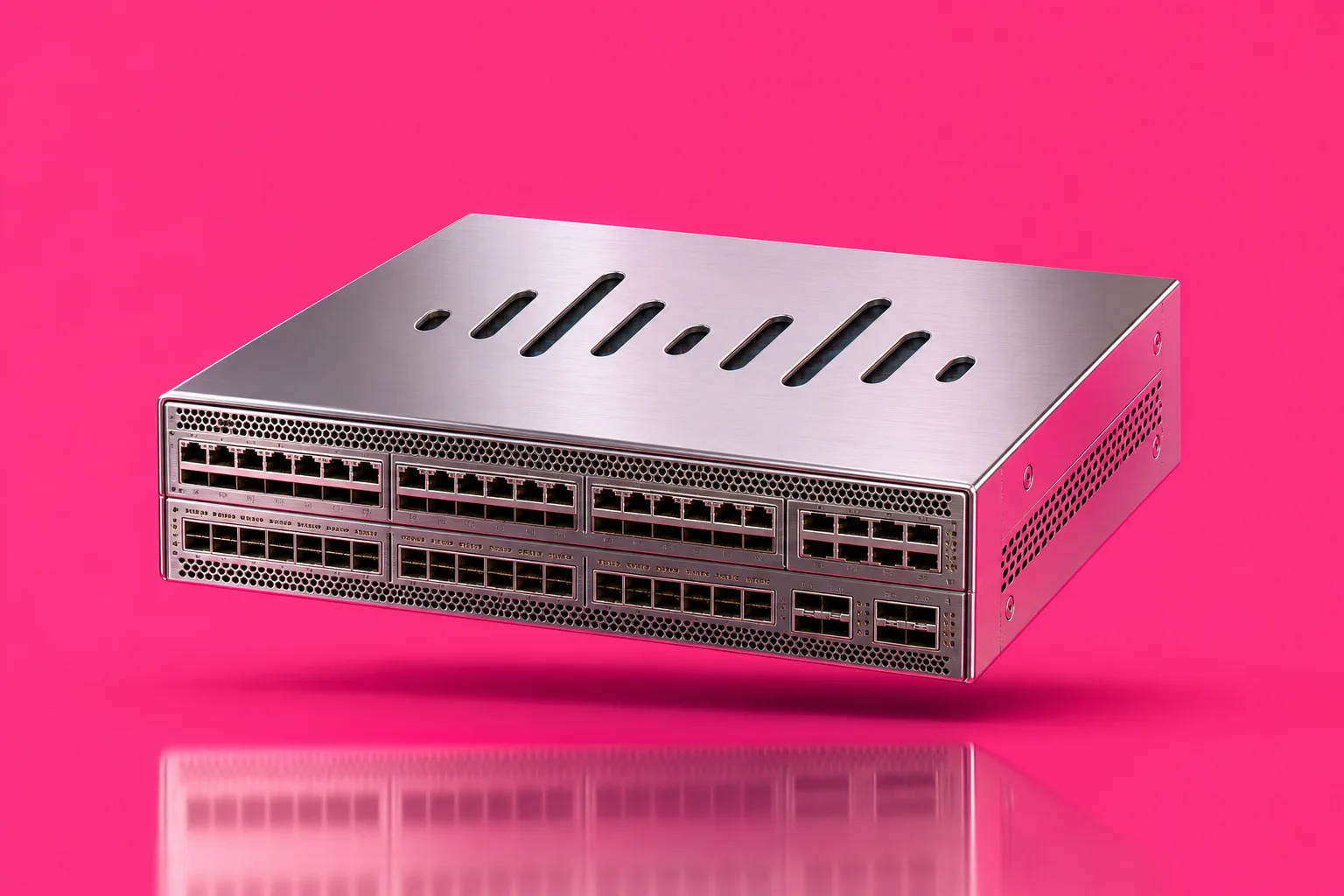
Cisco AI orders and gross margin trends are now driving the stock more than headline earnings. Cisco Systems shares closed at $112.90 on August 17 after a sharp post-results selloff, even though the company beat quarterly estimates and issued fiscal 2027 guidance above expectations.
The central issue was not revenue, earnings, or demand. It was profitability mix. Non-GAAP gross margin fell to 66.3% from 68.4% a year earlier, a 210-basis-point decline that signaled Cisco’s fast-growing AI infrastructure business is carrying a lower margin profile than its traditional software, services, and enterprise networking mix.
That tension matters because Cisco is no longer being judged as a slow-growth legacy networking company. The market is valuing it as an AI infrastructure supplier, which makes the durability of growth, margins, and backlog conversion critical for investors.
Key Facts
- Cisco reported fiscal fourth-quarter revenue of $17.25 billion, up 18% year over year and above the company’s prior guidance range of $16.7 billion to $16.9 billion.
- Non-GAAP EPS came in at $1.22, ahead of consensus near $1.17, while fiscal 2027 non-GAAP EPS guidance of $5.05 to $5.11 topped the $4.80 market expectation.
- Non-GAAP gross margin declined to 66.3% from 68.4% a year earlier, while product gross margin fell to 64.8% from 67.5%.
- Fiscal 2026 AI infrastructure orders reached $9.3 billion, including $4 billion in the fourth quarter alone, with expected fiscal 2027 AI revenue of $7.5 billion.
- Cisco shares fell 8.4% on August 13 after earnings and finished August 17 at $112.90, about 13.4% below the 52-week high of $130.37.
Cisco AI Orders
Cisco’s latest quarter showed a business growing faster than many investors expected. Revenue beat estimates, earnings beat estimates, and guidance for both the current quarter and the full fiscal year came in well above prior market assumptions. For fiscal 2027, Cisco guided revenue to $72.2 billion to $73.4 billion, implying roughly 15% growth at the midpoint from fiscal 2026 revenue of $63.33 billion.
The strongest demand signal came from AI infrastructure. Cisco booked $9.3 billion in AI infrastructure orders in fiscal 2026, more than four times the prior-year level. The fourth quarter alone produced $4 billion in hyperscaler AI orders, supported by Silicon One systems and Acacia optics. The company also indicated that fiscal 2027 AI infrastructure revenue should reach $7.5 billion, up sharply from about $4 billion in fiscal 2026.
Why did the stock still sell off? Investors focused on how that growth is being generated. Hardware-heavy AI revenue carries lower gross margins than Cisco’s historical mix of software, services, and higher-margin enterprise products. In other words, Cisco is gaining scale in AI, but each additional dollar of revenue is coming with less gross profit percentage than the market had grown used to. That affects valuation, especially for a stock that had already rallied strongly before earnings.
Cisco is trading gross margin percentage for faster AI-driven revenue and operating income growth, and the market is still deciding whether that exchange is worth a premium multiple.
Why the margin line mattered more than the earnings beat
On the surface, Cisco’s quarter looked strong. GAAP net income rose 51% year over year to $3.9 billion, while GAAP EPS reached $0.97. Non-GAAP operating margin hit 35.9%, and full-year non-GAAP operating margin reached 34.8%, both record levels. Those figures suggest Cisco is still extracting strong operating leverage even as its sales mix changes.
But gross margin is acting as the market’s stress test for the AI story. Product revenue rose 24% year over year, while services revenue was flat. Networking revenue climbed 28% to $9.79 billion and accounted for more than half of total quarterly sales. That mix naturally compresses blended margins because hardware contributes less gross profit than services and subscription software. Cisco’s first-quarter fiscal 2027 gross margin guidance of 65% to 66% reinforced the message that this pressure is not temporary.
Implications for Investors
For investors, Cisco now sits between two narratives. The bullish case is that the company has entered a multiyear AI and networking expansion cycle, with orders building faster than reported revenue and with enterprise customers modernizing infrastructure for AI workloads. Product orders rose 35% in the fourth quarter, and even excluding hyperscalers they rose 25%. Networking product orders increased 40%, marking the eighth consecutive quarter of double-digit growth.
The bear case is more valuation-sensitive. At $112.90, Cisco trades at roughly 22.2 times forward non-GAAP earnings using the midpoint of its fiscal 2027 EPS guidance. That is well above the valuation range long associated with a mature networking company. If gross margin keeps sliding and operating leverage becomes harder to sustain, the stock could face further multiple compression even if revenue growth remains solid.
Investors should also watch conversion of orders into backlog and revenue. Cisco ended the year with remaining performance obligations of $46.7 billion, up 7%, while deferred revenue rose 3% to $29.8 billion. Those increases were more modest than the headline order growth, which means the market will want clearer evidence in coming quarters that AI bookings are durable, non-cancellable, and converting as expected. The next earnings report will be important for measuring whether order momentum translates into higher reported revenue without deeper profitability erosion.
Cisco’s setup for fiscal 2027 is clear: demand is strong, guidance is elevated, and AI is materially reshaping the company’s revenue base. The next phase for the stock will depend less on whether growth exists and more on whether Cisco can prove that growth remains both scalable and profitable.