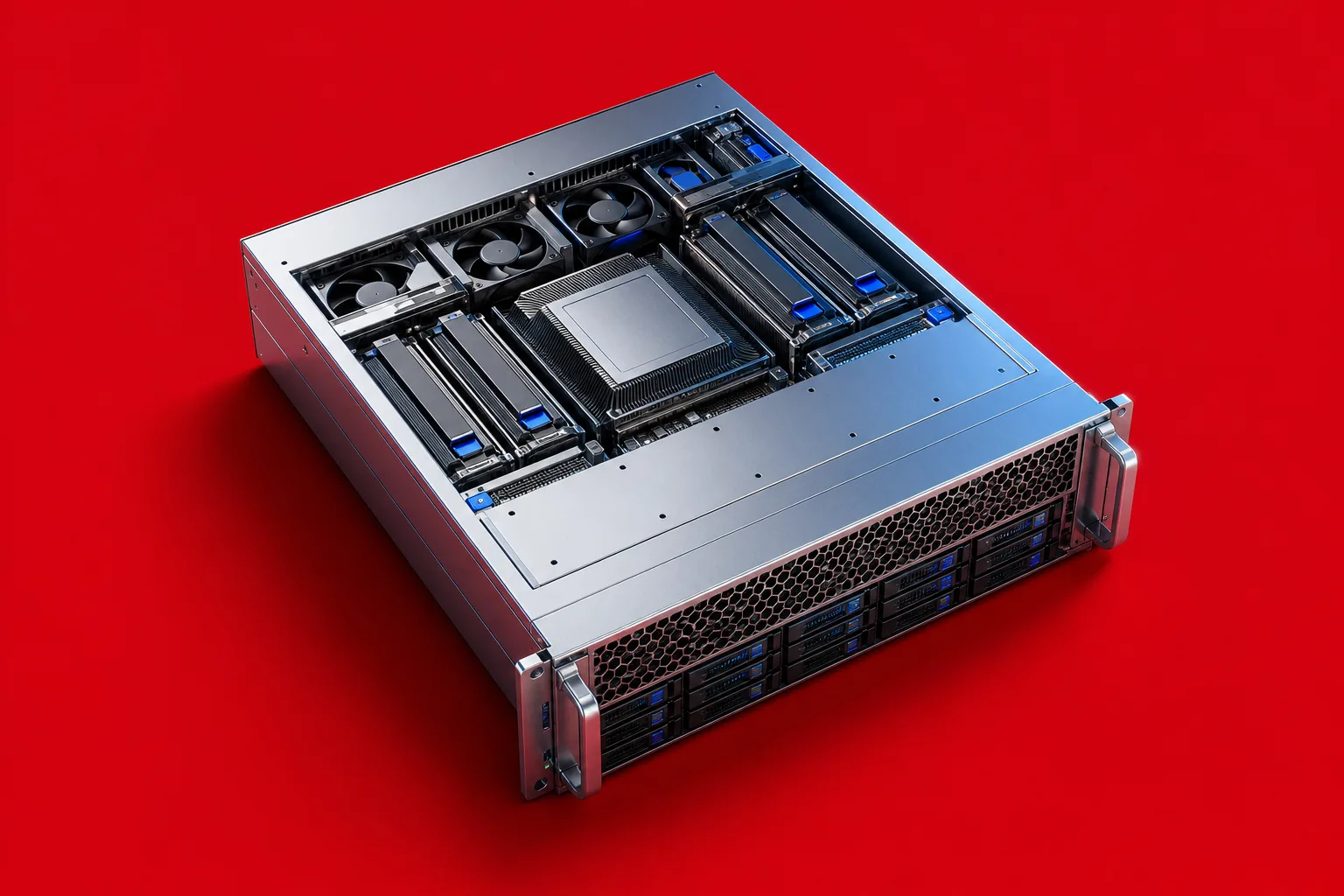
Dell Technologies became the standout winner of the September 3 session, climbing more than 10% after reporting a record $95 billion AI backlog and lifting its full-year outlook. The move came as broader U.S. equities sent a more divided signal, with the Dow Jones Industrial Average rising strongly while the Nasdaq struggled for traction.
The market split was driven less by earnings alone than by a sharp repricing in bond markets. The U.S. 10-year Treasury yield touched 4.814%, its highest level since November 2023, raising the discount rate on growth stocks and intensifying a rotation into industrial, energy and infrastructure-linked shares.
At the same time, weaker private-sector hiring data did little to calm rate concerns. That combination left investors facing a market in which select AI hardware names are being rewarded, but much of software and long-duration tech continues to lose support.
Key Facts
- Dell shares rose as much as 10.15% to $467.44 after the company reported $47 billion in quarterly revenue and a record $95 billion AI backlog.
- The U.S. 10-year Treasury yield reached 4.814%, while the 30-year yield traded near 5.27% and the 2-year had recently climbed to 4.369%.
- The Dow traded near 53,060.57, up 293.69 points or 0.56%, while the S&P 500 hovered around 7,647.61 and the Nasdaq Composite rose only modestly to about 26,110.72.
- ADP estimated U.S. private payroll growth of 38,000 in August, below the 47,000 consensus, with manufacturing losing 17,000 jobs.
- Brent crude climbed as high as $96.59 a barrel and WTI reached $91.78 before pulling back amid geopolitical volatility around the Strait of Hormuz.
Dell stock and rising Treasury yields reshape market leadership
Dell stock became the clearest expression of what investors still want to own in a tougher rate environment: companies with visible demand, near-term revenue conversion and a direct link to AI infrastructure spending. The company posted fiscal second-quarter revenue of $47 billion, up 58% year over year, and reported adjusted earnings per share of $7.04, far above the $4.91 consensus. Its Infrastructure Solutions Group generated $31.78 billion in revenue, up 89% from a year earlier.
The most important figure was not revenue or earnings, but backlog. Dell said it booked $60.9 billion in AI server orders during the quarter and exited with a record $95 billion backlog. Management also raised full-year revenue guidance to $192 billion from $167 billion and lifted its adjusted EPS target to $25.50 from $17.90. That guidance increase effectively confirmed that enterprise AI spending is still accelerating, even as other corners of technology face valuation compression.
Why this matters beyond one stock is simple. The same session that rewarded Dell punished large parts of software, cybersecurity and higher-multiple growth. Investors are drawing a sharper line between companies with immediate AI monetization and those whose valuations depend heavily on future cash flows. With the 10-year yield near 4.8%, that distinction becomes much more important for portfolio construction.
In a market dominated by higher yields, visible backlog is being rewarded while long-duration narratives are being repriced.
Why bond markets mattered more than economic data
The day’s broader tone was set by sovereign yields rather than by equity fundamentals alone. The rise in U.S. Treasury yields coincided with pressure across other major bond markets, including Japan, Germany and the U.K. That matters because equity valuations are built on a global cost of capital, not only on domestic earnings estimates.
Even weak labor data failed to reverse the move. ADP reported just 38,000 private payroll additions in August, below expectations and the weakest reading since January. Under a more growth-sensitive market backdrop, that number might have pushed yields lower. Instead, investors remained focused on inflation risks, energy volatility and the possibility that policymakers keep rates elevated for longer than previously expected.
Implications for Investors
For investors, the session reinforced three themes. First, higher Treasury yields continue to pressure expensive areas of the market, especially software and other long-duration equities. Several technology names fell sharply despite delivering earnings beats, signaling that multiple compression is overriding strong quarterly execution. When rates rise quickly, even solid results may not be enough to support premium valuations.
Second, AI exposure is not being treated equally. Hardware, servers, networking and related infrastructure remain in favor because order books are tangible and revenue recognition is visible. Dell’s rally, along with gains in names tied to enterprise hardware and systems demand, suggests investors are willing to pay for AI capacity buildout when the economics are immediate. By contrast, software names with more distant monetization paths are facing tougher scrutiny.
Third, inflation-linked sectors remain important hedges. Energy stocks advanced as crude prices swung on geopolitical developments, while select utilities and industrial names also outperformed. If oil stays elevated and bond yields remain high, investors may continue favoring cash-generative businesses with lower valuation sensitivity to rates. Key watch points now include the next payroll data, further moves in Treasury yields and whether oil volatility starts feeding more directly into inflation expectations.
The next phase for markets will depend on whether bond yields stabilize or continue climbing. If rates remain elevated, leadership is likely to stay narrow, centered on AI infrastructure, energy and defensive cash-flow names rather than broad-based growth.