The Dow Jones record at 52,524.75 captured a market split between industrial and financial strength on one side and pressure on mega-cap technology on the other. While the Dow advanced 1.30%, the Nasdaq Composite fell 0.51%, underscoring how sharply sector leadership has narrowed.
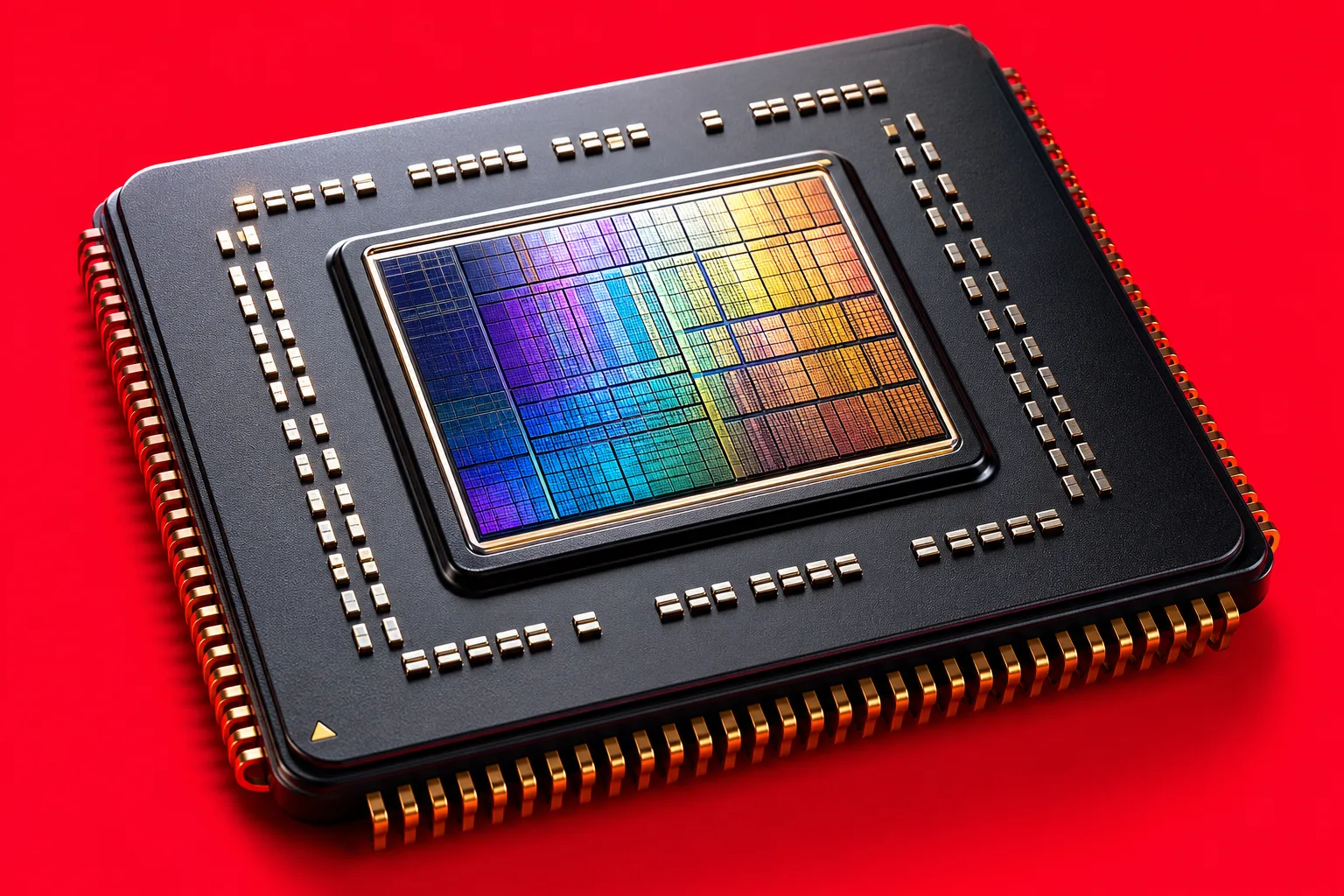
The biggest catalyst was Micron Technology, which surged about 17% after posting a record quarter and projecting roughly $50 billion in fiscal fourth-quarter revenue. At the same time, Apple dropped about 4.7% after raising prices on several MacBook and iPad models, pulling the tech-heavy Nasdaq lower.
The S&P 500 rose a modest 0.26%, reflecting the cross-currents: a powerful rally in memory and semiconductor names, offset by weakness in some of the market’s largest technology weights. For investors, the session highlighted how AI-linked demand is creating both windfall profits and cost pressure across the same supply chain.
Key Facts
- The Dow Jones Industrial Average rose 675.85 points, or 1.30%, to a record 52,524.75.
- Micron Technology reported fiscal third-quarter revenue of $41.46 billion and guided for about $50 billion in next-quarter revenue.
- The Nasdaq Composite fell 130.86 points, or 0.51%, to 25,345.78 as Apple shares dropped about 4.7%.
- Apple increased prices on selected devices, including the MacBook Neo to $699 from $599 and the iPad Pro Wi-Fi 256GB to $1,199 from $999.
- Core PCE inflation rose 3.4% year over year in May, while weekly initial jobless claims fell to 215,000.
Dow Jones record and Micron rally
The session revolved around an unusual divergence: blue-chip stocks and AI infrastructure beneficiaries rallied strongly, while the broader technology complex showed strain. The Dow’s climb to a fresh high reflected strength in banks, industrials, and names less exposed to the immediate pressure facing consumer hardware companies. The Russell 2000 also gained 1.20%, suggesting risk appetite extended beyond the largest stocks.
Micron’s earnings were the day’s defining event. The company posted adjusted earnings of $25.11 per share, far above consensus expectations, and reported a record gross margin of 84.9%. Management also disclosed 16 strategic customer agreements representing roughly $100 billion in minimum contracted revenue, with $22 billion in firm commitments over three to five years. Those figures reinforced the view that AI memory demand is moving from a cyclical upswing to a more durable supply-constrained expansion.
The implications reached beyond Micron. Shares of Western Digital, Seagate, Arm, Marvell, Broadcom, Applied Materials, ASML, Lam Research, and KLA all moved higher as investors repriced the earnings power of the memory and semiconductor ecosystem. Yet the same supply tightness that boosted chipmakers weighed on device manufacturers. Apple’s price increases suggested the cost inflation in DRAM and storage is now large enough to affect end-market pricing and potentially consumer demand.
The market is rewarding the companies selling AI infrastructure while punishing those forced to absorb its rising costs.
Why Apple and the Nasdaq lagged
Apple’s decline showed the other side of the AI trade. The company raised prices across several MacBook and iPad models while leaving the iPhone untouched, a move investors interpreted as a warning on margins rather than a sign of stronger pricing power. With Apple carrying outsized influence in the Nasdaq, the stock’s nearly 5% drop outweighed gains elsewhere in semiconductors.
That pressure is tied to a broader industry trend. DRAM prices rose as much as 98% in the first quarter and are expected to increase another 58% to 63% in the current quarter. If memory suppliers continue prioritizing AI and data center customers, makers of PCs, tablets, and smartphones may face further margin compression or weaker unit demand if higher component costs are passed on to consumers.
Implications for Investors
For equity investors, the most important takeaway is that AI remains a powerful earnings engine, but market leadership is becoming increasingly selective. Companies with direct exposure to memory, compute, networking, and semiconductor equipment may continue to benefit if supply remains tight and enterprise spending stays elevated. Micron’s guidance and long-term contracts suggest visibility that many cyclical chip companies rarely enjoy.
At the same time, concentration risk is rising. A handful of AI-related names now account for a large share of U.S. equity market value, making major earnings reports and pricing decisions capable of moving entire indexes. The contrast between the Dow’s record and the Nasdaq’s decline is a reminder that broad index performance can mask sharp internal dispersion. Investors should watch whether gains broaden beyond semiconductors and whether rising input costs begin to hurt margins for large technology buyers.
Macro conditions also remain relevant. Core PCE inflation at 3.4% year over year and personal spending growth of 0.7% indicate inflation is still above target even as demand stays resilient. With initial jobless claims at 215,000 and the Federal Reserve maintaining a hawkish posture, rate expectations could remain volatile. Lower oil prices may help ease inflation pressure, but persistent strength in spending and labor data could delay any policy relief.
Bank stocks offered a separate signal of resilience after all 32 major institutions in the latest stress test remained above minimum capital requirements. Dividend increases and buyback authorizations from JPMorgan, Goldman Sachs, Morgan Stanley, Wells Fargo, and Bank of New York Mellon supported the Dow and may continue to underpin financials if credit conditions remain stable.
The next phase for investors will hinge on whether the memory rally proves durable and whether higher chip costs spread more visibly into consumer electronics, cloud spending, and enterprise margins. If Micron’s forecast marks a new baseline for AI infrastructure demand, semiconductor winners could keep leading, but the pressure on downstream customers may become harder for the market to ignore.