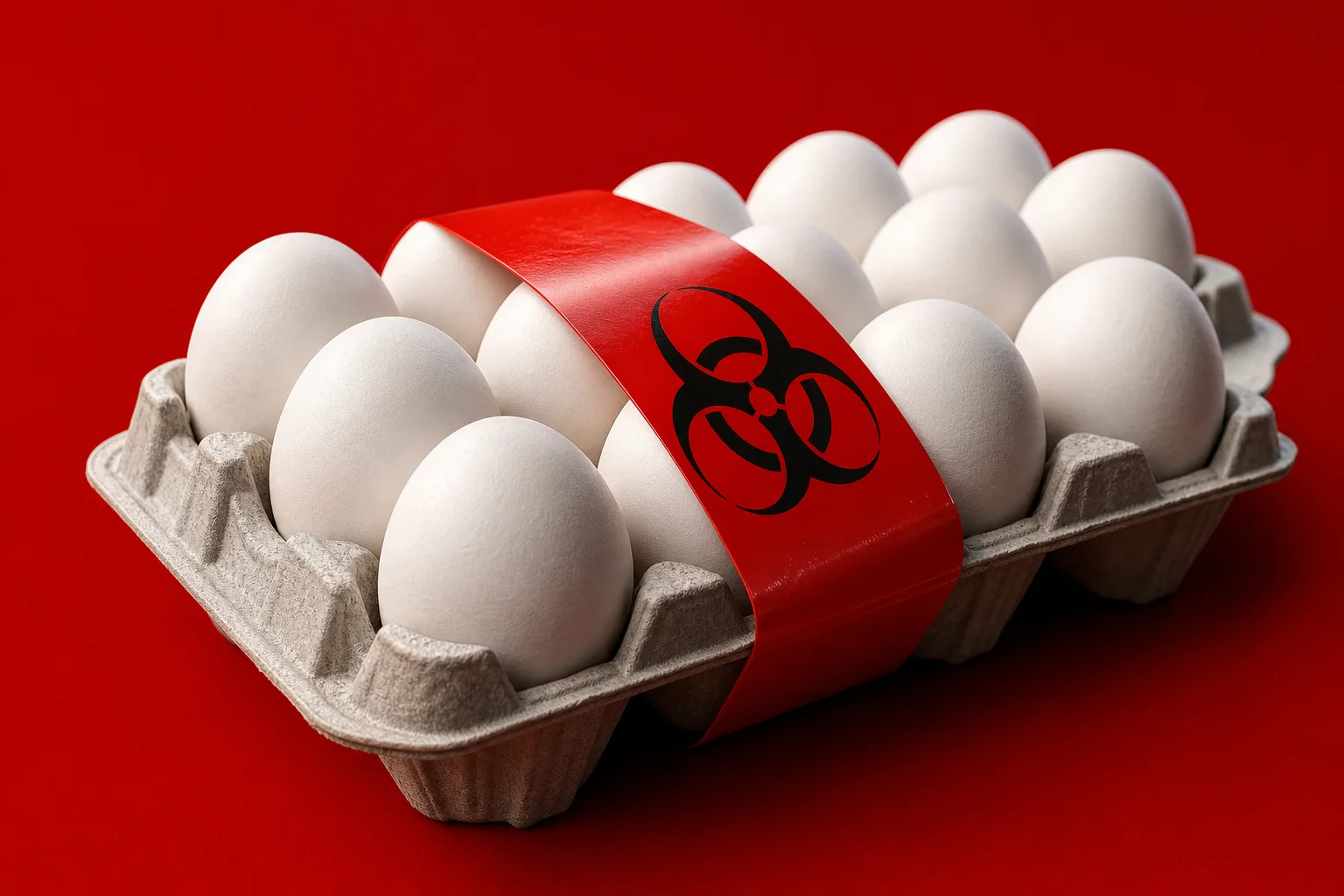
An egg recall tied to a salmonella outbreak has widened to roughly 1.5 million cartons, or more than 19 million eggs, after 98 illnesses were identified across 17 U.S. states. Federal health officials said the products are a likely source of the outbreak, though the investigation remains open.
The scale of the recall matters well beyond the refrigerated aisle. It affects supermarket shelves, foodservice supply chains, and consumer confidence in a staple category that has already faced periods of volatility.
For investors watching food retailers, agricultural suppliers, and consumer staples, the key issue is not only the immediate product pullback but whether the contamination event triggers broader costs, demand shifts, or additional enforcement actions.
Key Facts
- The recall covers about 1.5 million cartons, representing more than 19 million eggs produced between June 6 and July 3.
- As of July 24, health officials had identified 98 salmonella illnesses across 17 states linked to the outbreak investigation.
- The recalled cartons carry plant codes P-1950 or 0840962 and Julian dates between 157 and 184.
- Sell-by or best-by dates on the affected products range from July 20 through August 17.
- The eggs were distributed through Kroger stores in Louisiana and Texas, Brookshire Grocery outlets in six states, and foodservice channels in Texas, Oklahoma, and Louisiana.
Egg Recall and Salmonella Outbreak
The recall centers on eggs produced by Texas-based Midwest Poultry Services. The company said it identified the issue through environmental monitoring and root-cause analysis at two Texas farms, then stopped distributing fresh eggs from those facilities. Eggs have instead been diverted to a breaking plant for pasteurization, a step intended to eliminate pathogens before the product enters processed channels.
Health officials are focusing on possible contamination with Salmonella Enteritidis, a strain that can cause severe infections, especially in young children, older adults, and people with weakened immune systems. Typical symptoms include diarrhea, fever, nausea, vomiting, and abdominal cramps, usually beginning 12 to 72 hours after exposure and lasting four to seven days.
The investigation carries an important complication. While the recalled eggs were produced from June 6 to July 3, recorded illness onset dates run from November 21, 2025 to June 30, 2026. That gap suggests the eggs are likely only part of the story, and officials are still examining whether other foods may also be involved. For the market, that uncertainty can extend the headline risk for retailers and distributors handling overlapping supply chains.
When a recall reaches more than 19 million eggs but the illness timeline stretches across seven months, the immediate product pull is only one piece of the risk picture.
How the Recall Could Ripple Through Supply Chains
The affected products include multiple sizes and pack counts sold under store and regional labels, from 12-count cartons to larger bulk and foodservice formats. That broad mix increases logistical complexity because retailers may need to remove inventory from both consumer-facing shelves and back-end distribution channels at the same time.
For foodservice customers, bulk egg recalls can create operational challenges quickly. Restaurants, institutional buyers, and prepared-food operators may need substitute supply on short notice, often at higher spot prices. If replacement volumes are tight, margin pressure can surface for both buyers and distributors.
Implications for Investors
For investors, the immediate concern is whether the recall remains contained or broadens into a wider category issue. A single producer event can still affect sentiment across grocers, regional food distributors, and packaged-food companies that rely on steady egg inputs. Consumer-facing brands may also face temporary demand disruption if shoppers become more selective about labels, regions of origin, or store inventory.
Retailers exposed to the affected states could see modest near-term costs from product removal, customer refunds, labor, and compliance. Those expenses are often manageable in isolation, but repeated food safety incidents can weigh on traffic and trust. Analysts will likely watch whether any chains disclose measurable impacts on shrink, procurement costs, or same-store sales in affected markets.
Commodity and supply-chain dynamics also matter. If diverted production moves into pasteurized channels rather than fresh retail supply, that can alter pricing across adjacent egg markets. Investors should monitor whether wholesale egg prices, contract terms, or regional availability change in Texas, Louisiana, Oklahoma, Arkansas, Mississippi, and New Mexico. Any signs of prolonged tightness could benefit alternative suppliers while pressuring buyers with less pricing power.
Longer term, the event reinforces the value of traceability, testing, and biosecurity investment across the food system. Companies with strong recall management, diversified sourcing, and transparent quality controls are generally better positioned to absorb incidents without lasting brand damage. The next milestones to watch are updates from regulators on the source investigation, any expansion beyond the current product list, and whether additional illnesses are recorded after July 24.
If the outbreak is narrowed to a defined production window, the financial fallout may stay limited to recalls, refunds, and temporary sourcing adjustments. If the investigation identifies additional foods or broader distribution exposure, the market impact could widen across retail, foodservice, and agricultural supply chains.