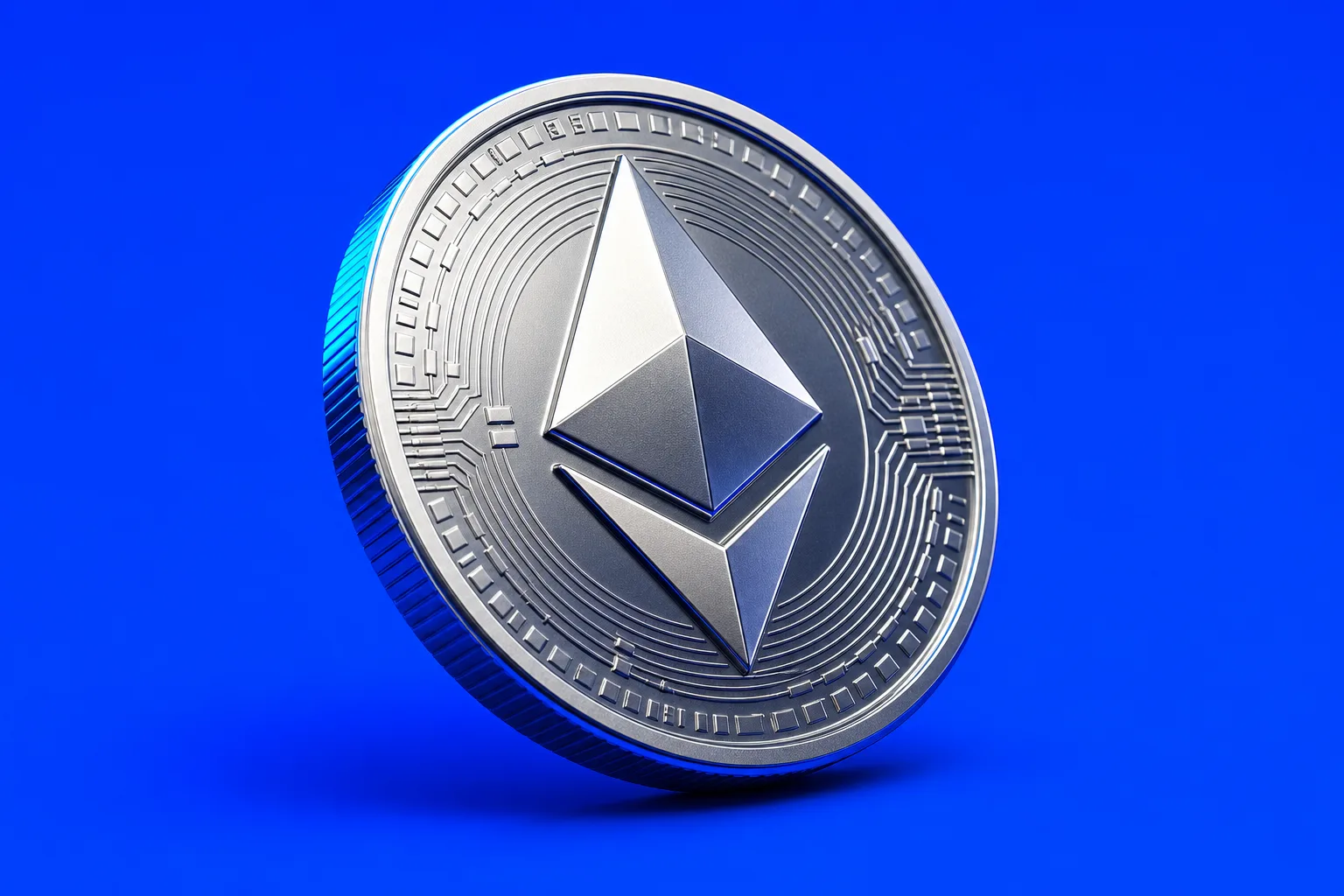
Ethereum ETF demand has surged just as Ethereum’s most important protocol upgrade slipped again. ETH traded around $2,453.78 in early Monday dealings after a 10-session run of net inflows into U.S. spot Ethereum ETFs brought in roughly $1.52 billion between August 17 and August 28.
That demand helped drive a sharp rebound from about $1,910 on August 17 to an intraday high of $2,484.70 last week, a gain of roughly 30% in 11 sessions. But the market is now weighing whether this move reflects durable repricing or a flow-driven rally vulnerable to macro pressure and delayed execution on Ethereum’s roadmap.
The key tension for investors is clear: Ethereum is attracting fresh capital through ETFs, yet the Glamsterdam upgrade, widely seen as central to the long-term bullish case for ETH, has been pushed to Q4 2026 for a second time.
Key Facts
- Ethereum traded near $2,453.78 on Monday morning, with a market capitalization of about $295.9 billion and daily volume near $14.6 billion.
- U.S. spot Ethereum ETFs recorded 10 consecutive sessions of net inflows from August 17 through August 28, totaling roughly $1.52 billion.
- BlackRock’s iShares Ethereum Trust absorbed about $1.02 billion across nine straight sessions and represented roughly 72% of total Ethereum ETF inflows in that stretch.
- ETH rose about 30% over the past month but still traded 50.4% below its all-time high of $4,946.05 set on August 24, 2025.
- The Glamsterdam upgrade, originally expected earlier in 2026, is now targeted for the fourth quarter of 2026 after new testnet scheduling changes.
Ethereum ETF Demand and the Glamsterdam Delay
The immediate story is that Ethereum has regained momentum with help from institutional wrappers. The 10-day inflow streak marks the strongest monthly stretch for spot Ethereum ETFs since those products launched in July 2024. On August 27 alone, the category attracted $225.8 million, the largest single-day intake in about 10 months, before adding another $102.18 million on August 28.
Even so, the composition of those flows matters. A significant share appears to reflect client allocations entering ETF products rather than discretionary balance-sheet buying. That distinction is important because subscription-led inflows often follow price strength instead of anticipating it. It can create powerful upside during rallies, but it may also fade quickly if momentum stalls.
At the same time, Ethereum’s core fundamental catalyst has weakened in the near term. Glamsterdam is designed to overhaul Ethereum’s gas model, improve throughput, reduce fee friction and bring more activity back to the base layer. Developers moved the mainnet timeline to Q4 2026 after launching the Plataberget public testnet and updating the downstream testing calendar. For a market that had been looking for a clearer path to network-level improvement, the delay undercuts the timing of the bullish thesis.
Ethereum is benefiting from strong ETF demand, but the market is still waiting for the network upgrade that could turn short-term flows into a lasting re-rating.
Why the upgrade matters
Glamsterdam is not a routine software patch. It is intended to address one of Ethereum’s central economic problems: too much user activity and fee generation has migrated away from the base chain and toward Layer-2 networks. That shift improved scalability but reduced value capture at the mainnet level, weakening fee burn and, by extension, some of the structural support behind ETH.
Proposed changes tied to Glamsterdam aim to raise gas capacity toward 200 million, support much higher transaction throughput, and materially reduce Layer-1 fees. If the upgrade succeeds, it could help Ethereum win back some activity currently handled more efficiently on rollups or rival chains. But until deployment is closer and implementation risk declines, investors are left with a market that is trading flows and macro expectations more than protocol fundamentals.
Implications for Investors
For investors, Ethereum now sits at the intersection of three forces: ETF demand, Federal Reserve policy expectations and protocol execution risk. The ETF picture is clearly constructive in the short run. Tight supply dynamics also provide support, with around one-third of circulating ETH staked and exchange reserves near their lowest levels since 2016. That setup can amplify upside when new capital enters the market.
However, the rally also shows signs of fragility. Momentum indicators have cooled, with the 14-day RSI falling from 84.8 to about 78.7 even as price continued to rise, a pattern often associated with waning momentum. Part of August’s surge was also fueled by short covering in the broader crypto derivatives complex, which is not a repeatable source of demand. If ETF subscriptions slow and leverage is already flushed out, price support becomes more dependent on fresh spot buying.
Macro conditions may be the biggest near-term variable. September rate-hike odds moved toward 58% after hawkish comments from Federal Reserve Chair Kevin Warsh at Jackson Hole. Higher policy expectations increase the opportunity cost of holding crypto assets, particularly when U.S. Treasury yields remain above the 3% to 4% annualized yield available from staking ETH. That makes incoming labor-market and inflation data, along with the September 16 FOMC meeting, critical watch points for crypto investors.
Competition is another issue. Solana has taken a large share of decentralized exchange volume, while Ethereum’s own Layer-2 ecosystem continues to absorb activity that once would have generated more direct fee value for ETH holders. Glamsterdam is meant to answer that challenge, but every quarter of delay gives competitors more time to extend their lead in high-volume on-chain use cases.
Technically, traders are watching a well-defined range. Immediate resistance sits near $2,484.70, followed by $2,550, a level Ethereum failed to hold consistently during the latest run. On the downside, support begins near Monday’s opening level of $2,417.98, with $2,306 as a more important line. A decisive break above $2,550 would strengthen the bull case, while a move below $2,306 would suggest the ETF-fueled rebound is losing traction.
Ethereum has regained investor attention, but the next phase likely depends on whether ETF inflows remain resilient and whether the macro backdrop stops tightening. Until the network roadmap becomes more certain, ETH may continue to trade as a high-beta macro asset with a powerful long-term narrative still waiting for delivery.