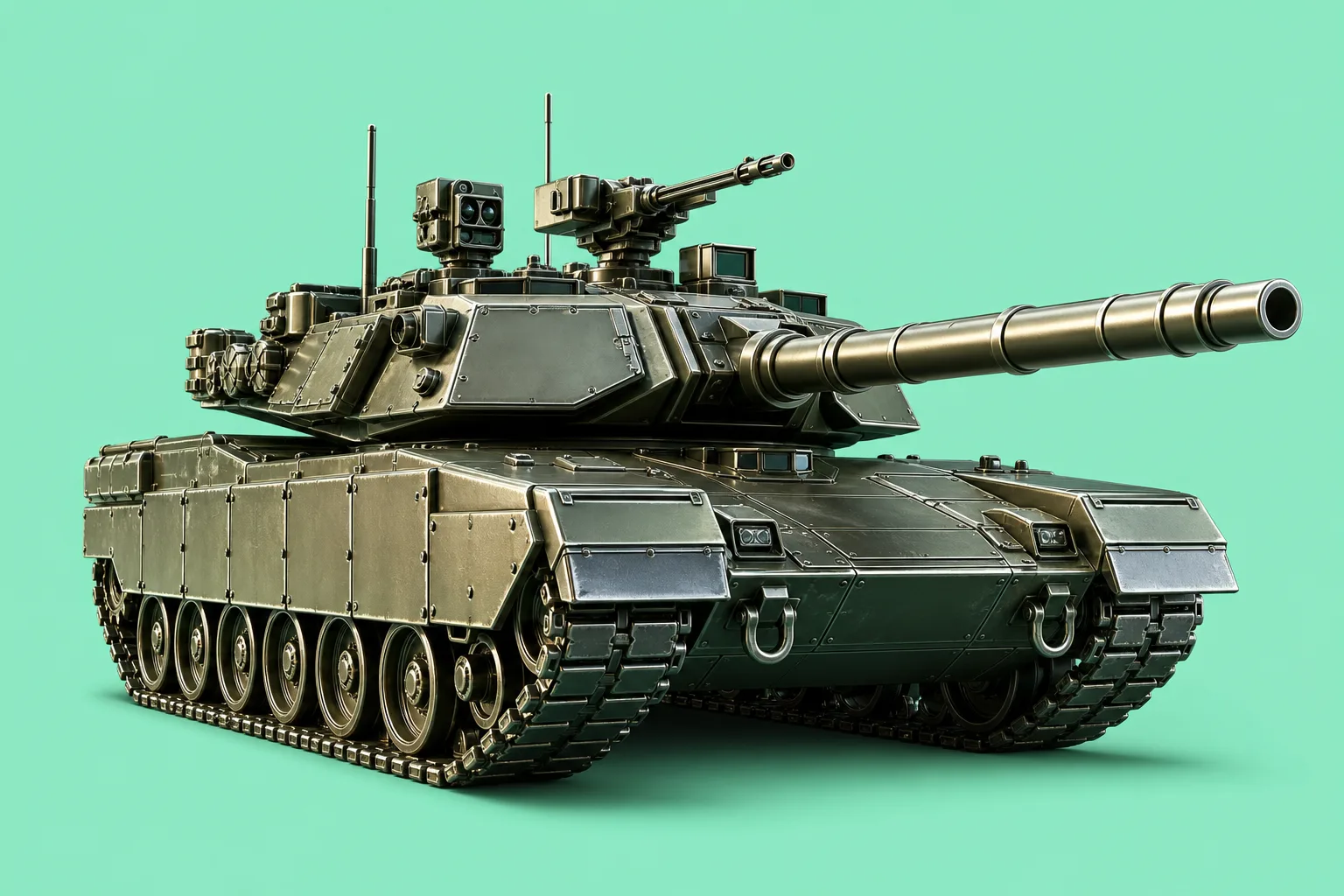
155 mm ammunition, armored vehicles and drone defenses are emerging as the core themes in Europe’s next phase of military modernization. The most important takeaway is not that tanks or artillery are obsolete, but that they now must operate inside a far more transparent and contested battlefield.
Military planners are increasingly focused on a 40 to 50 kilometer danger zone where drones, surveillance and electronic warfare make movement far riskier than in previous conflicts. That is pushing procurement toward a mix of conventional platforms, unmanned systems and digital battlefield tools rather than a wholesale replacement of legacy forces.
For defense investors, the message is straightforward: demand is broadening, not narrowing. Ammunition, artillery, armored vehicles, counter-UAV systems, sensors and electronic warfare all appear positioned to benefit as European governments rebuild readiness after years of underinvestment.
Key Facts
- The modern contested battlefield can extend roughly 40 to 50 kilometers, increasing the need for unmanned systems and counter-drone protection.
- Germany’s heavy land forces are still expected to rely on Leopard 2 tanks and Puma infantry fighting vehicles.
- Boxer wheeled vehicles are central to Germany’s developing medium-force structure because of their modular design and road mobility.
- Military planners still expect strong long-term demand for 155 mm ammunition despite the rapid expansion of drone warfare.
- Procurement bottlenecks in Germany reflect decades of post-1990 downsizing, even as defense funding becomes more available.
155 mm Ammunition and Battlefield Adaptation
The central lesson from the Ukraine war is that modern combat is becoming more integrated, not less dependent on conventional firepower. Drones have transformed reconnaissance, targeting and strike capabilities, but they have not eliminated the military value of tanks, artillery, infantry or protected mobility. Instead, they have exposed how vulnerable these forces become when they lack air defense, electronic warfare, counter-UAV coverage and strong battlefield awareness.
That matters for Europe because the investment cycle now underway spans far more than a single weapons category. Armies are being pushed to build layered combat systems in which armored vehicles, tube artillery, drones, missiles, digital command tools and electronic warfare operate together. This kind of combined-arms structure requires spending across multiple defense niches, helping explain why investors continue to watch large European defense names involved in land systems, munitions, electronics and aerospace.
Germany offers a particularly important case study. Its future force structure is expected to preserve light and heavy formations while building out a medium-force category around wheeled protected vehicles. That suggests procurement will not boil down to a simple choice between old and new technologies. Instead, established platforms are likely to be upgraded with active protection, onboard drones, sensors and electronic warfare systems, extending the relevance of incumbent manufacturers while creating opportunities for suppliers of subsystems and ammunition.
Modern warfare is not replacing conventional armies with drones; it is forcing armies to combine armor, artillery, ammunition and autonomous systems into a single survivable force.
Why drones have not replaced artillery
One of the clearest investment implications lies in the relationship between drones and tube artillery. Precision drones can locate and destroy individual targets at relatively low cost, but artillery still delivers sustained fire volume and remains usable across battlefield conditions where drones may be less effective, including poor weather and intense electronic disruption. That helps explain why 155 mm ammunition remains strategically important even as UAV production accelerates.
The issue is not only stockpile replenishment. European militaries also want surge capacity, meaning factories must be capable of sharply increasing output during a crisis. Even if some production lines later appear underutilized in peacetime, governments may still support them for resilience. For defense contractors, this shifts the discussion from short-term order spikes to the longer-term value of capacity, supply security and industrial readiness.
Implications for Investors
For investors, the most significant conclusion is that Europe’s defense upcycle is likely to be wider and longer-lasting than a narrow “drone boom” narrative suggests. Companies tied to artillery shells, armored vehicles, missile systems, radars, battlefield networking, electronic warfare and counter-UAV technology may all see demand support. The battlefield is becoming more complex, and procurement programs are increasingly designed around integration rather than one-off purchases.
There are also reasons to watch execution risk closely. Germany’s procurement process has been slowed by regulatory complexity, limited implementation capacity and a system built during three decades of shrinking force requirements. Even when budgets rise, industrial output and contracting timelines may prevent spending from translating immediately into revenue. Investors should therefore pay attention to backlog conversion, production expansion and delivery schedules, not just headline budget figures.
Another key watch-point is how European governments balance urgency with flexibility. Annual defense budgets can fluctuate for political or administrative reasons, while multi-year procurement plans often tell a more reliable story. In ammunition especially, spending may be constrained by what industry can physically produce in a given year. That means companies with scalable manufacturing, established land-systems positions and exposure to replenishment cycles could be better placed than firms relying only on experimental technologies.
Looking ahead, the strongest defense themes may come from platforms that can absorb new capabilities rather than from systems designed in isolation. Investors should monitor how Europe funds ammunition capacity, medium-force vehicle programs, electronic warfare and counter-drone layers as the region adapts to a battlefield where visibility is constant and survivability depends on integration.