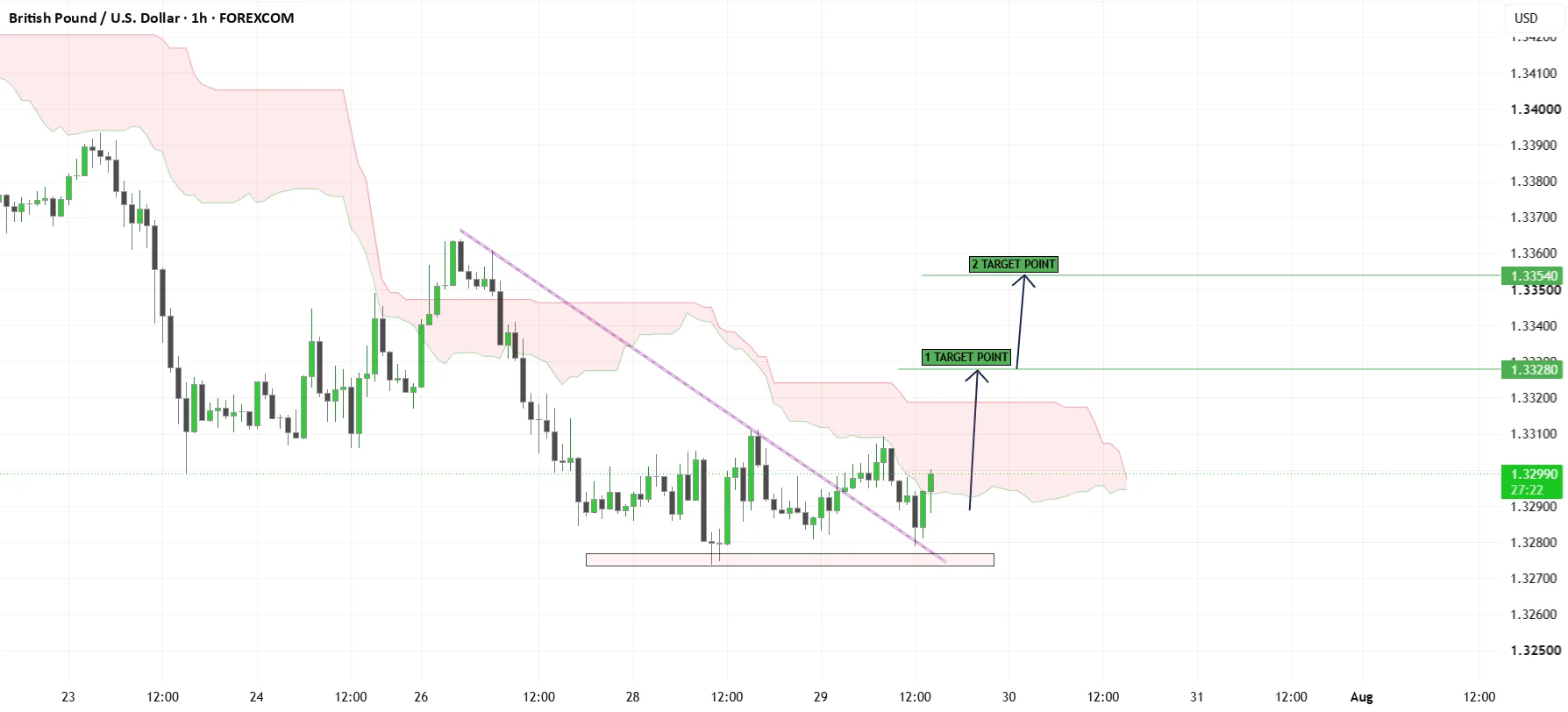
GBPUSD is holding a bullish bias as the pair attempts to extend a recovery through a breakout structure. The most important technical feature is a confirmed move above the Ichimoku cloud, which could reinforce upside momentum.
For market participants tracking sterling against the US dollar, the cloud area stands out as the main battleground. A clean break and hold above that zone would strengthen the recovery narrative, while failure there could keep the pair in a more hesitant range.
Market Snapshot
GBPUSD is a major forex pair, and the current technical picture points to a recovery phase that is trying to transition into a broader bullish structure. The setup centers on a breakout attempt, with price action pressing against an area that trend-following traders often treat as a dynamic resistance band.
In plain English, the prevailing bias is cautiously bullish as long as the pair continues to challenge overhead resistance rather than retreating sharply from it. The key question is whether GBPUSD can establish acceptance above the Ichimoku cloud and turn that area into support.
Key Levels
- Support: The lower edge of the recent recovery structure and the nearest pullback zone beneath the Ichimoku cloud.
- Resistance: The Ichimoku cloud region and the recent swing high directly above it.
These levels matter because they combine trend structure and market memory. The cloud often acts as a decision zone, while nearby swing highs and pullback lows help define whether the move is developing into a breakout or fading back into consolidation.
Bullish Scenario
The bullish path becomes more credible if GBPUSD records a confirmed breakout above the Ichimoku cloud and then holds that area on a retest. That type of price behavior would suggest buyers are not just pushing through resistance temporarily, but are building a stronger base for continuation.
If that trigger is met, the next realistic target zone would be the latest visible swing-high area above the cloud, followed by any prior congestion band that capped earlier advances. A sustained move through those levels would indicate that the recovery is broadening into a more established uptrend rather than remaining a short-term bounce.
Bearish Scenario
The bearish alternative comes into focus if GBPUSD fails to break the Ichimoku cloud decisively or breaks above it briefly and then slips back underneath. That would weaken the breakout thesis and suggest that upside momentum is not strong enough to absorb supply in the resistance zone.
In that case, the practical invalidation level for the bullish setup is a move back below the nearest recovery support area that has been supporting the recent advance. A drop through that zone could expose the pair to a retest of lower consolidation levels, with a realistic downside target in the prior reaction low region beneath the current structure.
What to Watch
Macro catalysts remain important for GBPUSD because the pair is highly sensitive to both UK and US data. Traders will be watching scheduled releases tied to inflation, labor markets, growth, and central bank expectations, as these can quickly shift interest rate pricing and alter short-term momentum.
Session timing also matters. GBPUSD often sees clearer directional moves during the London session and around the London-New York overlap, when liquidity deepens and institutional participation increases. If a breakout above the cloud happens during an active session with follow-through volume and strong candle closes, the signal may carry more weight than a quiet move during thinner conditions.
Correlated assets and sentiment indicators can offer useful context as well. The US Dollar Index, UK gilt and US Treasury yield trends, and broader risk sentiment across equities can all influence whether sterling gains traction. If the dollar softens broadly while risk appetite stabilizes, that would align with a more constructive GBPUSD backdrop.
For now, GBPUSD remains at an important technical decision point. Whether the pair can convert the Ichimoku cloud from resistance into support will likely shape the next phase of price action.