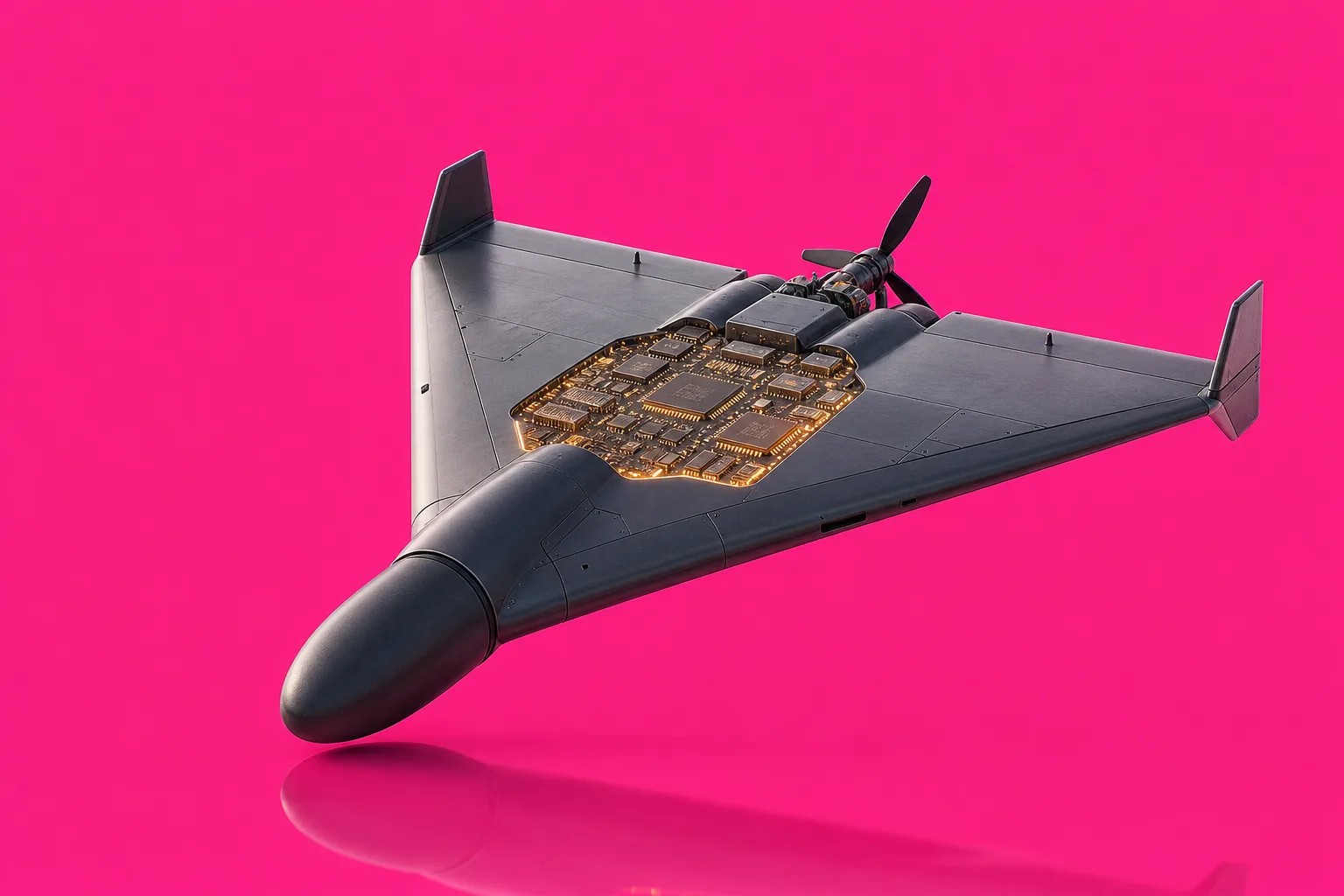
Geran-4 drone chips are drawing fresh scrutiny after investigators found that American-made parts accounted for roughly three-quarters of the electronic components identified in a recovered Russian attack drone. The review cataloged 105 parts and linked 80 of them to U.S. companies, a share of 76.19%.
The concentration was even sharper at the manufacturer level. Texas Instruments and National Semiconductor, which Texas Instruments acquired in 2011, were tied to 61 components, or 58.1% of the total parts list examined.
For investors, the findings matter beyond geopolitics. They highlight the persistent difficulty of policing global semiconductor distribution, the compliance risks facing chipmakers, and the growing role of traceability and export-control monitoring in valuing hardware supply chains.
Key Facts
- Investigators identified 105 electronic components on boards recovered from a Geran-4 drone, with 80 linked to U.S. companies.
- American companies accounted for 76.19% of the identified parts in the drone’s onboard computer.
- Texas Instruments and National Semiconductor were tied to 61 components, representing 58.1% of the total list.
- The reported production rate for the Geran-4 is 3,000 units per month, implying annual demand for more than 2 million components from those two suppliers alone.
- Named parts included TMS320F28335PGFA processors, VP230 CAN transceivers, MB3238I transmitters, PS767D301 voltage regulators, and REF3020 voltage references.
Geran-4 Drone Chips
The core finding is straightforward: a sanctions-constrained military program appears to remain deeply dependent on foreign semiconductors, especially U.S.-origin chips. The parts were identified after an engineering unit examined largely intact internal electronics recovered from Geran-4 wreckage, using markings and serial numbers to trace likely manufacturers.
That matters because the Geran-4 is not a marginal system. It is described as a jet-powered one-way attack drone designed for speed, longer reach, and a more difficult interception profile. If a platform with that role still relies heavily on widely distributed commercial and industrial semiconductors, it suggests export controls alone do not guarantee denial when components can move through layered distributors, intermediaries, and re-export channels.
The issue also reaches beyond one drone model. Semiconductor supply chains are global, multi-tiered, and often opaque after first sale. Parent-company classification further complicates analysis, as some brands now sit within larger international groups. Even so, the broad pattern is clear: high-performance military systems can still incorporate commercial off-the-shelf electronics from companies based in sanctioning countries.
Sanctions may restrict direct sales, but the Geran-4 findings suggest commercial chips can still reach prohibited end users through gaps in distribution oversight and component traceability.
How the Supply-Chain Gap May Be Operating
It remains unclear when the identified chips entered Russia or through which channels they moved. Several pathways are plausible: inventories accumulated before tighter sanctions, purchases routed through third-country intermediaries, procurement via shell entities, or recycling from broader commercial supply chains. In practice, these routes can overlap, making enforcement difficult even when manufacturers have formal compliance programs in place.
The concentration in mature analog, control, interface, and power-management components is also notable. These parts are often less visible than advanced AI accelerators or leading-edge processors, yet they are indispensable for flight control, power regulation, onboard communications, and measurement functions. That makes them strategically important despite being comparatively common in industrial and automotive applications.
Implications for Investors
For semiconductor investors, the immediate financial impact on large diversified chipmakers may be limited, but the compliance implications are significant. Companies linked to parts found in sanctioned end uses can face heightened regulatory scrutiny, tougher distributor audits, and pressure to improve know-your-customer processes. Even when a manufacturer did not knowingly sell to a prohibited buyer, the reputational and legal risks can still affect valuation multiples.
The findings may also strengthen the investment case for firms focused on supply-chain verification, secure component authentication, and export-compliance software. Governments and prime contractors are likely to spend more on tracing part movement, monitoring secondary distribution, and hardening procurement controls. That could benefit providers of industrial cybersecurity, logistics intelligence, serialization tools, and defense-oriented electronics testing.
At the same time, investors should watch for policy spillovers. A renewed focus on mature-node semiconductors and analog parts could produce broader licensing requirements or tighter rules on distributors operating in transshipment hubs. That would raise friction across parts of the electronics ecosystem, especially for companies with complex channel sales models or limited visibility into downstream resellers. Management commentary on channel controls, distributor discipline, and sanctions compliance may become a more important differentiator in earnings calls and risk disclosures.
The next phase to watch is regulatory response: whether authorities pursue tougher enforcement against intermediaries, expand reporting obligations, or push chipmakers to implement more rigorous end-use monitoring. For markets, the story is less about one drone teardown and more about how geopolitics is reshaping the economics of global semiconductor distribution.