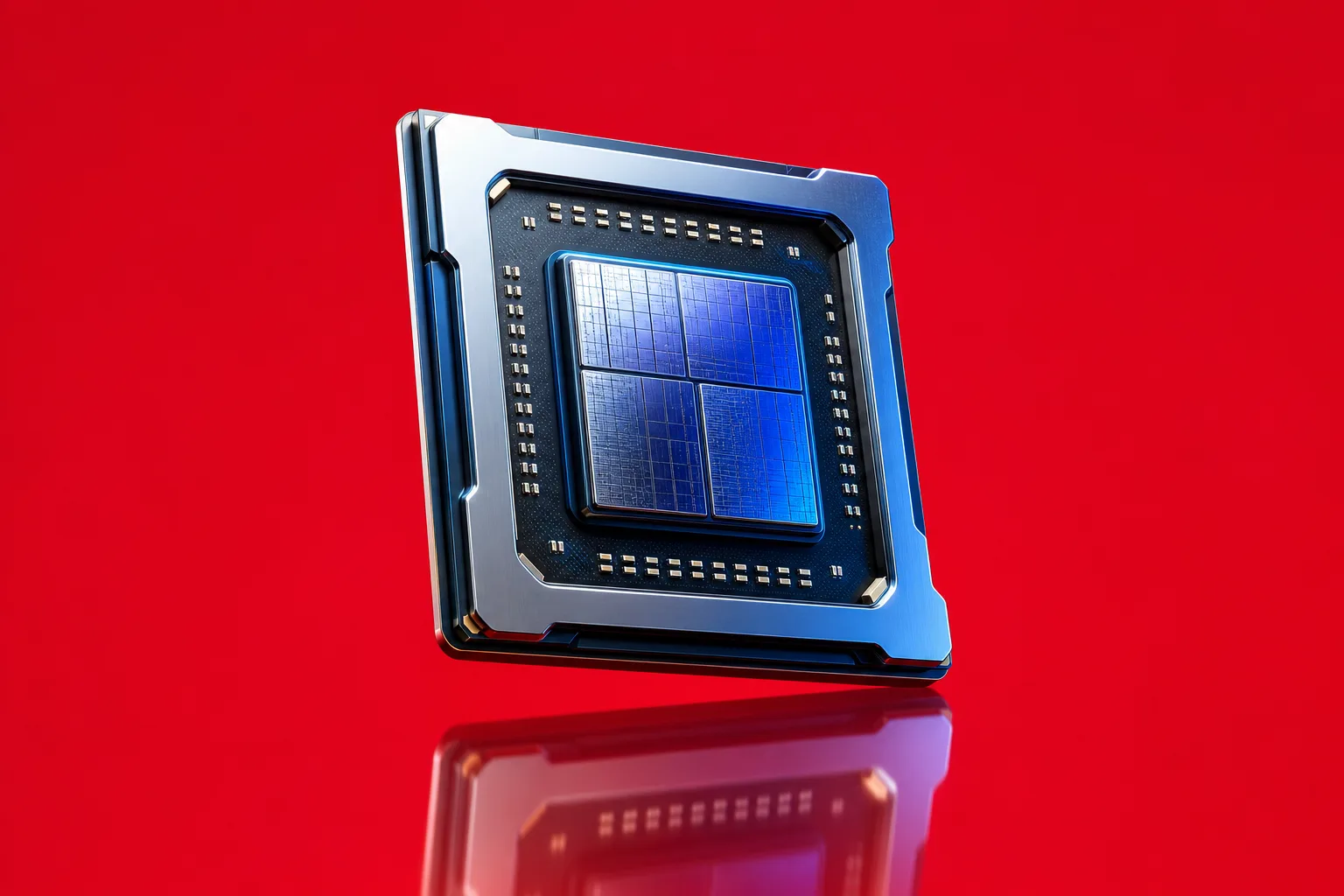
Intel stock surged 8.16% to $103.61 on September 8, breaking above the psychologically important $100 level as investors responded to a rare combination of pricing power, manufacturing progress and improving sentiment. The rally stood out even as broader U.S. equity indexes moved lower.
The move followed three catalysts packed into a short window: reports of an approximately 10% increase in PC processor prices effective October 5, an analyst upgrade with a $120 price target, and a disclosure that Intel Foundry has processed more than 1 million wafers using High NA EUV lithography.
For investors, the significance goes beyond a single trading session. The latest developments reinforce a broader shift in the Intel story, from market-share defense and margin pressure toward disciplined pricing, premium product mix and a more credible manufacturing roadmap.
Key Facts
- Intel shares rose $7.81, or 8.16%, to $103.61, with an intraday range of $96.04 to $103.24.
- The company’s market capitalization reached $547.72 billion after the stock gained 291.98% over the past 12 months.
- Intel is expected to raise PC CPU prices by about 10% on October 5, marking a third pricing action since late 2025.
- June-quarter revenue was $16.1 billion, up 25% year over year, while non-GAAP gross margin reached 41.8%.
- Intel Foundry said it has processed more than 1 million wafers on High NA EUV systems, a key marker for advanced-node execution.
Intel stock
The immediate trigger for the Intel stock rally was a set of developments that addressed the market’s biggest questions around the company: whether it can charge more for its chips, whether its factories are executing, and whether its foundry ambitions are becoming more than a capital-intensive promise.
The reported October 5 PC processor price increase matters because it points directly to gross margin expansion. Intel has already pushed through multiple rounds of price increases since the end of 2025, including selective hikes on consumer chips and much steeper adjustments on certain Xeon server processors. In the June quarter, higher average selling prices were already visible in results, helping non-GAAP gross margin beat guidance by 280 basis points.
That pricing trend is paired with a strategic review of lower-margin products under Chief Executive Lip-Bu Tan. If Intel exits or trims weaker product lines, it would signal a more aggressive willingness to trade some unit volume for profitability. In a constrained supply environment, that shift can improve returns on manufacturing capacity by steering wafers toward higher-value server and premium client products. The main beneficiaries would be shareholders looking for sustained margin recovery, while the main risk is that competitors capture any abandoned low-end market share.
Intel’s latest rally suggests investors are rewarding not just growth, but evidence that the company can turn demand strength into lasting margin improvement.
Why the foundry milestone matters
The disclosure that Intel Foundry has processed more than 1 million wafers using High NA EUV technology may be even more important over the long term than the latest price increase. High NA EUV has been watched closely across the semiconductor industry because of its potential to improve patterning at leading-edge nodes, but also because of persistent concerns around throughput, uptime and cost.
Reaching the 1 million-wafer mark suggests Intel is moving beyond experimentation into production-scale use. That strengthens the company’s argument that its 18A and future 14A process technologies can support not only internal products but also external foundry customers. The foundry segment remains under pressure, with $5.8 billion in quarterly revenue but only $293 million from external customers and a $2.1 billion operating loss, so execution milestones carry outsized importance.
Implications for Investors
For investors, the biggest near-term takeaway is that Intel’s earnings profile may be improving faster than its historical reputation implies. June-quarter revenue reached $16.1 billion, non-GAAP earnings per share were $0.42, and September-quarter guidance pointed to revenue of $15.8 billion to $16.8 billion with 42% gross margin and $0.38 in non-GAAP EPS. If pricing actions continue to stick, margin expansion could become a more durable support for valuation.
The second issue is whether the data center business can remain the company’s growth engine. Data center and AI revenue climbed 59% year over year to $6.3 billion in the June quarter, far outpacing client computing. Management has indicated that server demand remains strong and that customer orders continue to exceed available supply. If the market for inference and enterprise AI infrastructure continues to favor higher CPU content alongside accelerators, Intel’s server franchise could enjoy a longer growth runway than many investors had expected.
The main caution is valuation and execution risk. Intel has already appreciated nearly 292% in 12 months, and its foundry strategy still requires substantial capital while external customer traction remains limited. The company raised about $20 billion through an August share offering priced at $95, adding roughly 210.5 million shares. Clearing that level is technically constructive because those new holders are now in profit, but it also underscores the scale of funding still needed to build out advanced manufacturing capacity.
Looking ahead, investors will be watching whether the October 5 pricing action holds, whether gross margins continue to rise, and whether Intel can convert manufacturing milestones into meaningful foundry wins. The next phase of the Intel story will depend less on promises and more on proof that better pricing, stronger server demand and advanced-node execution can translate into sustainable returns.