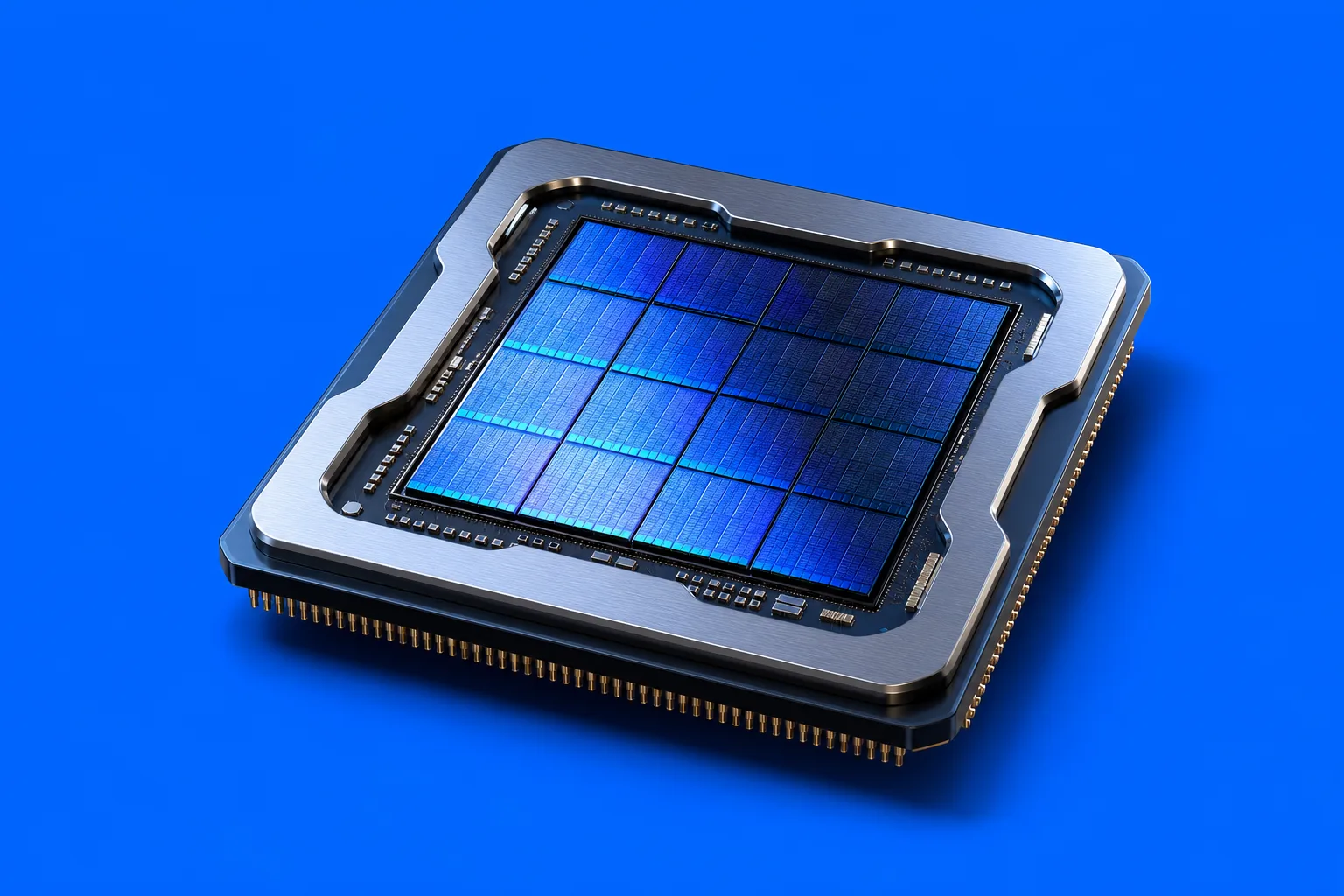
Intel stock lost ground in a broad semiconductor retreat, falling about 3% to roughly $109 even though the company released no new material update of its own. The move underscored how exposed high-flying chip names remain to sector sentiment after a powerful run earlier in 2026.
The decline followed a sharp reset across AI-linked semiconductor stocks after weaker-than-expected AI chip guidance from a major peer unsettled investors. For Intel, the selloff arrived after one of the market’s most dramatic turnarounds: a climb from about $36.90 at the start of 2026 to a record $132.45 on May 11.
That backdrop matters because Intel is no longer being valued simply as a legacy PC and server chipmaker. Investors have increasingly treated the company as a strategic U.S. foundry and AI infrastructure play, supported by domestic manufacturing incentives but still facing major execution questions.
Key Facts
- Intel shares traded near $109, down roughly 3% in the session.
- INTC began 2026 around $36.90 and reached a record high of $132.45 on May 11.
- The stock remained up about 205% year to date and roughly 456% over the prior 12 months.
- After peaking in May, Intel pulled back into the $107 to $110 range during its recent consolidation.
- Consensus analyst price targets remain far below the current share price, with a median near $48.
Intel stock and the foundry turnaround story
The immediate trigger for the move was not Intel-specific. A disappointing tone around AI chip demand from a sector peer sparked a wider semiconductor selloff, and Intel was caught in that downdraft. That kind of reaction is common when investors decide to reduce exposure to richly valued, momentum-driven chip stocks all at once.
But the larger story is Intel’s transformation in market perception. Over the past 18 months, the company has shifted from being seen as a mature incumbent under pressure to being viewed as a potential national champion in advanced semiconductor manufacturing. Federal support tied to U.S. fab expansion in Ohio and Arizona has strengthened that narrative by reducing some of the financial strain associated with building leading-edge production capacity.
Why this matters is straightforward: Intel’s valuation now depends less on its historical CPU business and more on whether its foundry strategy can become commercially viable at scale. If Intel can attract meaningful external customers for advanced nodes such as 18A and eventually 14A, investors may argue the rerating is justified. If customer adoption lags, the stock’s sharp rise becomes much harder to defend, especially with GAAP profitability still under pressure.
Intel’s latest pullback shows that a government-backed foundry narrative can lift a stock quickly, but only proven economics can sustain that valuation.
Why the market remains divided
The bullish argument rests on several real developments. Intel has regained strategic relevance in domestic chip manufacturing, improved operational momentum in data center and AI products, and benefited from policy support designed to expand U.S. semiconductor capacity. The company is also trying to rebuild confidence under relatively new leadership after years of execution setbacks.
The bearish case is just as clear. Intel Foundry has not yet demonstrated broad external customer traction, the company is still reporting GAAP losses, and competition is intensifying on multiple fronts. In CPUs, AMD remains a strong rival, while Nvidia’s reported plans for a major CPU push add another threat to Intel’s traditional stronghold. In foundry services, Intel is trying to catch entrenched leaders that already enjoy scale, trust, and proven manufacturing depth.
Implications for Investors
For investors, Intel now sits in a difficult middle ground between turnaround opportunity and valuation risk. The stock’s rise from about $37 to more than $130 at its peak reflected improving fundamentals, but also a major expansion in narrative premium. With shares still far above the analyst consensus range, each earnings report and each foundry milestone carries outsized importance.
One key watch-point is whether Intel can convert strategic ambition into signed external foundry business. Government grants can help fund capacity, but they do not guarantee demand. The next phase of the bull case likely requires customer wins, clearer margin progress, and evidence that Intel’s advanced manufacturing roadmap can compete on both performance and reliability.
Investors should also watch technical and sentiment levels closely. The recent $105 to $107 area has emerged as an important support zone after the post-record pullback. If the stock stabilizes and reclaims the $115 to $120 range, momentum traders may see the uptrend as intact. If broader chip weakness deepens and Intel breaks lower, the gap between market price and more conservative fundamental targets could become a source of renewed volatility.
Longer term, Intel remains one of the semiconductor sector’s most consequential execution stories. A successful foundry build-out could reshape the company’s earnings profile and strategic value over the rest of the decade. A failure to win outside customers at scale would leave investors confronting a stock that ran far ahead of currently proven financial results.
The next catalysts are likely to come from earnings, foundry customer updates, and any fresh developments tied to U.S. semiconductor incentives. Until then, Intel stock may remain highly sensitive to swings in chip-sector sentiment as investors weigh a compelling strategic story against an still-unfinished bottom-line recovery.