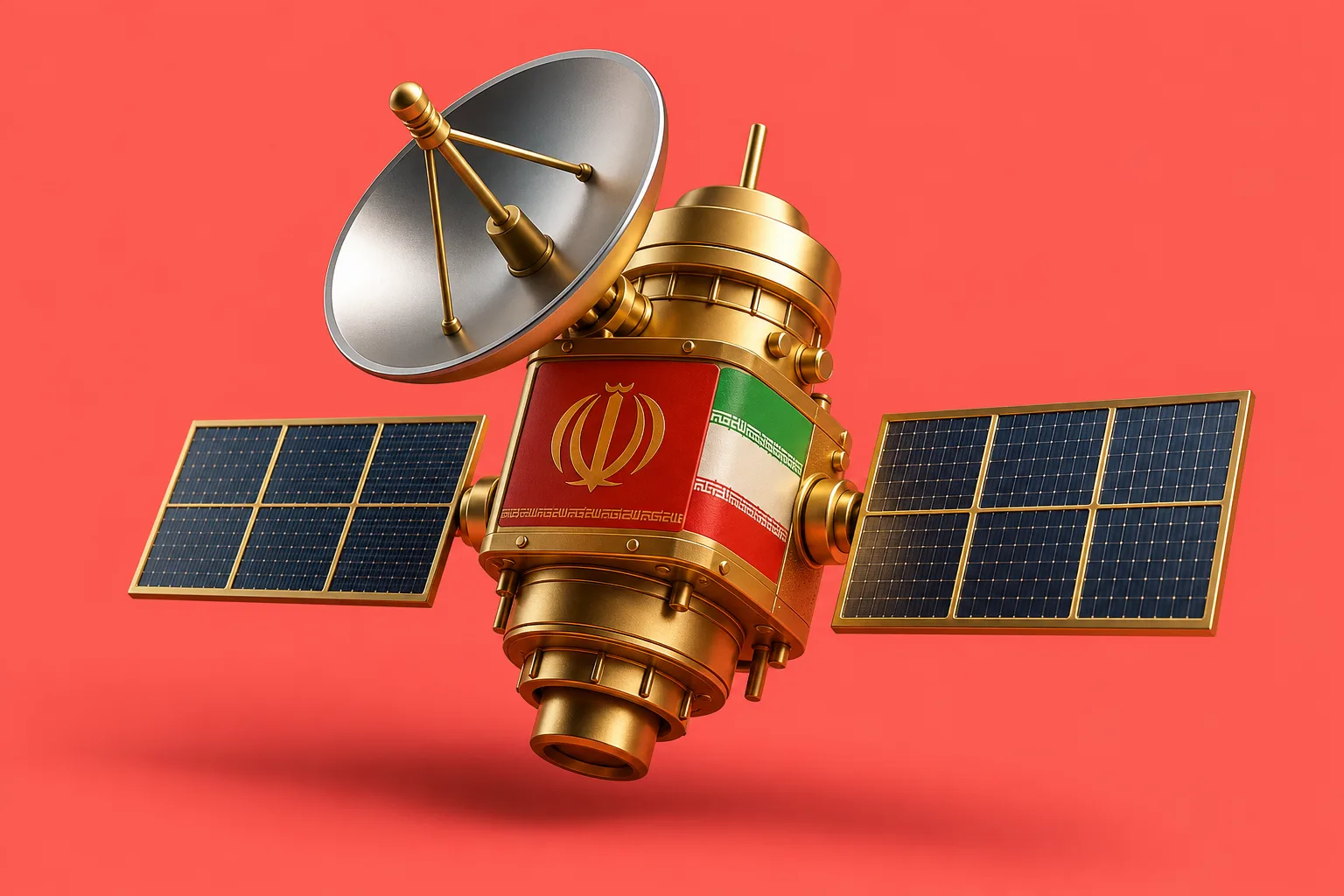
Iran’s reported adoption of China’s BeiDou satellite navigation system has emerged as one of the most consequential military-technology shifts in the Gulf since the June 2025 conflict. The core issue is simple: navigation resilience can determine whether a missile misses by hundreds of meters or lands within roughly 5 meters of its target.
The claim gaining traction in security circles is that Iranian missiles and drones struggled under GPS jamming and spoofing during the 12-day war in June 2025, then showed materially better precision by early 2026 after integrating BeiDou-based guidance. If sustained, that would raise the cost of missile defense, increase pressure on Gulf infrastructure and complicate U.S. regional force posture.
For investors, the significance extends beyond defense. More accurate long-range strike capability affects energy logistics, insurance pricing, sovereign risk and procurement flows across the Gulf. It also reinforces the commercial and geopolitical importance of non-U.S. space infrastructure.
Key Facts
- The June 2025 conflict lasted 12 days and exposed vulnerabilities in Iranian systems operating under GPS jamming and spoofing.
- BeiDou-3 was completed around 2020, turning China’s satellite navigation network into a global system with dozens of satellites.
- Iran is described as having integrated BeiDou into parts of its missile and drone arsenal by late 2025 or early 2026.
- Reported circular error probable for BeiDou-supported strike capability in key regions is under 5 meters.
- The strategic roots of China’s push for independent navigation trace back to the 1993 Yinhe incident involving a Chinese cargo ship bound for Iran.
Iran BeiDou Satellite Navigation
The main strategic story is not merely that Iran may have changed guidance inputs. It is that satellite navigation is now a contested layer of warfare, and dependence on a rival’s infrastructure can become a critical weakness. During the June 2025 confrontation, electronic warfare reportedly disrupted Iranian weapons that relied on systems vulnerable to Western jamming and spoofing. That limited strike effectiveness against sophisticated air defenses.
By early 2026, the picture appeared to change. Security assessments increasingly pointed to improved resistance to interference, better terminal accuracy and enhanced command-and-control flexibility. BeiDou’s architecture is viewed as offering anti-interference features, frequency resilience and secure messaging functions that may permit mid-course updates. For a missile or drone campaign, those features can materially improve survivability and targeting confidence.
This matters because the affected parties extend far beyond Iran and the United States. Gulf states hosting critical oil, gas, desalination, shipping and military assets are directly exposed. If precision-guided systems become harder to suppress electronically, the credibility of regional missile defense umbrellas comes under scrutiny. That does not make defensive systems obsolete, but it can force a more expensive and layered approach to interception, hardening and redundancy.
Iran’s reported shift to BeiDou suggests that control of satellite navigation is no longer a background technical issue, but a front-line determinant of deterrence, defense spending and regional risk pricing.
Why the 1993 Yinhe episode still matters
The historical context helps explain why this issue reaches beyond a single conflict. In 1993, the Chinese cargo ship Yinhe was stranded after allegations tied to a shipment bound for Iran. The episode became an enduring lesson for Beijing about the risks of relying on foreign-controlled navigation infrastructure. Whether viewed through a military or commercial lens, the message was the same: strategic autonomy in positioning, navigation and timing is a national security asset.
That logic drove the phased development of BeiDou. Early regional capability evolved into broader coverage through BDS-2, and then into a global network with BDS-3 around 2020. The result was not just another satellite constellation, but a competing standard with geopolitical utility across Asia, the Middle East, Africa and other parts of the Global South.
Implications for Investors
For investors, the first implication is a reassessment of geopolitical risk in the Gulf. If Iranian strike systems have indeed become more accurate and more resistant to jamming, the risk premium on energy infrastructure, shipping lanes and strategic industrial sites may increase. That can affect crude benchmarks, LNG supply assumptions, maritime insurance costs and the valuation of regionally exposed assets.
The second implication is for defense and aerospace. A more contested navigation environment supports long-term spending on missile defense interceptors, electronic warfare, space resilience, hardened communications and multi-layer sensing networks. Companies tied to air defense, satellite services, anti-jam receivers, inertial navigation and battlefield networking could benefit if Gulf states accelerate procurement and modernization programs.
A third consideration is the strategic value of alternative technology ecosystems. BeiDou’s rising relevance underscores that space infrastructure is becoming a commercial battleground as well as a military one. Investors should watch countries and companies building around non-U.S. standards in navigation, telecom, cloud and dual-use electronics. That trend could reshape supply chains, export controls and cross-border technology partnerships.
There are also important caveats. Much of the operational detail around Iran’s use of BeiDou remains difficult to verify independently, and wartime performance can be uneven. Precision gains may reflect more than one factor, including improved drones, better mission planning, stronger inertial backups or changing tactics. Investors should avoid treating any single technology as a complete explanation for battlefield outcomes.
The most practical watch-points are regional defense budgets, evidence of further Gulf infrastructure hardening, shipping and energy insurance trends, and any new sanctions or export-control measures involving Chinese space-linked technology. Statements from military planners and procurement agencies will matter more than rhetoric alone, particularly if they point to increased spending on anti-jam navigation, integrated air defense and rapid replenishment of interceptor stockpiles.
If the reported Iran-BeiDou shift proves durable, the Gulf security environment may enter a more expensive and less predictable phase. Markets will be watching not only missile exchanges, but also the space and electronics systems that increasingly shape the balance below the headline level of conflict.