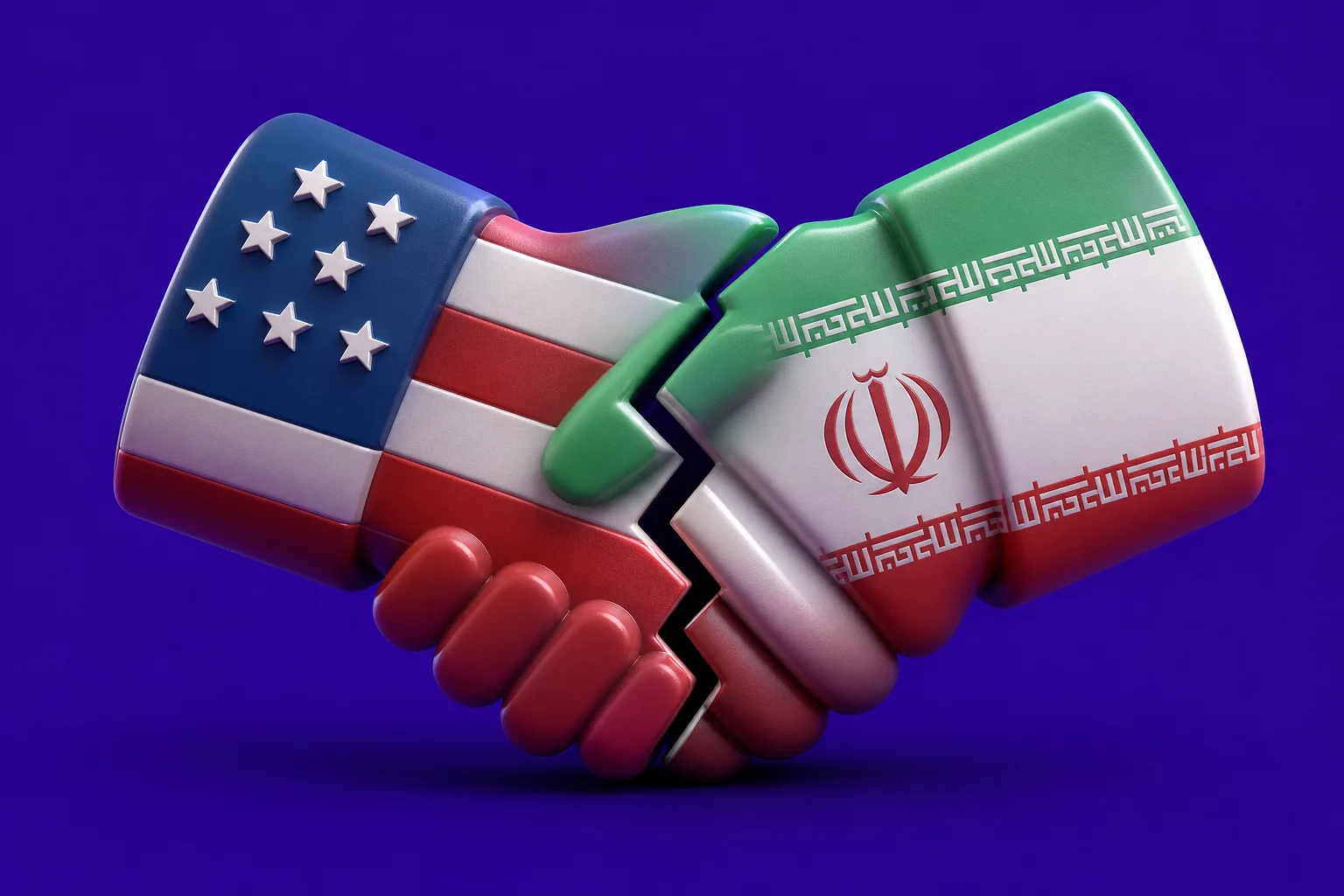
Iran said there are currently no negotiations with the United States, clarifying that any communication is limited to messages passed through intermediaries. The statement matters well beyond diplomacy: it arrives as markets look for signs of stability in the Strait of Hormuz, one of the world’s most important energy chokepoints.
At the same time, Tehran described its discussions with Oman as constructive and positive, with a temporary transit route under review and a transit map already agreed. That combination of guarded operational progress and stalled US-Iran diplomacy keeps geopolitical risk elevated for crude oil, shipping insurers and investors exposed to Middle East supply chains.
The key takeaway for markets is straightforward. A narrower maritime arrangement may improve traffic management in the near term, but it does not amount to a broader political breakthrough, nor does it signal momentum toward renewed nuclear or uranium talks.
Key Facts
- Iran said there are no negotiations currently taking place with the United States, with contacts limited to messages via intermediaries.
- Tehran said its active negotiations are with Oman and described those talks as constructive and positive.
- Iran said a temporary route related to Strait of Hormuz transit is being discussed, with the transit map agreed and technical points still under review.
- Officials said Iran is not seeking to impose fees on ships transiting through the Strait of Hormuz for now.
- Iran warned the Strait of Hormuz would not be a safe passage if the United States continues what Tehran called an aggressive policy and naval blockade.
Iran-US Talks and Strait of Hormuz
The immediate significance of Iran’s remarks lies in the gap between market hopes and diplomatic reality. Investors had been watching for any signal that maritime arrangements involving Oman could mark the start of a wider de-escalation path. Instead, Tehran drew a clear line: operational discussions over shipping routes are moving ahead on a limited basis, but there is no active negotiation with Washington.
That distinction matters because the Strait of Hormuz is central to global energy trade. A large share of the world’s seaborne crude and petroleum products passes through the narrow waterway, making even temporary disruptions highly market-sensitive. If traffic rules, routing protocols or monitoring mechanisms change, the effects can ripple through freight rates, tanker availability, insurance premiums and crude benchmarks within hours.
Iran’s comments on fees add another layer. By saying it is not seeking to charge vessels for transit at this stage, Tehran appears to be trying to avoid an immediate commercial shock. Still, it also left open the possibility of future charges if monitoring or navigation services are implemented. For shipowners and commodity traders, that means the cost structure around passage through the strait could become a fresh source of uncertainty if the security environment worsens.
Limited progress on a temporary shipping route is not the same as a diplomatic breakthrough, and markets may be overestimating what this development changes.
Why the Oman Channel Matters
Oman has long played a practical role as a regional intermediary, especially when formal direct engagement is politically difficult. In this case, the talks appear focused on mechanics rather than grand strategy: a temporary route, a transit map and technical details needed to manage shipping under strained security conditions.
That makes the Oman channel important but also inherently narrow. It may help reduce immediate navigational friction and provide a framework for vessel movement, yet it does not resolve the larger dispute over sanctions, military posture or nuclear policy. Investors should therefore separate shipping administration from geopolitical settlement; the first can advance without the second.
Implications for Investors
For energy investors, the message is that supply risk remains alive even if worst-case fears ease temporarily. Oil prices often react not only to actual outages but to the probability of disruption. A temporary transit arrangement could limit near-term panic, but the absence of US-Iran negotiations means the underlying risk premium has not disappeared. That is especially relevant for crude-sensitive equities, refiners, airlines and chemicals producers.
Shipping and insurance markets also warrant close attention. Tanker rates can move sharply when vessel operators reassess route security, and war-risk insurance can become more expensive if rhetoric hardens or naval tensions increase. Investors in listed shipping companies, marine insurers and logistics providers should watch whether the temporary route produces measurable stabilization in traffic patterns or merely postpones another period of volatility.
Currency and sovereign risk may also come into focus. Gulf-linked assets, regional equity markets and oil-importing economies can all feel the effects of persistent uncertainty in Hormuz. For broader portfolios, the situation is a reminder that geopolitical events can quickly influence inflation expectations, central bank assumptions and cross-asset sentiment. Any sign that technical talks with Oman are breaking down, or that US-Iran messaging is deteriorating further, could feed back into global risk pricing.
The next marker for markets will be whether Iran and Oman finalize the technical points around the temporary route and whether vessel transit normalizes without new security incidents. Until there is evidence of direct diplomatic progress beyond intermediaries, investors are likely to treat any improvement in the Strait of Hormuz as tactical rather than transformative.