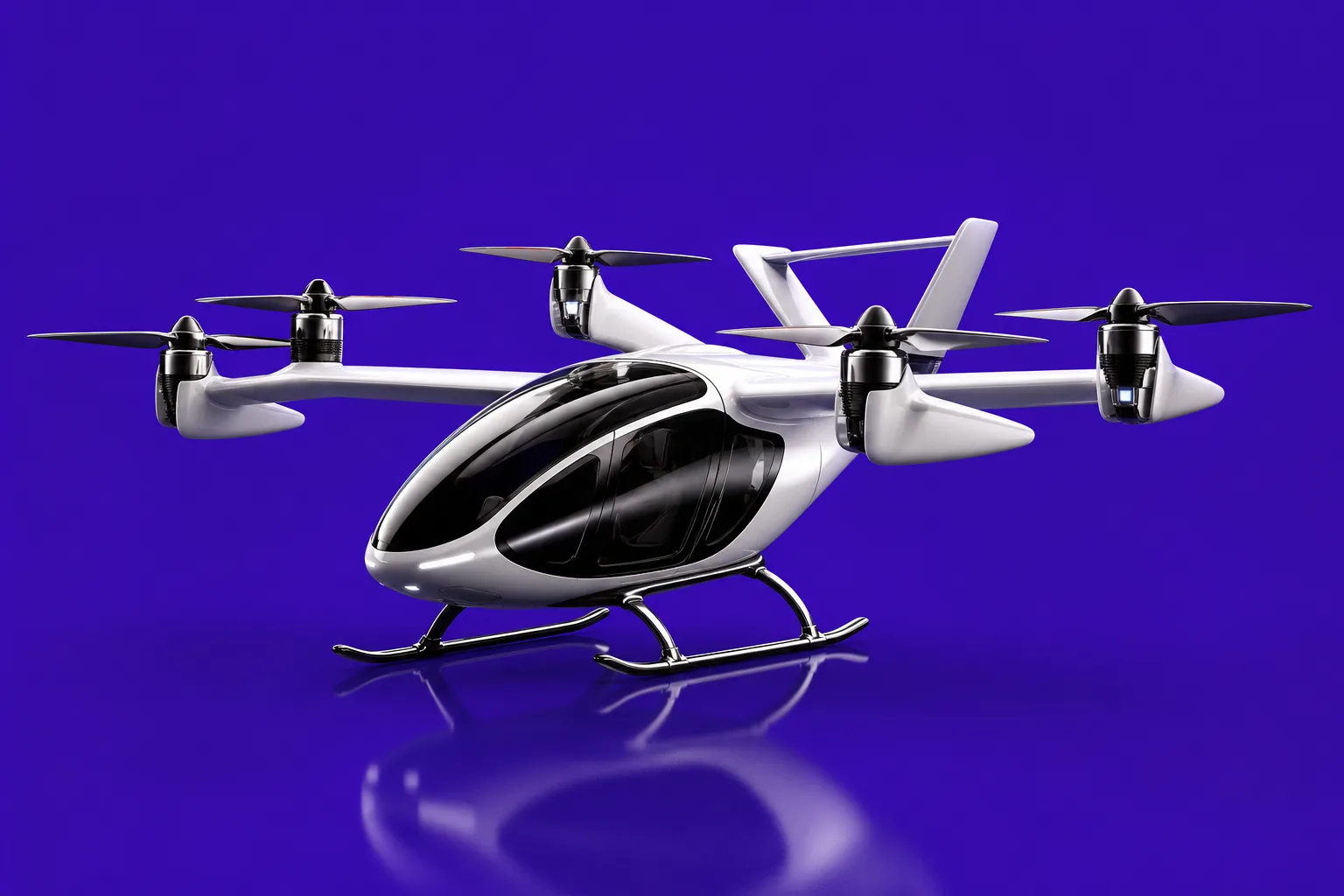
Joby Aviation has completed a 3,199-mile autonomous flight across the United States, marking a notable milestone for autonomous aviation and remote aircraft operations. The aircraft crossed the country with no human control inputs, operating with only an onboard safety pilot while being supervised remotely.
The eastbound leg ended in North Carolina near Kitty Hawk, linking one of aviation’s newest technologies to the site of the first powered flight in 1903. For investors, the achievement adds a concrete operational proof point as companies race to commercialize advanced air mobility and autonomous flight systems.
The demonstration matters because autonomy is increasingly viewed as a long-term lever for lowering operating costs, expanding access to remote routes, and supporting military and logistics use cases. At the same time, certification, liability, and public acceptance remain major constraints on near-term revenue potential.
Key Facts
- Joby Aviation’s autonomous aircraft completed a 3,199-mile cross-country flight with no human control inputs.
- The converted Cessna Caravan was remotely supervised from Santa Cruz, California, and Shaw Air Force Base in South Carolina, as far as 2,323 miles away.
- The monthlong eastbound tour included stops in Concord, Phoenix, Fort Worth, Shaw Air Force Base, and the Outer Banks of North Carolina.
- Joby said the aircraft operated in dense airspace, including Phoenix Deer Valley, one of the busiest general aviation airports in the United States.
- Founded in 2009, the company says it has completed more than 400 flights and 800 automated flight hours in controlled and uncontrolled airspace.
Autonomous Flight Across the U.S.
The flight used a converted Cessna Caravan equipped with Joby’s autonomy technology. The aircraft handled takeoff, navigation, landing, and taxiing while under remote supervision rather than direct pilot control. An onboard safety pilot was present, but the company said no human control inputs were made during the trip.
Operationally, that is significant because it demonstrates more than cruise automation. The aircraft showed the ability to function through multiple phases of flight and to adjust around severe weather in real time. Those capabilities are essential if autonomous systems are to move from test programs into repeatable commercial missions such as cargo delivery, emergency response, and selective regional transport.
The route also appears designed to demonstrate real-world relevance rather than a closed-course achievement. By flying through varied weather and busy aviation environments, Joby is building an evidence base for regulators, defense customers, and commercial partners. That matters because autonomous aviation will be judged less by isolated engineering success and more by reliability in complex airspace.
Joby’s 3,199-mile flight is less a publicity event than a validation exercise: autonomous aviation is proving it can operate at scale, but certification and trust will decide how quickly that capability becomes a business.
Why certification remains the critical bottleneck
Even with a successful cross-country flight, investor attention should remain on certification milestones. Joby has highlighted progress toward Type Inspection Authorization, or TIA, flight testing, an important phase in which regulators review test plans, aircraft systems, and operational procedures against safety standards. Advancing through that process is often more important to long-term valuation than a single headline-grabbing demonstration.
Industry observers have also raised concerns about how autonomy changes accountability. Removing cockpit decision-making shifts liability toward software, systems integration, and remote supervision. That has implications for insurance costs, legal exposure, and operating approvals, especially for passenger service. In practical terms, fully pilotless commercial passenger aviation is likely to arrive later than autonomous cargo or defense applications.
Implications for Investors
For investors following Joby Aviation and the broader advanced air mobility sector, the flight offers a measurable technology milestone in a market where many claims remain forward-looking. It suggests the company is progressing not only in electric aircraft development but also in autonomy, an adjacent capability that could widen its addressable market beyond passenger air taxis. Potential future applications include cargo, military logistics, medical delivery, and disaster-response missions.
That said, the commercial payoff is unlikely to be immediate. The key watch points are regulatory approvals, certification timelines, software validation, and evidence that autonomous operations can be insured and integrated into existing air traffic systems at acceptable cost. If the technology advances faster than policy and public acceptance, revenue conversion may lag technical progress.
There is also a strategic angle. Autonomous systems can create optionality for companies that already have relationships with defense agencies or infrastructure partners. Joby has said its aircraft has participated in U.S. military exercises, which may support non-passenger use cases before broader commercial deployment. Investors should monitor whether future announcements include government contracts, expanded test authorizations, or additional operating corridors, as those would signal movement from demonstration toward monetization.
Joby’s westbound return route, including planned stops in Raleigh, Washington, Louisville, Wichita, Oklahoma City, Salt Lake City, and Portland, will offer another test of endurance and operational consistency. The next phase for the company is no longer proving that autonomous flight is possible, but showing that it can become certifiable, scalable, and economically viable.