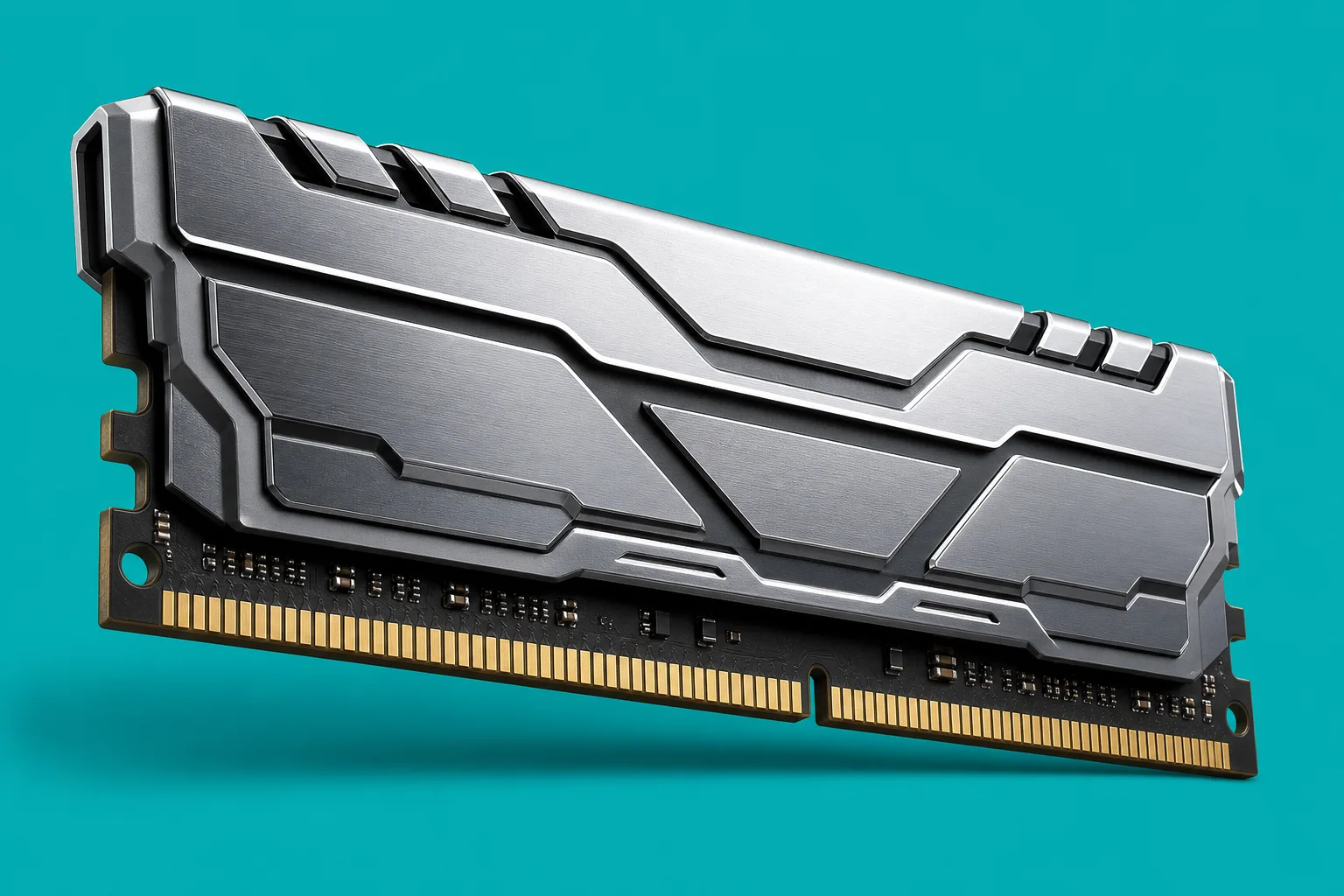
KMEM ETF, the only U.S.-listed fund dedicated solely to the memory chip industry, is trying to gain traction at a moment when DRAM and high-bandwidth memory have become central to the AI buildout. The opportunity is clear, but so is the fragility: the fund had a market value of just $25.52 million in the most recently cited trading data.
That small size comes with outsized volatility. KMEM traded at $16.26 on August 7, 2026, after swinging between $14.55 and $27.25 within a matter of months, underscoring how concentrated thematic products can amplify both upside and downside.
The backdrop is supportive. Memory-related stocks helped lead the Nasdaq Composite higher, with the index rising 222.40 points to 26,202.59, while major memory names such as Micron and other AI-linked chip stocks advanced as investors focused on tight supply, rising contract prices, and heavy data-center spending.
Key Facts
- KMEM held 85.3% of its portfolio in SK hynix, Micron, and Samsung as of August 14, 2026.
- The ETF traded at $16.26 on August 7, 2026, with an intraday range of $15.82 to $17.00 and a market value of $25.52 million.
- The fund’s 52-week range spans $14.55 to $27.25, a drawdown of roughly 46.6% from peak to trough.
- Micron represented 25.36% of the portfolio, while SK hynix was the largest position at 36.90% and Samsung stood at 23.00%.
- Conventional DRAM contract prices are projected to rise 13% to 18% in the third quarter of 2026, while NAND prices are projected to increase 10% to 15%.
KMEM ETF
KMEM was launched in May 2026 and is positioned as a targeted vehicle for investors who want direct exposure to the memory segment rather than broad semiconductor indexes. That distinction matters. In diversified chip funds, memory often accounts for only a modest share of total weight. KMEM, by contrast, is designed to isolate the part of the semiconductor chain that has become a bottleneck in AI systems.
The fund’s concentration is not accidental. The global memory market, particularly in DRAM and high-bandwidth memory, is dominated by a small group of manufacturers with the scale to produce at volume. That oligopolistic structure means a pure-play memory ETF will almost inevitably be concentrated. In KMEM’s case, the top three holdings account for most of the portfolio’s economic exposure, making performance heavily dependent on a narrow set of corporate and industry outcomes.
That narrow exposure cuts both ways for investors. If pricing remains firm and AI server demand continues to absorb advanced memory output, a concentrated fund can capture more upside than broader technology products. If supply expands too fast, export controls tighten, or one of the major holdings disappoints, the same structure can magnify losses. The fund’s brief trading history already reflects that dynamic.
KMEM offers one of the market’s purest AI memory trades, but its concentration means the thesis must be right and the timing must be disciplined.
Why the top-three exposure matters
SK hynix is the fund’s defining position. At 36.90% of assets in the latest disclosed allocation, it represents the strongest direct bet on high-bandwidth memory, the premium product used alongside advanced AI accelerators. That gives KMEM leverage to one of the most important capacity constraints in modern data-center infrastructure.
Micron provides the U.S.-listed anchor and arguably the clearest window into the cycle for domestic investors. The company recently posted revenue of $41.46 billion, up 345.7% year over year, while non-GAAP earnings per share of $25.11 exceeded expectations of $20.28. Samsung adds global manufacturing scale across both DRAM and NAND, though its conglomerate structure introduces exposure to business lines beyond memory.
Investors also need to understand that KMEM is not a plain-vanilla stock basket. The fund uses derivatives, including exchange-traded options and related instruments, to build exposure. That helps explain why direct equity holdings can appear smaller than total economic exposure. It also introduces additional complexity around liquidity, valuation, taxation, and risk management.
Implications for Investors
For portfolios, KMEM sits squarely in the high-conviction thematic category rather than the core allocation bucket. Its appeal is straightforward: investors who believe the AI infrastructure cycle will sustain elevated demand for HBM, DRAM, and NAND can use the ETF as a direct expression of that view. The projected third-quarter 2026 price increases of 13% to 18% for DRAM and 10% to 15% for NAND support the argument that pricing power remains intact.
The risks, however, are unusually layered for a fund this small. The $25.52 million asset base leaves it below the rough viability threshold many issuers prefer for long-term scale. Thin assets can translate into wider bid-ask spreads, greater sensitivity to creations and redemptions, and elevated closure risk if investor demand does not broaden. Flow data cited since inception suggests most of the capital came in a concentrated burst, while the gap between cumulative inflows and later market value implies meaningful mark-to-market losses.
There is also structural risk beyond semiconductor fundamentals. Because KMEM uses derivatives and maintains a fixed-income sleeve, shareholders are exposed not only to memory pricing but also to interest-rate risk, credit risk, and potential tax differences in distributions. In other words, buying a memory ETF here is not identical to simply owning three semiconductor stocks. Investors should watch updated holdings, premium or discount to net asset value, and liquidity conditions before trading in size.
The next phase for KMEM will depend on whether the memory upcycle can keep attracting fresh assets as volatility remains high. If AI demand continues to tighten advanced memory supply, the fund may gain relevance; if the cycle turns, its concentration will become the central challenge.