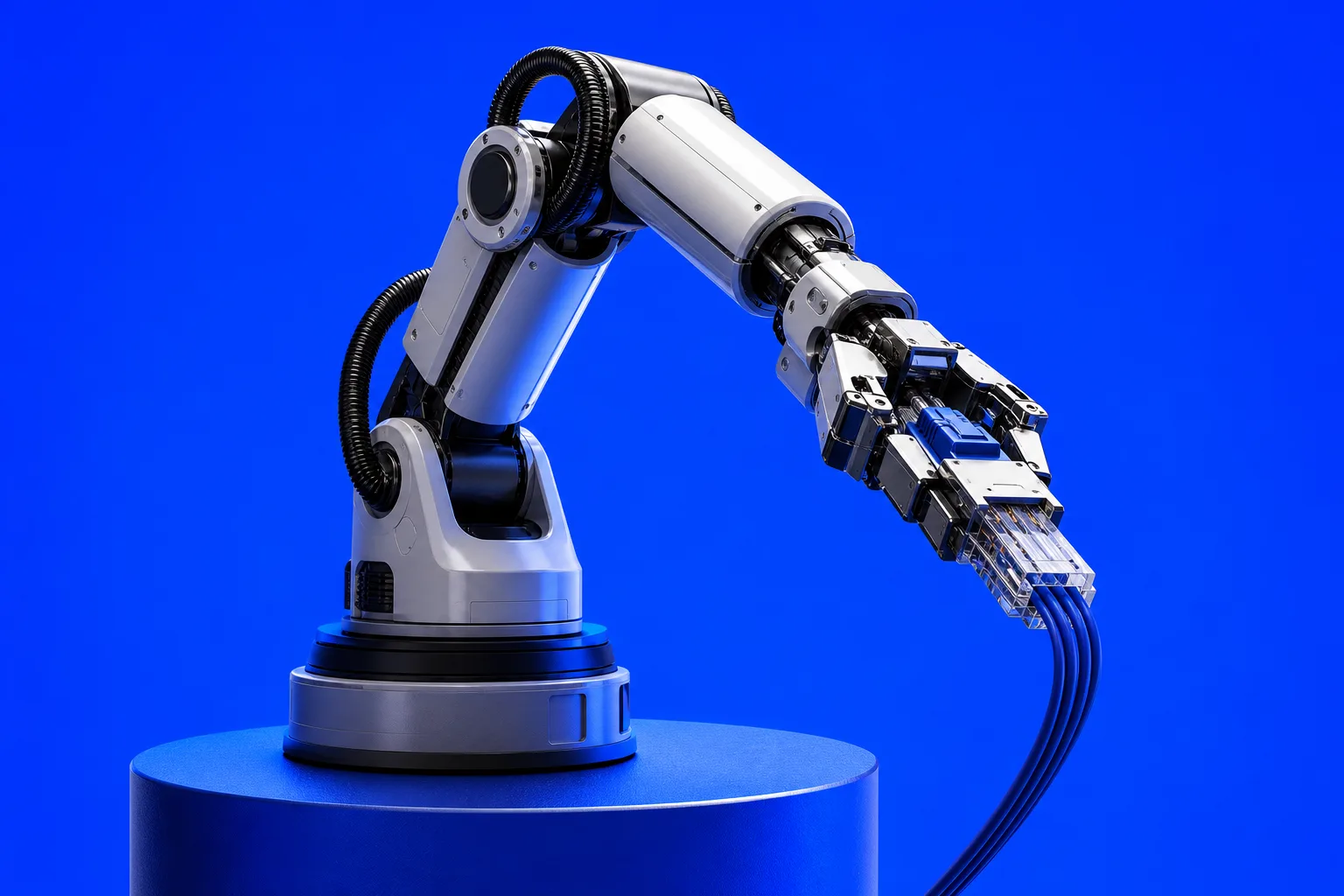
Meta data center robots are moving beyond simple reboot tasks and into more complex physical work, including swapping network cables and reseating server components. The shift matters because data centers sit at the core of Meta’s AI buildout, where uptime, labor availability and maintenance speed directly affect returns on multibillion-dollar infrastructure investments.
The company is evaluating multiple robotic systems across U.S. campuses, including facilities in Altoona, Iowa, and New Albany, Ohio. While the technology remains limited in speed and dexterity, the experiments show that physical automation is becoming a more serious part of hyperscale data center operations.
For investors, the key issue is not whether robots replace technicians immediately, but whether automation can lower operating friction as AI server fleets become larger, denser and more expensive to maintain.
Key Facts
- Meta is testing robots that can swap cables, power cycle servers and reseat components inside data centers.
- One employee estimated a successful cable-swapping robot could eventually absorb up to 80 percent of certain workloads.
- At Meta’s Altoona, Iowa, campus, dual-arm Watney robots are being tested for cabling tasks.
- At the Prometheus campus in New Albany, Ohio, ABB robots on four-wheel platforms are being used to reseat components.
- Complex AI hardware setups, including systems built around Nvidia GB300 equipment, remain difficult for robots to service.
Meta Data Center Robots
Meta’s robotics tests reflect a broader operational challenge across the technology sector: AI is driving a rapid expansion in data center capacity just as skilled technical labor remains tight. Physical maintenance inside server halls has traditionally depended on human dexterity, especially for cable management, parts replacement and diagnosing hardware issues in dense racks. By automating even a portion of that work, Meta could reduce downtime, improve consistency and make facilities easier to operate at scale.
The company is not starting from zero. Some sites already use a simple remotely controlled mechanism that presses power buttons to reboot equipment. Self-driving tugger robots move heavy server racks, and wheeled inventory systems assist with equipment scans and inspections. The latest round of testing goes further by targeting jobs that are harder to automate and more closely tied to technician workflows.
The significance extends beyond labor savings. AI data centers use more power, more networking gear and more advanced accelerators than older cloud infrastructure. That raises the cost of every minute of disruption and makes preventive maintenance more valuable. If Meta can deploy robots in hotter, darker or otherwise less hospitable parts of its facilities, it may improve resilience while reducing exposure to repetitive or hazardous tasks for workers.
Meta’s robotics push suggests the next efficiency battle in AI infrastructure will be fought not only with chips and power, but also with machines that can perform the physical work of keeping server fleets online.
Why full automation remains difficult
The technical barriers are still substantial. Data centers were designed around human hands, not robotic manipulators. Tight rack layouts, irregular cable paths, visual ambiguity and the need for precise force control all make simple maintenance tasks harder than they appear. Robots may complete repetitive actions reliably in a controlled environment, but real-world service work often requires adaptation when labels are unclear, connectors resist movement or neighboring equipment blocks access.
Current systems also have practical limits. Some robots need significant charging time, others move more slowly than technicians, and inspection machines can struggle with corners, cables and equipment indicators. In many cases, humans still need to relocate machines between buildings or supervise tasks closely. That suggests adoption will likely be incremental, with robots handling narrow, standardized jobs first rather than replacing full technician roles in the near term.
Implications for Investors
For Meta investors, the main takeaway is that physical automation could become an important lever for data center efficiency as AI capital spending rises. If robots can reduce incident response times, support preventive maintenance and cut labor bottlenecks, the company may improve utilization of expensive compute assets. In a business where AI infrastructure requires enormous upfront investment, even modest gains in uptime and maintenance productivity can matter.
There is also a margin story. Labor is only one line item in data center economics, but technician scarcity can slow deployments and increase service costs. Robotics may help Meta operate larger campuses without matching headcount growth one-for-one. Over time, that could support operating leverage, particularly if robotic systems become cheaper and more autonomous.
Investors should also watch the risks. The hardware is not yet mature enough to displace human workers broadly, and poorly integrated automation can add complexity rather than remove it. There are social and political considerations as well. Data center projects often benefit from local tax incentives partly because they promise jobs. If automation reduces employment intensity, communities and policymakers may reassess the economic case for future projects.
Competition is another factor. Other hyperscalers, including Microsoft, Google and Amazon, have also explored robotics in data center operations. If physical automation becomes a standard capability across large cloud and AI operators, the advantage may shift from labor reduction alone to who can integrate robots best with asset monitoring, predictive maintenance and AI-driven workflows.
Meta’s current tests do not point to an immediate overhaul of data center staffing, but they do signal where infrastructure operations are headed. The next milestones for investors will be broader deployment, measurable uptime or cost benefits, and whether robots can handle increasingly complex AI hardware environments with less human supervision.