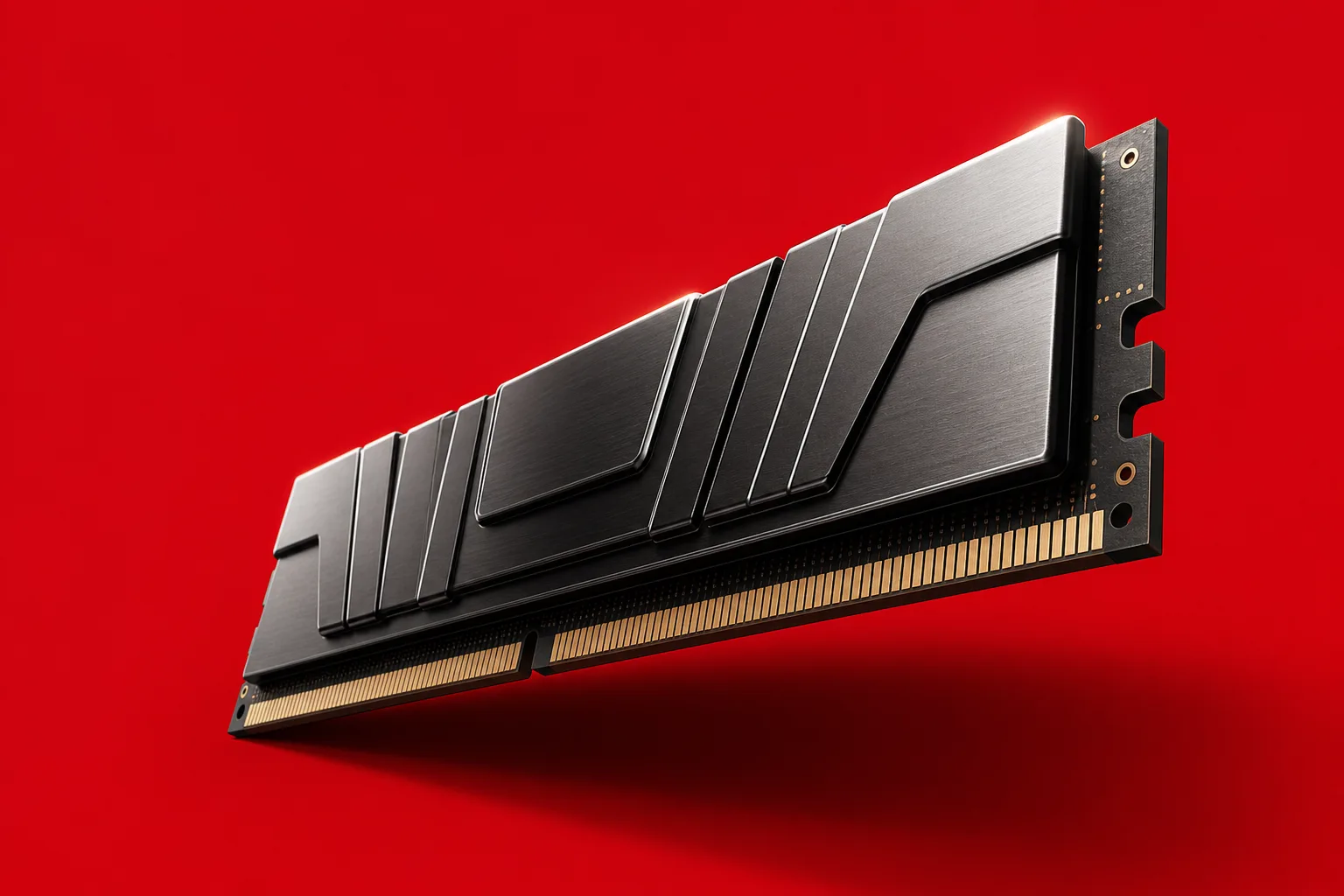
Micron Technology stunned the semiconductor market with a record fiscal third quarter and an even more aggressive outlook, sending the stock sharply higher and pushing it to a fresh intraday high of $1,255. The company’s guidance for roughly $50 billion in next-quarter revenue became the defining number for investors reassessing AI-linked memory demand.
The scale of the earnings beat was difficult to ignore. Revenue reached $41.46 billion, adjusted earnings climbed to $25.11 a share, and gross margin expanded to a record 84.9%, showing how strongly pricing power has shifted toward suppliers of high-bandwidth and data-center memory.
Just as important, Micron disclosed approximately $100 billion in contracted customer commitments over three to five years. That backlog suggests a degree of visibility that memory investors rarely assign to a sector historically known for sharp boom-and-bust cycles.
Key Facts
- Micron reported fiscal third-quarter revenue of $41.46 billion, versus market expectations near $35.84 billion.
- Adjusted earnings per share came in at $25.11, ahead of estimates clustered around $20.28 to $20.86.
- Gross margin reached a company-record 84.9%, up from 74.9% in the prior quarter and 39% a year earlier.
- The company guided for about $50 billion, plus or minus $1 billion, in fiscal fourth-quarter revenue, above consensus near $43.58 billion.
- Micron disclosed 16 strategic customer agreements representing roughly $100 billion in minimum contracted revenue, including $22 billion in firm financial commitments.
Micron earnings and AI memory demand
Micron’s latest report did more than beat estimates; it altered the market’s framework for evaluating memory demand in the AI era. For most of its history, Micron has traded as a cyclical manufacturer whose profitability rose and fell with supply discipline, pricing swings and end-market demand. The latest quarter pointed to a business increasingly tied to long-duration AI infrastructure spending rather than short-lived inventory cycles.
The company’s outlook for roughly $50 billion in fiscal fourth-quarter revenue implies that demand is still accelerating from an already elevated base. Management also projected adjusted earnings of $30 to $32 per share and gross margin of about 86%, indicating that stronger volumes are being matched by continued pricing strength. In practical terms, Micron is benefiting from a market in which advanced memory has become a bottleneck for AI servers and accelerators.
Who is affected goes far beyond one stock. Cloud providers, hyperscalers, automakers and AI model developers all rely on secure access to high-performance memory. For rival chipmakers and hardware buyers, Micron’s numbers reinforce the view that the most profitable part of the AI supply chain is broadening beyond graphics processors into memory subsystems, where scarcity remains acute.
Micron’s quarter suggests AI memory is no longer a side story in semiconductors; it is becoming one of the industry’s core profit engines.
Why the backlog matters
The most consequential detail may be the contracted revenue base rather than the headline quarterly results. Micron said its 16 strategic agreements cover about $100 billion in minimum contracted revenue, with $22 billion in firm commitments. These arrangements reportedly include minimum volume and pricing structures over three to five years, giving the company clearer demand visibility as it expands capacity.
That matters because valuation multiples in memory have historically stayed lower than those for other semiconductor businesses. Investors typically discount future profits when supply growth can quickly trigger price declines. If a substantial share of Micron’s revenue is effectively reserved under take-or-pay or similar long-term structures, the market may be willing to value earnings more like infrastructure-linked semiconductor cash flows than traditional commodity memory cycles.
Implications for Investors
For shareholders, the immediate takeaway is that Micron’s earnings power has moved sharply higher. At the current run rate, the company is producing profit and margin levels once viewed as unrealistic for a memory manufacturer. The record 84.9% gross margin and guidance for further expansion support the argument that Micron is capturing outsized economics from AI-related shortages in DRAM and high-bandwidth memory.
The opportunity is clear, but so is the risk. The stock has already risen more than 700% over the trailing year and showed intense volatility around the earnings release, trading between $1,136.31 and $1,255.00 in one session. That kind of move reflects how much expectation is already embedded in the shares. If competitor capacity ramps faster than expected, or if AI infrastructure spending slows, pricing could normalize and compress margins rapidly.
Investors should also watch capital spending discipline. Micron spent $7.1 billion in net capital expenditures during the quarter and signaled further investment to meet contracted demand. Expansion is necessary if the company is to fulfill multi-year supply commitments, but memory history shows that aggressive buildouts can sow the seeds of future oversupply. The central question for portfolios is whether today’s backlog and AI demand durability are strong enough to offset that classic industry risk.
Another important market signal is relative positioning within semiconductors. Micron’s results indicate that AI winners are not limited to logic chips and accelerators. Storage, DRAM and HBM suppliers may continue to attract capital if investors conclude that the memory shortage extends beyond 2027. That could support a broader re-rating across the semiconductor supply chain, though Micron remains the most direct public-market expression of that thesis.
Looking ahead, Micron’s next quarter will test whether the company can convert extraordinary momentum into a more durable investment case. If revenue approaches $50 billion and margins hold near 86%, the debate may shift from whether the cycle is peaking to how long this new earnings profile can last.