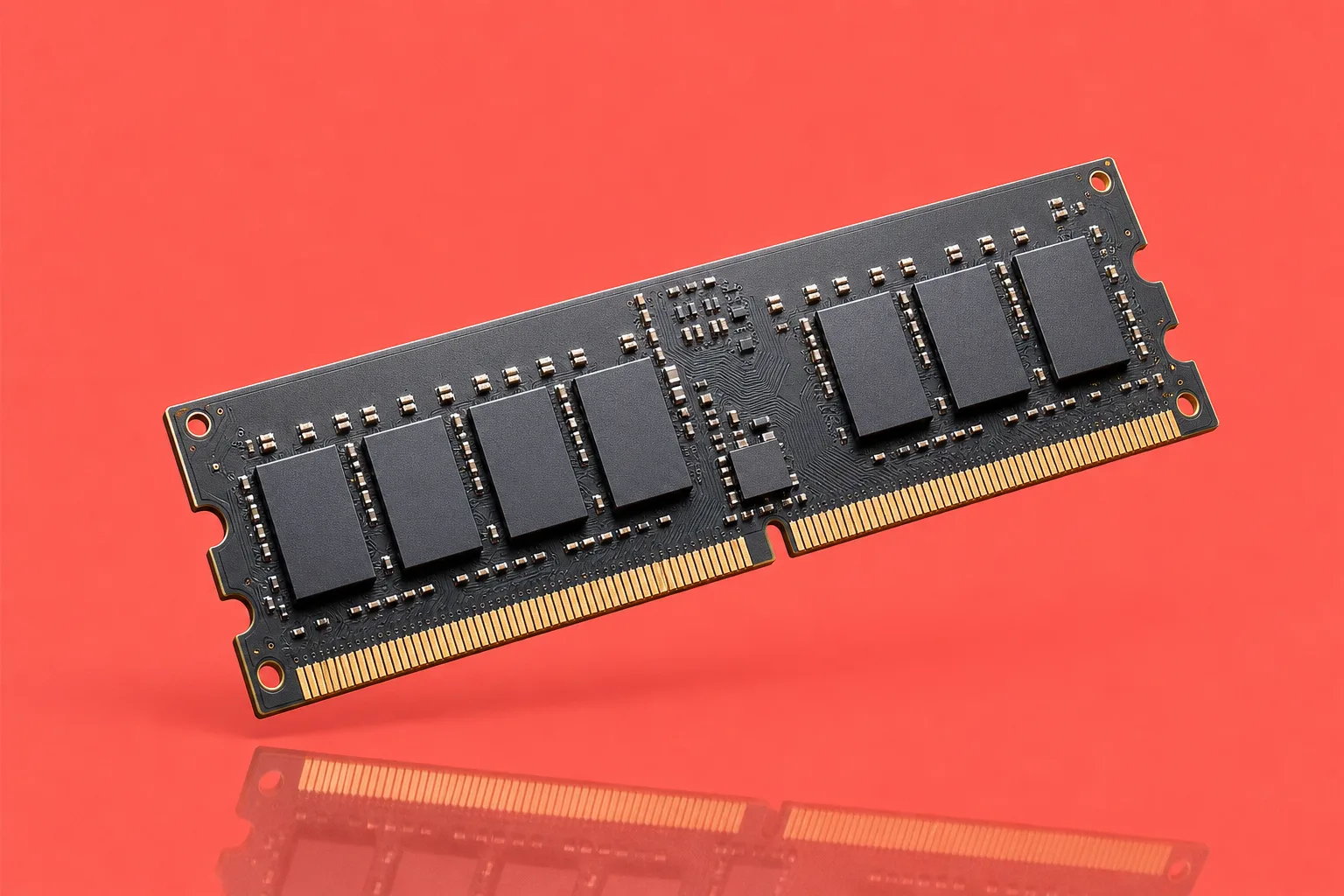
Micron shares came under renewed pressure after a sharp selloff in Korean semiconductor stocks and fresh signs that China’s memory industry is closing the technology gap in DRAM. The move underscored a growing tension in the market: near-term memory profits remain exceptionally strong, but investors are increasingly focused on what supply and pricing could look like in 2027 and 2028.
The immediate catalyst was a steep decline in South Korea’s equity market after a holiday closure, with Samsung Electronics and SK Hynix dropping about 4.5% each and the KRX semiconductor index falling 5.2%. At the same time, ChangXin Memory Technologies, or CXMT, said it had made key progress on a 4F² DRAM architecture, a design that could significantly increase memory density if it reaches commercial production.
That combination hit sentiment across the memory complex. For investors, the central question is no longer whether current earnings are strong. It is whether the industry is approaching peak memory earnings just as new capacity, new technology, and more Chinese competition begin to reshape the cycle.
Key Facts
- Micron had recently guided for fiscal first-quarter revenue of $60 billion to $63 billion, above a $56.8 billion consensus estimate.
- South Korea’s Kospi fell 3.65% to 6,384.2, while the Kosdaq dropped 4.8% and the KRX semiconductor index declined 5.2%.
- Samsung Electronics and SK Hynix each lost about 4.5% in the session, while foreign investors sold roughly $415 million of Samsung and $782 million of SK Hynix stock.
- CXMT said it plans to roll out a server-memory product based on a 4F² DRAM cell design by the end of 2026.
- Nanya Technology reported quarterly revenue of NT$133.6 billion, up 62% quarter over quarter, with gross margin of 85.7%.
Micron and the DRAM Cycle
The selloff in Micron and other memory names reflects a classic late-cycle market shift. Investors are not disputing that DRAM and high-bandwidth memory fundamentals remain tight in the near term. Contract pricing has been strong, margins are elevated, and several suppliers have pointed to limited inventory and firm customer demand. Under normal conditions, those signals would support higher valuations.
Instead, the market is starting to discount what happens after the current shortage phase eases. Korean chipmakers had been key beneficiaries of the AI-driven memory rally, but their recent weakness suggests investors now see downside risk once new supply enters the market. The end of massive share buybacks by Samsung and SK Hynix removed an important technical support for Korean equities, exposing a market already under pressure from foreign outflows and fading retail demand.
Micron is affected because it sits at the center of the same memory cycle. When Korean peers weaken and Chinese competition appears more credible, the market tends to reassess the entire group. Strong earnings can still coexist with falling share prices if investors believe those earnings are close to a peak. That is the valuation challenge facing memory stocks now.
Memory fundamentals may still be exceptional, but the market is increasingly pricing the risk that 2027 and 2028 will look very different from 2026.
Why CXMT’s 4F² DRAM Progress Matters
CXMT’s announcement drew attention because 4F² DRAM architecture is widely viewed as an important next step in memory scaling. In simple terms, a reduction from a 6F² cell to a 4F² cell shrinks the area used by each memory cell, potentially allowing meaningfully more cells on a chip at the same line width. That creates a path to higher density and better cost efficiency, even without access to the most advanced extreme ultraviolet lithography tools.
CXMT said the design relies on a proprietary vertical surrounding gate transistor structure intended to reduce current leakage while shrinking the cell footprint. If the company succeeds in bringing a server-memory product to market by the end of 2026, it would be a notable milestone for China’s domestic DRAM ambitions. Even if commercialization takes longer than planned, the announcement matters because it reinforces a broader market concern: Chinese producers are advancing faster than many investors once assumed.
This is particularly important for Samsung and SK Hynix, which have their own 4F² roadmaps on longer timelines. If CXMT narrows the technology gap while continuing to expand capacity, pricing assumptions for DRAM in 2028 could become more conservative. That potential shift helps explain why strong current results are not translating into expanding valuations.
Implications for Investors
For investors, the memory sector now presents a familiar but difficult setup. Near-term earnings visibility remains high, especially for companies exposed to DRAM and AI-related memory demand. Results such as Nanya’s show just how profitable the current environment can be, with revenue surging and gross margins above 80%. On a backward-looking basis, many memory stocks may appear inexpensive.
The risk is that the market is no longer valuing the group on current margins alone. Investors are increasingly asking whether contract prices peak in 2027, whether Chinese output grows faster than expected, and whether new fab capacity from established players arrives into a less constrained market. If those fears intensify, memory stocks could continue to derate even if reported earnings remain robust over the next few quarters.
That does not eliminate opportunity. Long-term investors may find value in companies with stronger balance sheets, disciplined capital spending, and exposure to premium products such as HBM, where barriers to entry remain higher. But the sector may become more selective. Pure exposure to the memory cycle is no longer enough; execution, pricing discipline, customer commitments, and technology leadership will matter more as the market shifts from shortage to normalization.
Key watch points include Samsung’s earnings call on October 29, SK Hynix results in the final week of October, capital expenditure updates, long-term supply agreements, and any new details on HBM4 ramps or DRAM node transitions. Investors should also monitor whether CXMT’s roadmap progresses from technical claims to meaningful commercial shipments.
The next phase for memory stocks will likely be decided less by how strong the current quarter looks and more by how credible the supply outlook appears for 2027 and 2028. Until that picture becomes clearer, volatility across Micron, Samsung, SK Hynix, and the broader DRAM complex is likely to remain elevated.