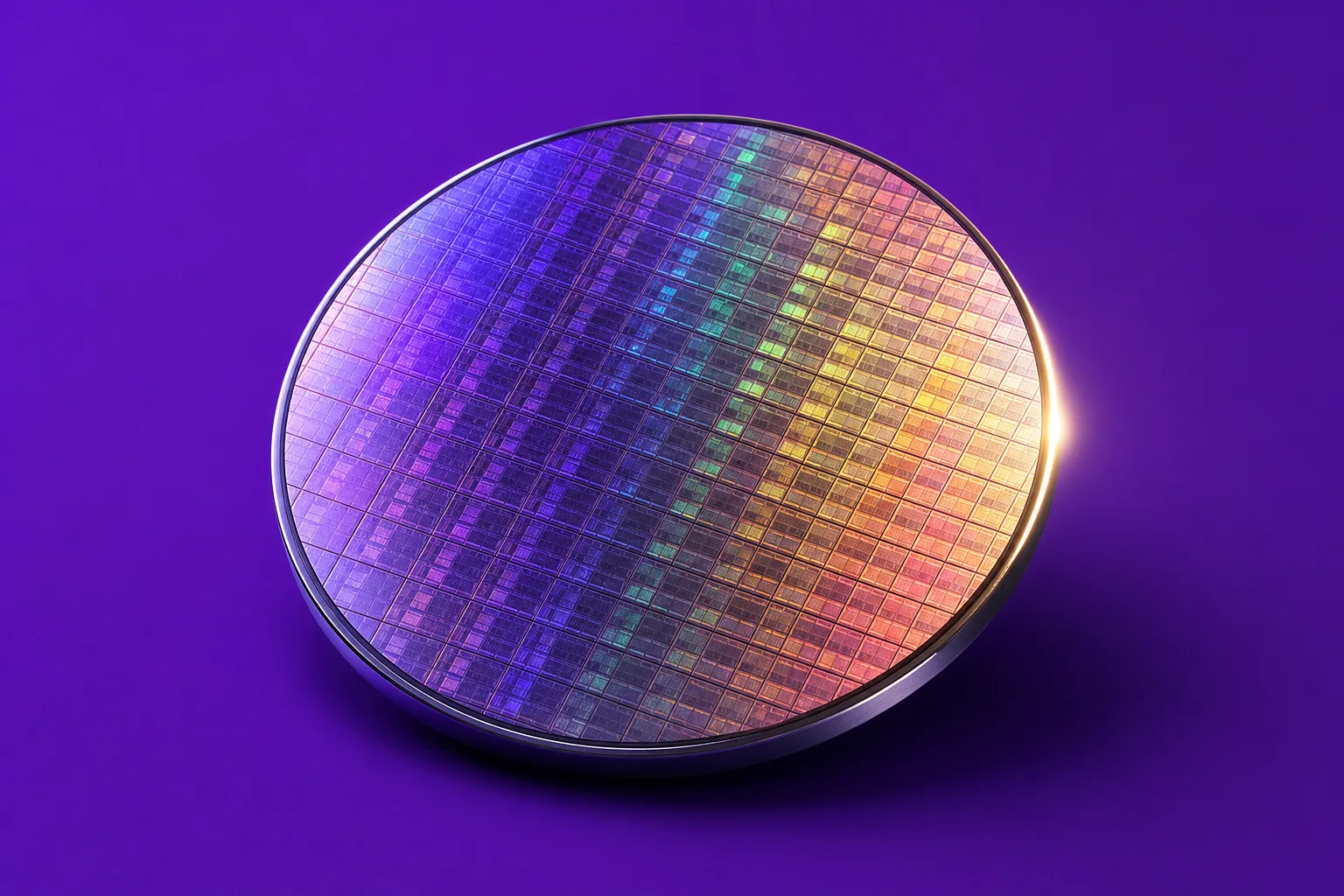
Micron stock surged 8.9% to about $1,020 after the company unveiled a $3 billion commitment to strengthen the U.S. semiconductor supply chain, including $500 million in strategic financing for GlobalWafers’ Texas facility. The move helped reverse a steep selloff that had pulled the shares roughly 22% below their late-June peak.
The rebound matters because it landed at a critical moment for Micron. Investors have been weighing exceptional AI-driven growth, a sold-out high-bandwidth memory pipeline, and roughly $100 billion in contracted revenue against familiar concerns about semiconductor overcapacity and the memory industry’s long history of boom-and-bust cycles.
With the stock testing a key technical level near $1,014, the latest rally has become more than a one-day bounce. It is now a referendum on whether Micron’s business model has fundamentally improved or whether the market is once again pricing cyclical earnings as if they were permanent.
Key Facts
- Micron shares rose about 8.9% to roughly $1,020 after the company announced a $3 billion U.S. supply chain initiative.
- The plan includes $500 million in strategic financing for GlobalWafers’ Sherman, Texas facility and a 10-year silicon wafer supply agreement.
- The stock had fallen from above $1,255 in late June to near $892 before rebounding.
- Micron reported quarterly revenue of $41.46 billion and adjusted gross margin of 84.6% in its most recent quarter.
- The company says its HBM products are effectively booked through 2028, supporting a multi-year AI demand outlook.
Micron stock
The immediate trigger for the move was Micron’s effort to lock in a critical raw material for advanced chip production. Silicon wafers are a foundational input for memory manufacturing, and the agreement with GlobalWafers gives Micron a longer-term domestic supply base as the company scales production for AI-related demand. For investors, the significance goes beyond the headline number: the company is trying to reduce supply-chain risk at a time when customers want certainty around future deliveries.
The timing is notable. Micron had been under pressure after a rapid run-up left the stock vulnerable to profit-taking, valuation concerns, and new competition for investor attention. The shares had dropped into what many traders consider local bear-market territory after peaking above $1,255, with sentiment hurt by AI-related multiple compression and broader volatility across semiconductor names. A recovery from around $892 back toward $1,020 suggests buyers still view the company as a central beneficiary of AI infrastructure spending.
The bigger question is whether Micron’s earnings power is becoming more durable. Management has pointed to long-term, non-cancelable strategic customer agreements and large cash-backed commitments as evidence that its revenue base is becoming more visible than in prior memory cycles. If that proves true, the market may reward Micron with a valuation more typical of structural growth companies rather than cyclical commodity-chip producers. If it does not, the company could remain exposed to the same pricing swings that have defined memory for decades.
Micron’s latest rally is really a market test of one idea: can AI-era contracts and capacity discipline finally make a memory stock less cyclical?
Why the GlobalWafers deal matters
The GlobalWafers financing package is strategically important because it ties capital deployment directly to supply assurance. Rather than simply spending on its own fabs, Micron is supporting an upstream supplier and securing a decade-long wafer flow that could become essential as HBM output expands. In the AI memory market, production constraints do not come only from fabrication plants; they also come from availability of specialized materials and equipment.
That is why investors reacted positively. The deal signals that Micron is planning for sustained demand into the next decade, not just managing for one strong year. Bulls see this as evidence of confidence in long-cycle AI spending, while skeptics may view it as the kind of aggressive investment that often arrives near an industry peak.
Implications for Investors
For shareholders, the core opportunity remains straightforward: Micron is leveraged to one of the strongest demand trends in technology, with HBM and AI server memory acting as major growth engines. Record quarterly revenue of $41.46 billion, very high margins, and bookings extending through 2028 give the company a fundamentally stronger backdrop than a traditional memory upswing driven only by spot pricing.
The main risk is that supply eventually catches up. Even if Micron has improved visibility through strategic contracts, the broader market still includes powerful rivals expanding aggressively. If capacity additions by Micron, SK Hynix, and Samsung outpace end demand, pricing pressure could return quickly. That possibility is central to the bear case and helps explain why some investors remain wary despite the company’s exceptional recent numbers.
Investors should also watch competitive positioning, customer concentration, and whether new contracts continue to translate into cash-backed commitments. The company’s ability to hold margins, execute on domestic expansion, and maintain HBM leadership will matter more than a single day’s price action. Near term, the technical level around $1,014 may shape trader sentiment, but longer term the more important indicators are revenue durability, supply discipline, and the pace of AI infrastructure spending.
Micron has regained momentum, but the next phase will depend on whether strong AI demand can keep outrunning industry expansion. If the company’s contract model and supply strategy hold, the rebound could become the start of a broader re-rating rather than just a relief rally.