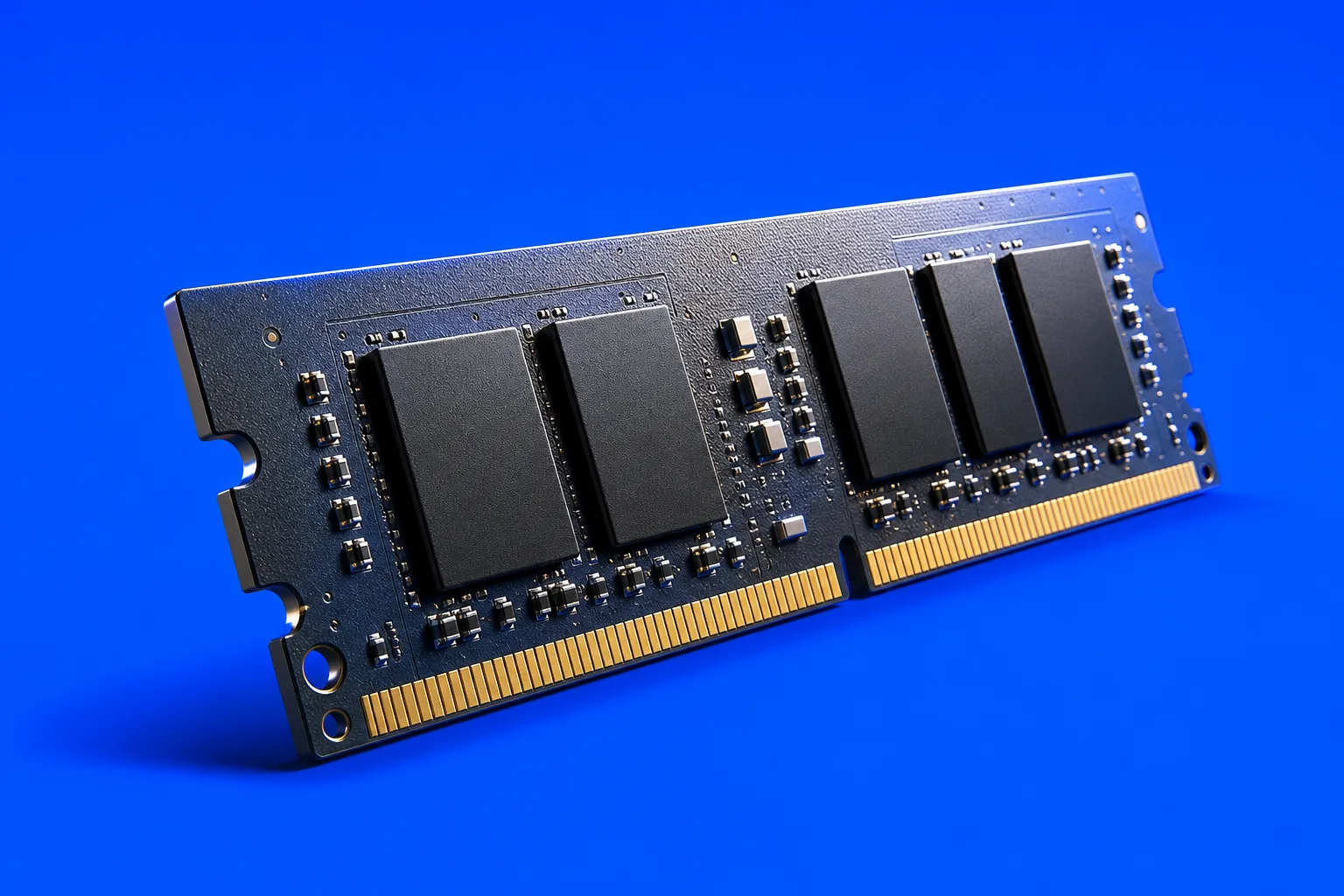
Micron Technology stock fell sharply in premarket trading on Monday, dropping 6.12% to $730.66 as a broader retreat from growth stocks weighed on semiconductor names. The decline came alongside weakness in index futures, with Nasdaq futures down 1.45% and S&P 500 futures off 0.78%.
The move matters because Micron Technology stock is widely viewed as a barometer for investor sentiment toward memory chips, artificial intelligence infrastructure and cyclical semiconductor demand. A fall of this size before the opening bell signaled that risk appetite had deteriorated quickly.
Even after the selloff, analysts remained broadly constructive on the company’s long-term outlook. That disconnect between strong price targets and weak short-term trading is likely to keep MU shares in focus.
Key Facts
- Micron Technology shares were down 6.12% at $730.66 in Monday premarket trading.
- Nasdaq futures fell 1.45%, while S&P 500 futures declined 0.78% during the broader market selloff.
- MU traded 12.8% below its 20-day simple moving average and 22.6% below its 50-day moving average.
- The stock was 4.6% below its 200-day moving average, with chart resistance near $818.50 and support around $650.
- Micron carried a consensus Buy rating with an average analyst price target of $1,622.38.
Micron Technology stock
Monday’s decline in Micron Technology stock reflected more than company-specific pressure. Investors were rotating away from high-beta technology names as broader market sentiment weakened, hitting semiconductor stocks that had previously benefited from enthusiasm around AI, data center expansion and improving memory pricing.
From a technical standpoint, the chart has turned more fragile. MU traded below its 20-day, 50-day and 200-day moving averages, a setup that often signals persistent near-term selling pressure. The moving average convergence divergence indicator also remained below its signal line, pointing to weak momentum and limited evidence of a quick reversal.
At the same time, the longer-term trend has not fully broken down. The 50-day average remains above the 200-day average, suggesting that the broader structure has not yet shifted into a decisively bearish pattern. For investors, that leaves Micron in a transitional zone: short-term momentum is weak, but the stock still sits within a longer-run semiconductor growth narrative tied to memory demand and AI-linked server spending.
Micron’s sharp premarket drop underscored how quickly sentiment can turn against semiconductor leaders when investors start cutting exposure to growth and momentum trades.
What the technical levels suggest
For traders, the most immediate levels to watch are resistance at $818.50 and support at $650. A recovery above resistance would suggest buyers are willing to step back into the name after the latest washout. A move toward support, by contrast, could test whether long-term holders still view the stock as attractive on weakness.
The technical picture is especially relevant because Micron is held heavily in momentum- and technology-focused exchange-traded funds. If those funds face inflows, MU could rebound quickly. If they see outflows, passive selling could intensify downside pressure regardless of company fundamentals.
Implications for Investors
For investors, the key question is whether the drop in Micron Technology stock is a sentiment-driven reset or an early warning that expectations for chip stocks had become too stretched. The average price target of $1,622.38 suggests analysts still see substantial upside from current levels, and recent Buy ratings with targets of $1,900 and $1,650 indicate confidence in the company’s earnings power over time.
Still, valuation support alone does not prevent volatility. Micron is deeply tied to cyclical end markets, and semiconductor stocks often amplify broader market moves. If macro concerns continue to pressure high-growth equities, MU could remain vulnerable even if its underlying business outlook holds up. Investors with shorter time horizons may focus on trend confirmation before adding exposure.
Portfolio positioning also matters because Micron carries meaningful weight in several thematic funds. The stock represents 8.73% of the Invesco S&P 500 Momentum ETF, 8.47% of the Pacer Data and Digital Revolution ETF and 8.25% of the State Street SPDR NYSE Technology ETF. That level of ETF ownership can magnify price swings, especially during sessions when investors are rapidly reducing exposure to momentum-heavy technology baskets.
Looking ahead, investors will be watching whether MU can stabilize above the $650 support area and regain lost momentum. If broader risk appetite improves, Micron could recover quickly; if the technology selloff deepens, the stock may face continued pressure despite bullish long-term expectations.