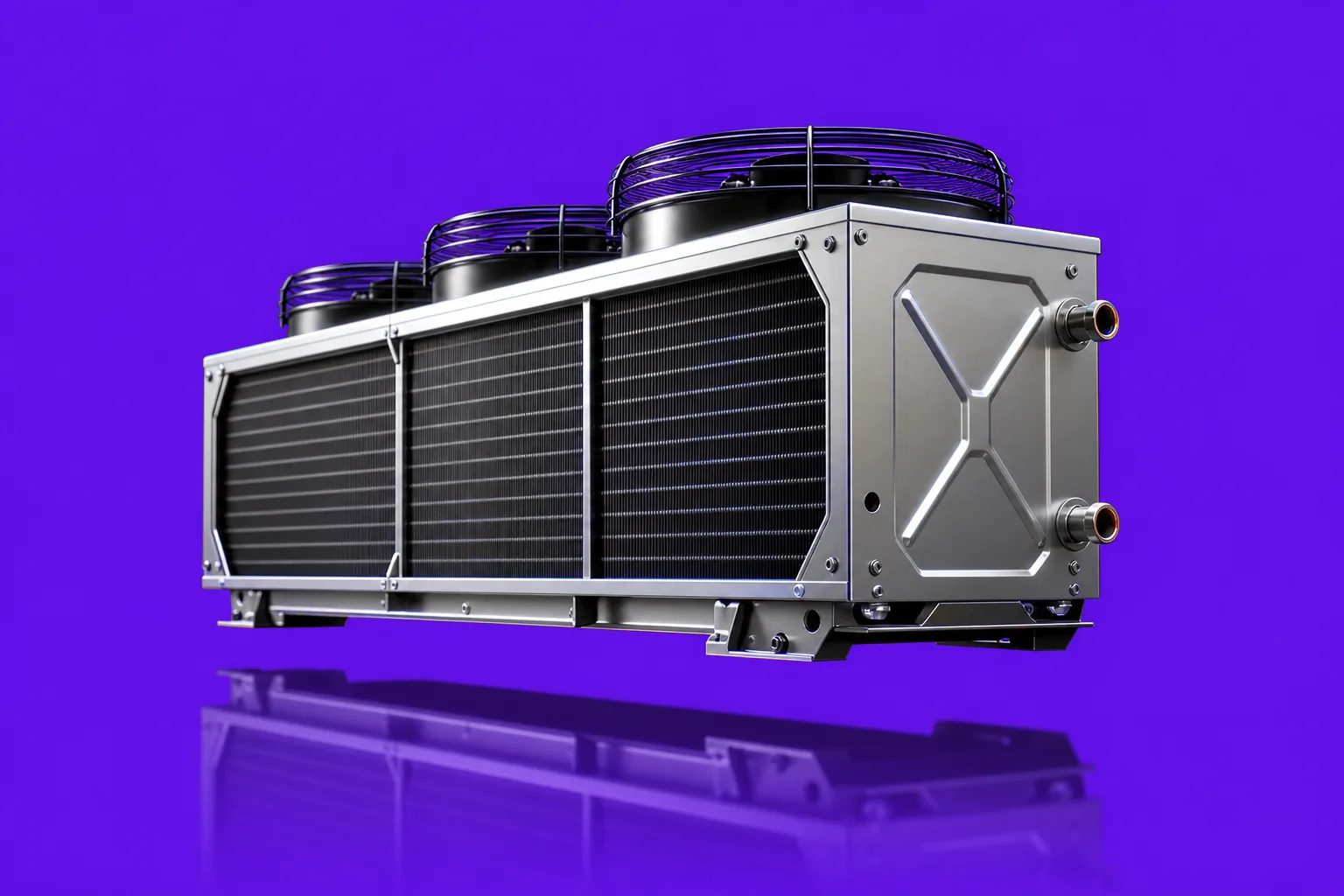
Modine stock surged 28.38% to $136.21 on November 13 after reports that Samsung Electronics is in talks to acquire the U.S. cooling specialist, a move that sharply reset expectations for the company’s valuation.
The rally added roughly $1.6 billion in market value in a single session, lifting Modine’s equity capitalization to about $7.25 billion from $5.64 billion at the prior close. The jump reflects more than deal speculation: it underscores how strategically important data center cooling has become in the AI infrastructure buildout.
For investors, the central question is no longer whether Modine has demand. It is whether the market should value the company as a temporarily pressured industrial name or as a scarce owner of critical data center thermal capacity.
Key Facts
- Modine shares rose $30.11, or 28.38%, to $136.21 on November 13 after opening at $141.40 and hitting an intraday high of $146.50.
- The company’s market value increased to about $7.25 billion on 53.20 million shares outstanding, up from $5.64 billion at the previous close.
- Data Centers segment sales climbed 95% year over year to $439.7 million in the fiscal second quarter ended September 30, 2026.
- Modine holds a $4 billion long-term capacity agreement for Airedale cooling products covering calendar years 2027 through 2029, supported by a $165 million upfront customer payment.
- Management expects Data Centers sales to grow 80% to 90% in fiscal 2027, up from a previous outlook of 60% to 80%.
Modine stock and Samsung buyout talks
Reports of Samsung’s interest arrived just days after Modine’s stock had been hit by concerns over margin pressure, cash burn and execution risk. That backdrop matters. Before the takeover speculation, investors had punished the company despite strong revenue growth because expanding cooling capacity for hyperscale data centers has required heavy working capital and capital spending.
The possible strategic logic is straightforward. Samsung already has direct exposure to AI infrastructure through semiconductors, but cooling sits in the same spending chain and often carries more durable visibility through long-term contracts. Modine brings products that are hard to replicate quickly, including chillers, air handling units, fan walls and coolant distribution systems used by large-scale data center operators.
The timing is also notable. Modine recently completed the separation of its Performance Technologies business, leaving a more focused climate solutions company centered on Data Centers and Commercial HVAC. That cleaner structure could make Modine more attractive to any buyer seeking North American cooling capacity tied to AI server growth.
Samsung’s reported interest suggests Modine is no longer being viewed simply as a cyclical industrial stock, but as a strategic AI infrastructure asset.
Why the data center cooling business matters
Modine’s underlying growth story remains centered on data centers. Quarterly orders in the segment topped $1 billion for the first time, marking a fourth straight record quarter for order intake. The backlog also reached a record level, reinforcing the idea that capacity, not end-demand, is the key constraint.
That scarcity helps explain why customers are committing capital upfront. The $165 million payment tied to the long-term capacity agreement is a strong signal that hyperscale operators are willing to fund supply expansion in exchange for certainty. In a market where AI racks run hotter and facilities consume more power, cooling has become a bottleneck alongside chips, networking and electrical equipment.
Implications for Investors
For shareholders, the immediate upside case rests on two parallel scenarios. The first is a formal bid. No transaction has been announced, no price has been disclosed, and talks could still fail. Even so, strategic acquisitions of high-growth infrastructure assets often involve meaningful premiums, and the reported discussions may place a valuation floor under the stock unless the process breaks down.
The second scenario is a standalone rerating. Modine’s recent selloff had followed a fiscal second-quarter report that showed revenue strength but margin disappointment. Net sales rose 35% to $994.4 million, while adjusted earnings per share of $1.35 missed expectations. In Data Centers, sales nearly doubled, yet gross margin fell 470 basis points to 19.7% due to material, component and tariff costs. If management can prove those pressures are temporary and deliver the promised price recovery, investors may again focus on backlog, contracts and growth rather than short-term profitability noise.
Risk remains substantial. Free cash flow was negative $140.6 million in the quarter, and operating cash flow was negative $98.5 million as receivables and inventory expanded. Debt also rose, though post-transaction deleveraging has improved the pro forma picture. If acquisition talks collapse and execution remains uneven, the stock could retrace toward the pre-report range around $106 to $110. If margins recover and investor confidence returns, the recent $160 upside target discussed by market participants becomes easier to justify even without a deal.
Investors should also watch the November 18 Analyst and Investor Day. Management is expected to outline long-term targets for the post-spin business, including fiscal 2028 and fiscal 2029 expectations. That event could be critical in establishing whether Modine can support a higher standalone valuation through revenue growth, margin normalization and improved cash conversion.
In the near term, Modine sits at the intersection of M&A speculation and one of the strongest structural themes in industrial markets: data center cooling demand. Whether through a takeover, a higher standalone multiple, or both, the company’s next moves will likely hinge on execution, margins and the durability of AI infrastructure spending.