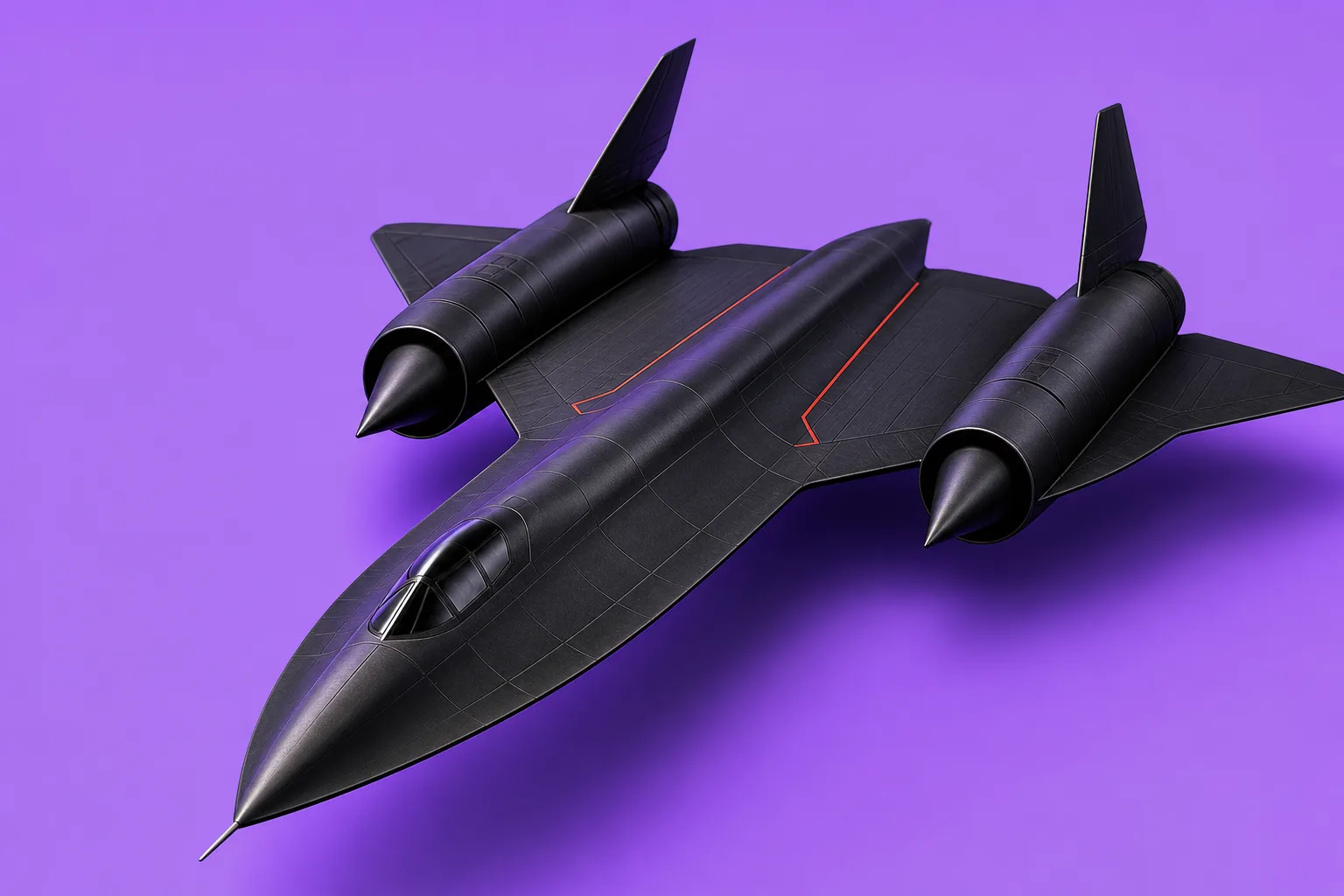
NASA has revived speculation around high-speed flight research after signaling a renewed interest in experimental aircraft and reportedly moving an SR-71 Blackbird into a hangar for restoration work. The prospect of returning the legendary spy plane to the air would mark one of the agency’s most ambitious aviation efforts in decades.
The biggest obstacle is not nostalgia but logistics. A reported $600 million stockpile of Blackbird spare parts was destroyed in 2007, leaving any SR-71 restart dependent on expensive re-engineering, new manufacturing, and the recreation of specialized support systems.
For investors watching aerospace and defense technology, the story matters less as a near-term program award and more as a signal that hypersonic and high-speed flight research may be moving higher on the national technology agenda.
Key Facts
- NASA Administrator Jared Isaacman discussed “rebuilding our X-plane portfolio” during a September 2026 presentation and said the agency wants to get back to “flying high and fast again.”
- Tail No. 844, a 59-year-old SR-71 aircraft, was removed from outdoor display at NASA’s Armstrong Flight Research Center in California earlier in 2026.
- The aircraft was reportedly moved into a former Space Shuttle hangar, where work has been underway.
- A $600 million inventory of SR-71 spare parts was destroyed in 2007, raising the cost and complexity of any return-to-flight effort.
- The Blackbird would require hard-to-source inputs including JP-7 fuel, triethylborane ignition chemical, specialized oils, hydraulic fluids, and custom ground equipment.
NASA SR-71 Blackbird Revival
The SR-71 Blackbird remains one of the most technically distinctive aircraft ever built. Designed for sustained high-altitude, high-speed missions, it depended on a tightly integrated ecosystem of engines, fuels, support gear, and maintenance practices that no longer exists at production scale. That is why the idea of flying one again carries significance well beyond a museum restoration project.
The immediate trigger for renewed attention was Isaacman’s public emphasis on rebuilding NASA’s X-plane portfolio, accompanied by an aircraft silhouette that prompted comparisons to the Blackbird. Although he denied the image depicted the SR-71 itself, the broader message was clear: NASA wants to expand advanced flight research, particularly at the edge of speed and altitude where materials, propulsion, and thermal management become critical technologies.
If the agency is seriously evaluating a return-to-flight path for Tail No. 844, the implications extend to contractors involved in propulsion, specialty materials, avionics modernization, advanced manufacturing, and test infrastructure. Even if the aircraft never flies again, the engineering work required to assess feasibility could inform future high-speed programs, including experimental aircraft linked to next-generation intelligence, surveillance, reconnaissance, and hypersonic systems.
Bringing an SR-71 back to the runway would not be a simple restoration; it would amount to rebuilding an entire industrial ecosystem from scratch.
Why the restart would be unusually difficult
The Blackbird was never an ordinary fleet aircraft. Its Pratt & Whitney J58 engines, inlet spikes, thermal expansion characteristics, and fuel system were tailored to a mission profile few aircraft have ever matched. Recreating that capability would require more than airframe repair. NASA or its partners would need to source or reproduce consumables, certify components, and rebuild support carts and tools once considered routine but now absent.
The fuels challenge alone is notable. The SR-71 relied on JP-7, a specialized fuel formulated for extreme operating conditions, as well as triethylborane for ignition. Those niche requirements create supply-chain issues that can quickly drive up costs. On top of that, specialized oils, hydraulic fluids, and maintenance procedures would have to meet modern safety and operational standards, adding further time and expense.
Implications for Investors
For investors, the central takeaway is not that a legacy aircraft is about to generate a large procurement cycle. Instead, the story points to a broader theme: renewed institutional interest in high-speed aerospace research. That trend could benefit companies exposed to thermal protection systems, advanced propulsion, exotic alloys, digital engineering, and low-volume specialty manufacturing.
The clearest opportunities would likely sit with established aerospace and defense primes and their niche suppliers rather than with commercial aviation names. If NASA uses the SR-71 effort as a technology demonstrator or test-bed concept, spending may flow into research contracts, component remanufacturing, instrumentation, simulation, and flight-test services. Investors should also watch whether any work connects to longer-running interest in a notional SR-72 or adjacent hypersonic development programs.
There are also clear risks. A Blackbird restoration would be capital-intensive, technically uncertain, and vulnerable to schedule slips. Without a defined mission, budget line, or public procurement roadmap, the project remains speculative. Investors should distinguish between headline excitement and funded program reality, especially in a sector where concept visibility often arrives well before revenue conversion.
The next important signals will be budget documentation, contract awards, and any formal clarification of NASA’s X-plane priorities. Whether or not Tail No. 844 flies again, the push toward high-speed research is becoming a market theme worth monitoring across aerospace and defense.