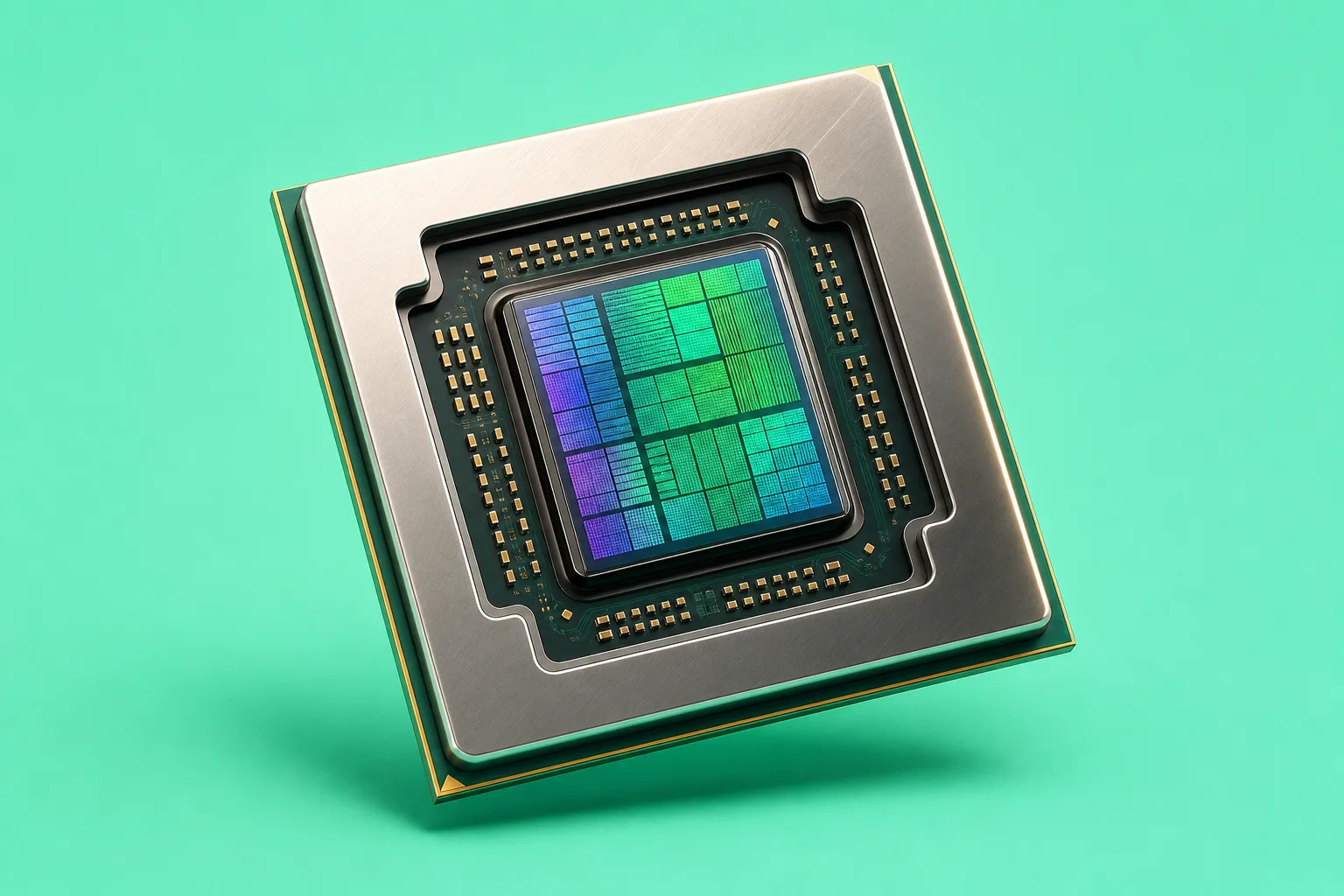
The Nasdaq entered correction territory after a brutal technology selloff erased trillions of dollars in market value and knocked the index more than 10% below its October peak. Early signs of a rebound in semiconductor shares were quickly tested as the 10-year Treasury yield climbed to 4.903% following a much stronger-than-expected October payrolls report.
The market backdrop remains fragile. Nasdaq 100 futures rose 1.33% to 27,107.75 in early trade, while S&P 500 futures added 0.26% to 7,402.50. Dow futures, however, fell about 475 points toward 51,110, underscoring a sharp rotation away from defensive blue chips and back into the most heavily sold growth names.
The key question for investors is whether the semiconductor bounce marks the start of a durable recovery or only a short-lived reaction after one of the worst sessions for large-cap tech since 2020.
Key Facts
- The Nasdaq Composite closed at 24,315.00 after falling 5.52%, while the S&P 500 dropped 4.36% to 7,353.73 and the Dow Jones Industrial Average lost 1,833.06 points, or 3.44%, to 51,523.06.
- October nonfarm payrolls rose by 165,000 versus a consensus estimate near 59,000, while the unemployment rate fell to 4.1%.
- The 10-year Treasury yield jumped more than 6 basis points to 4.903%, pressuring long-duration technology valuations.
- The Philadelphia Semiconductor Index plunged 12.2% in the prior session, while the Nasdaq 100 fell 6.36% to 26,629.81.
- Cloudflare shares surged about 20% in premarket trading after reporting 39% revenue growth and raising guidance.
Nasdaq Correction
The latest move in the Nasdaq reflects more than a routine pullback. Thursday’s selloff was concentrated in the AI and semiconductor complex, with investors repricing demand assumptions tied to data-center expansion, hardware spending and elevated earnings multiples. Nvidia fell 9.26% to $181.60, AMD dropped 17.3%, and Micron lost 17%, highlighting how aggressively the market marked down the AI capital-expenditure trade.
At the center of the repricing is concern that political and regulatory resistance to new data-center construction could delay or reduce planned capacity additions across major U.S. markets. If a meaningful share of proposed AI-focused facilities is postponed, demand for GPUs, memory, networking equipment, power systems and cooling infrastructure may shift further into the future. That matters because many of the sector’s premium valuations were built on expectations of uninterrupted buildout and rapid revenue scaling.
At the same time, the macro backdrop turned less supportive for growth stocks. A payrolls print of 165,000, combined with 0.4% monthly wage growth and a 4.1% unemployment rate, strengthens the case for tighter monetary policy. For the Nasdaq, that is a direct valuation challenge: higher Treasury yields increase the discount rate applied to future earnings, which tends to weigh most heavily on richly valued technology companies.
The Nasdaq correction is no longer just a story about stretched AI valuations; it is now a test of whether growth stocks can absorb both regulatory uncertainty and a renewed rise in bond yields.
Why the chip rebound may not be enough
Premarket gains in semiconductors were striking but incomplete. Micron rose 8.93%, Lam Research gained 11.10%, Western Digital added 9.32%, and AMD climbed roughly 7.6%. Yet these rebounds recovered only part of the prior session’s losses. A stock that falls 17% needs a gain of more than 20% merely to return to its starting point, which shows how deep the damage was.
The composition of the rebound also suggests a tactical move rather than a full change in narrative. Memory, storage and semiconductor-equipment stocks led the bounce because they had been hit hardest and were most vulnerable to short-covering and mean-reversion buying. For a more durable recovery, investors will likely want to see broader participation, lower volatility and evidence that benchmark indices can hold gains into the close rather than fade as Treasury yields rise.
Implications for Investors
For portfolios, the immediate message is that market leadership is unstable. Defensive stocks helped cushion losses earlier in the week, but Friday’s futures indicated that money was rotating out of the Dow and back into beaten-down tech. That kind of rapid style reversal can create opportunity for active investors, but it also raises execution risk for anyone chasing short-term moves.
Bond yields now deserve as much attention as earnings. The 10-year yield near 4.90% and the 2-year yield around 4.54% suggest markets are again pricing a meaningful chance of another Federal Reserve rate increase at the December 9 meeting. If yields move back above recent highs, the pressure could broaden beyond semiconductors and hit software, internet and other high-multiple sectors. Investors should also monitor whether the Nasdaq can reclaim and hold levels above its 200-day moving average, a line many institutional and systematic strategies use as a key trend signal.
There are still pockets of relative resilience. Cloudflare’s strong outlook, Airbnb’s earnings beat and raised guidance, and improved profitability trends at IREN show that the market continues to reward companies delivering accelerating revenue and credible forward guidance. In contrast, businesses that miss expectations or cut outlooks, such as DraftKings and Atlassian, are being punished severely. That split suggests stock selection may matter more than broad sector exposure in the weeks ahead.
Looking forward, investors will be watching whether the semiconductor rebound can survive a high-rate environment and whether political pressure on data-center development turns into measurable delays. The next inflation data release and the December Federal Reserve decision are likely to determine whether this Nasdaq correction stabilizes or deepens.