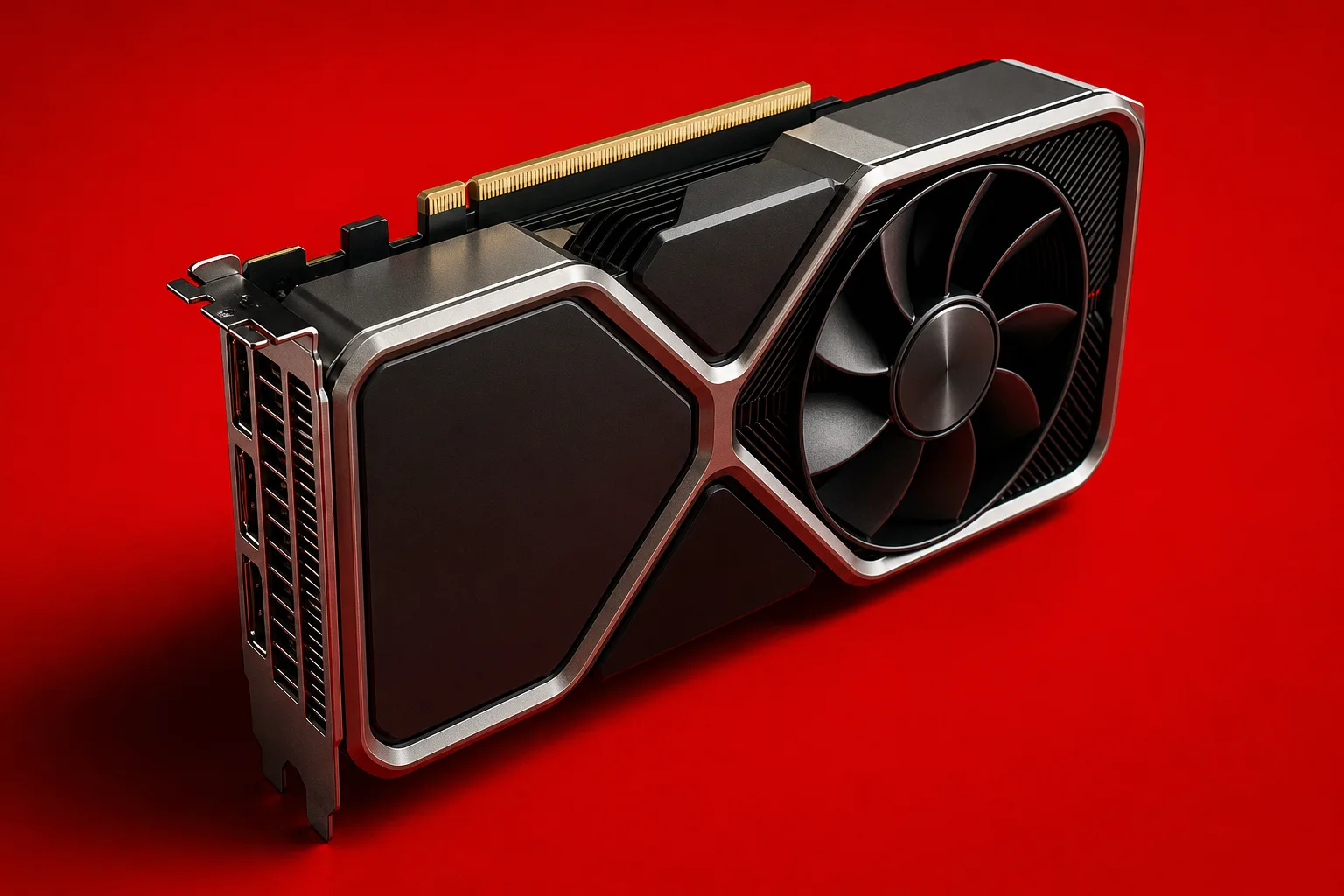
Nvidia earnings have become a pivotal event for equity markets, not just for semiconductor investors. After disappointing reactions to recent results from Alphabet and Amazon, concern is rising that even a modest shortfall from Nvidia could reverberate across the Nasdaq and the broader AI ecosystem.
The core issue is not simply whether Nvidia can beat consensus again. It is whether the company can deliver results and guidance strong enough to justify elevated valuations, aggressive capital spending by cloud providers, and the market’s continued belief that AI infrastructure demand will keep expanding at a rapid pace.
That dynamic matters because Nvidia now sits at the center of one of the market’s most concentrated investment themes. If its growth narrative weakens, investors may be forced to reassess assumptions that have supported chip stocks, data-center suppliers, utilities, and other AI-linked trades.
Key Facts
- The Nasdaq fell 1.4% in regular trading and another 1.4% after hours following negative reactions to recent mega-cap tech earnings.
- Nvidia has beaten consensus earnings expectations for 15 consecutive quarters, a streak dating back to early 2023.
- Shares have still fallen in the session after seven of Nvidia’s last 12 earnings reports, showing how demanding investor expectations have become.
- One cited bearish voice still carried a price target of $180, underscoring how few analysts are positioned for a major disappointment.
- The article highlights Nvidia as the central beneficiary of the AI capital-spending cycle that now influences multiple sectors beyond semiconductors.
Nvidia Earnings
Nvidia’s earnings report matters because the company has become more than a chipmaker in the eyes of investors. Its revenue growth, margins, and guidance are now treated as a real-time read on enterprise AI demand, hyperscaler spending discipline, and the durability of one of the market’s most profitable narratives.
That makes the setup unusually sensitive. Markets have largely moved beyond asking whether Nvidia can beat estimates. The real test is the size of the beat, the trajectory of guidance, and whether management can reinforce confidence that customers are still committing massive sums to AI servers, accelerators, networking gear, and related infrastructure.
If Nvidia merely meets expectations, or beats by less than investors have come to expect, the reaction could still be negative. That is the challenge for richly valued market leaders: when expectations become extreme, strong results may no longer be enough. For investors in AI-linked names, the consequences would likely extend well beyond Nvidia’s own shares, affecting companies tied to semiconductors, power demand, cooling, data-center construction, and cloud spending plans.
Nvidia is no longer judged only on whether it beats earnings estimates, but on whether it can keep validating the entire AI investment thesis.
Why the market reaction could spread
The concentration of gains in a narrow group of mega-cap technology stocks has made earnings season more fragile. When leadership is concentrated, any sign of slowing momentum in a single bellwether can trigger wider de-risking as investors question valuation multiples across related industries.
In Nvidia’s case, the spillover risk is especially pronounced because the company sits upstream of so much AI spending. Its results influence how investors value cloud platforms, memory suppliers, networking firms, equipment makers, utilities, and infrastructure providers that have all benefited from expectations of sustained AI buildout.
Implications for Investors
For portfolios, the main issue is correlation risk. Many investors may believe they are diversified across software, semiconductors, industrial suppliers, utilities, and large-cap internet stocks, yet much of that exposure can still be tied to the same underlying theme: continued AI capital expenditure growth. A disappointing Nvidia report could reveal how interconnected those bets have become.
There is also a valuation question. When a market leader repeatedly posts exceptional growth, surrounding sectors often re-rate higher in anticipation of second-order benefits. If Nvidia’s report suggests demand is moderating, investors may reconsider earnings assumptions across the broader AI chain. That would not necessarily invalidate long-term AI adoption, but it could alter timing, spending intensity, and near-term multiples.
On the other hand, another strong beat with bullish guidance could reinforce the current market structure. In that scenario, AI beneficiaries may continue to attract capital, especially companies with direct exposure to data-center expansion and power-intensive computing. Investors should watch not only revenue and earnings per share, but also commentary on supply constraints, customer concentration, backlog visibility, and the pace of future orders from major cloud buyers.
The next Nvidia report is shaping up as more than a company-specific event. It is a test of whether the market’s most important growth engine can continue to support elevated expectations across the AI trade and the Nasdaq in the months ahead.