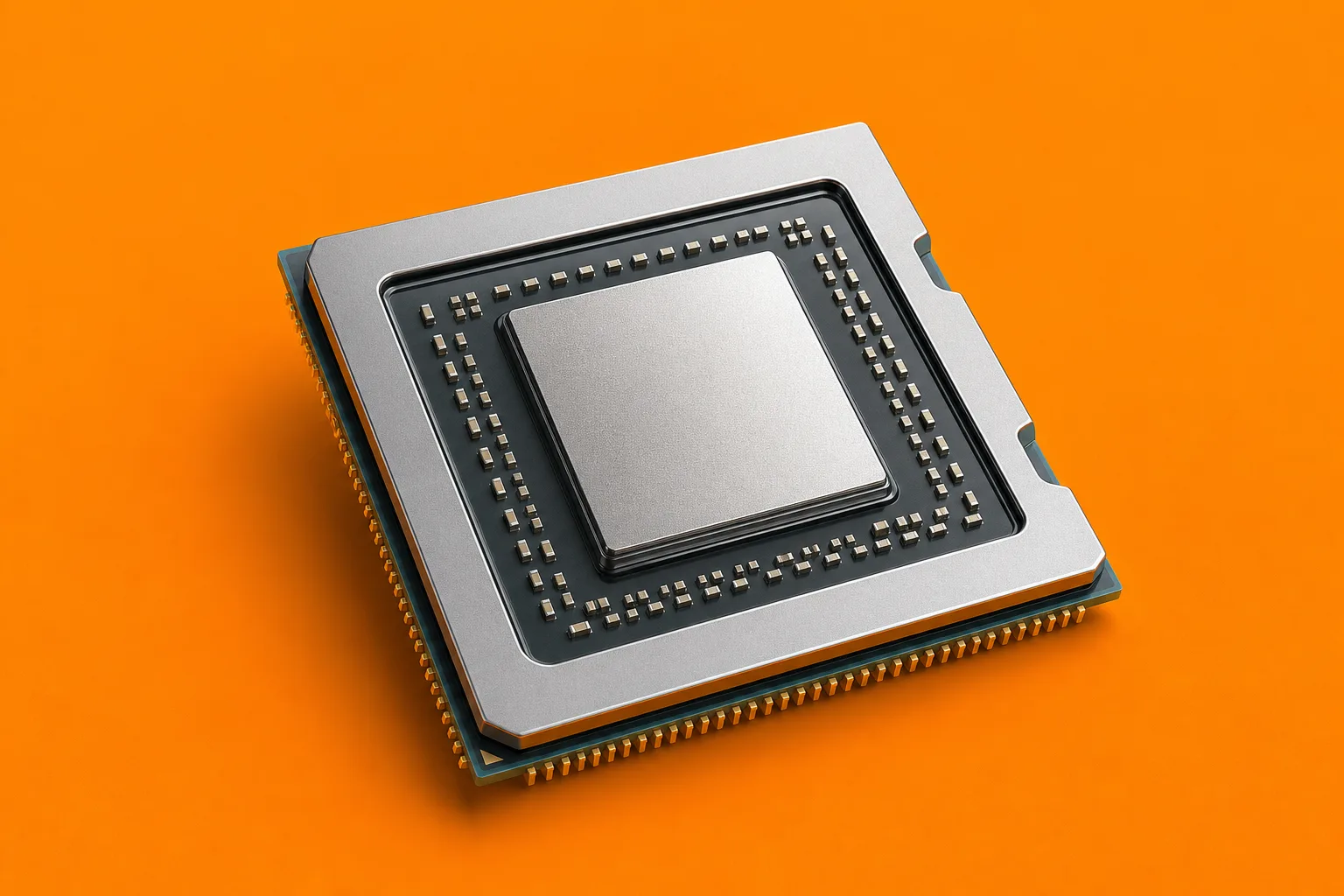
Nvidia’s push into the Windows PC market became the defining market catalyst on June 2, overshadowing geopolitical tension and rising oil prices. The company unveiled the N1X, an Arm-based processor designed to serve as the main chip inside AI-focused Windows laptops, and the announcement quickly rippled across equities.
Arm Holdings surged about 10% on the session, while Intel fell nearly 6% and AMD dropped roughly 4% in early trading. The move underscored a larger investor view: AI infrastructure demand is no longer confined to data centers, and the next battleground may be the personal computer.
Major indexes still pushed higher despite risk signals elsewhere. The S&P 500 traded near 7,592, up about 0.16% and at a fresh record, while the Nasdaq Composite approached 27,016. That resilience highlighted how strongly semiconductor and AI-linked names continue to influence market direction.
Key Facts
- Nvidia introduced the N1X, an Arm-based Windows PC processor, with laptops expected to ship in fall 2025.
- Arm Holdings rose roughly 10%, while Intel fell nearly 6% and AMD lost about 4% in early trading.
- The S&P 500 traded near 7,592, the Dow near 51,167, and the Nasdaq Composite near 27,016 during the session.
- West Texas Intermediate crude climbed about 3.7% to $90.55 a barrel, while Brent rose around 3.2% to near $94.
- The 10-year U.S. Treasury yield held around 4.45%, keeping pressure on rate-sensitive sectors and small caps.
Nvidia PC Chip Launch
The N1X launch marks a strategic expansion for Nvidia beyond its dominant role in AI accelerators and data-center hardware. The chip combines an Arm-based 20-core CPU with Blackwell graphics architecture, delivering RTX-class performance without a separate discrete graphics card. Device makers expected to include the new silicon in upcoming systems include Microsoft, Dell, HP, ASUS, Lenovo, and MSI, placing Nvidia directly into the heart of the Windows ecosystem.
Why that matters is simple: the PC industry remains a massive installed base, and success there could challenge the long-standing dominance of x86 processors in Windows machines. Investors immediately interpreted the launch as a threat to Intel’s legacy position and a fresh validation of Arm’s architecture. For Nvidia, the product broadens its AI narrative by moving inference and agentic computing from centralized servers to on-device experiences.
The announcement also matters for enterprise buyers, laptop manufacturers, and software developers. If Nvidia can deliver high-performance local AI computing with strong battery life and premium graphics, the product could accelerate a new replacement cycle in higher-end PCs. That would create upside not only for chip designers, but also for OEM partners and parts of the broader hardware supply chain.
Nvidia’s PC move suggests the AI trade is expanding from the data center to the desktop, with major implications for Arm, Intel, and the next phase of computing demand.
Why Arm gained and Intel sold off
Arm’s gains reflected more than simple headline momentum. Nvidia’s decision to build a flagship Windows PC processor on Arm architecture gives the ecosystem a high-profile endorsement at a time when the industry is increasingly prioritizing efficiency, local AI processing, and integrated system design. For investors, the launch strengthened the argument that Arm-based computing can capture additional share in premium devices.
Intel’s decline reflected the opposite concern. The company still has substantial scale in PCs, but the market reaction showed how sensitive investors are to any sign that x86 could lose ground in one of its core profit pools. AMD was pulled lower as well, even though its product roadmap remains competitive in several segments. In the near term, the market treated Nvidia’s move as a category-defining event rather than just another product announcement.
Implications for Investors
For investors, the clearest takeaway is that AI leadership is widening across the semiconductor stack. Nvidia remains the center of the trade, but the impact now reaches licensing models, OEM hardware names, component suppliers, and software companies positioned to benefit from local AI workloads. Arm, Microsoft, HP, and Dell all stand to gain if this product category gains traction in premium laptops.
At the same time, the rally carries clear risks. Market breadth remains narrow, with the Russell 2000 lagging even as the S&P 500 and Nasdaq hit records. Higher bond yields and $90 oil create a more difficult backdrop for cyclical and rate-sensitive sectors. If AI-linked earnings fail to justify current multiples, leadership could become more fragile quickly.
Investors should also watch the distinction between announcement value and commercial execution. Launching a new PC chip is not the same as establishing a durable platform. Key signposts will include pricing, battery performance, software compatibility, enterprise adoption, and early shipment volumes from partners. Nvidia’s confirmation that its Vera CPU is already in full production with early customers including OpenAI, Anthropic, and SpaceX adds another layer of support to the broader AI spending thesis, but expectations are now elevated across the sector.
Outside semiconductors, the session showed that macro risks have not disappeared. Oil surged after military escalation involving the U.S. and Iran, raising concern about supply disruption through the Strait of Hormuz. Meanwhile, the Chicago PMI rose to 62.7 in May, its strongest reading in four years, reinforcing the view that economic activity remains firm enough to keep the Federal Reserve cautious. Those conditions could continue to favor select growth leaders while weighing on smaller, more rate-sensitive companies.
The next test for the market will be whether upcoming earnings and economic data confirm that AI demand is still accelerating fast enough to offset higher rates and geopolitical uncertainty. If that confirmation arrives, Nvidia’s PC chip launch may be remembered as the moment the AI trade moved decisively beyond the server rack.