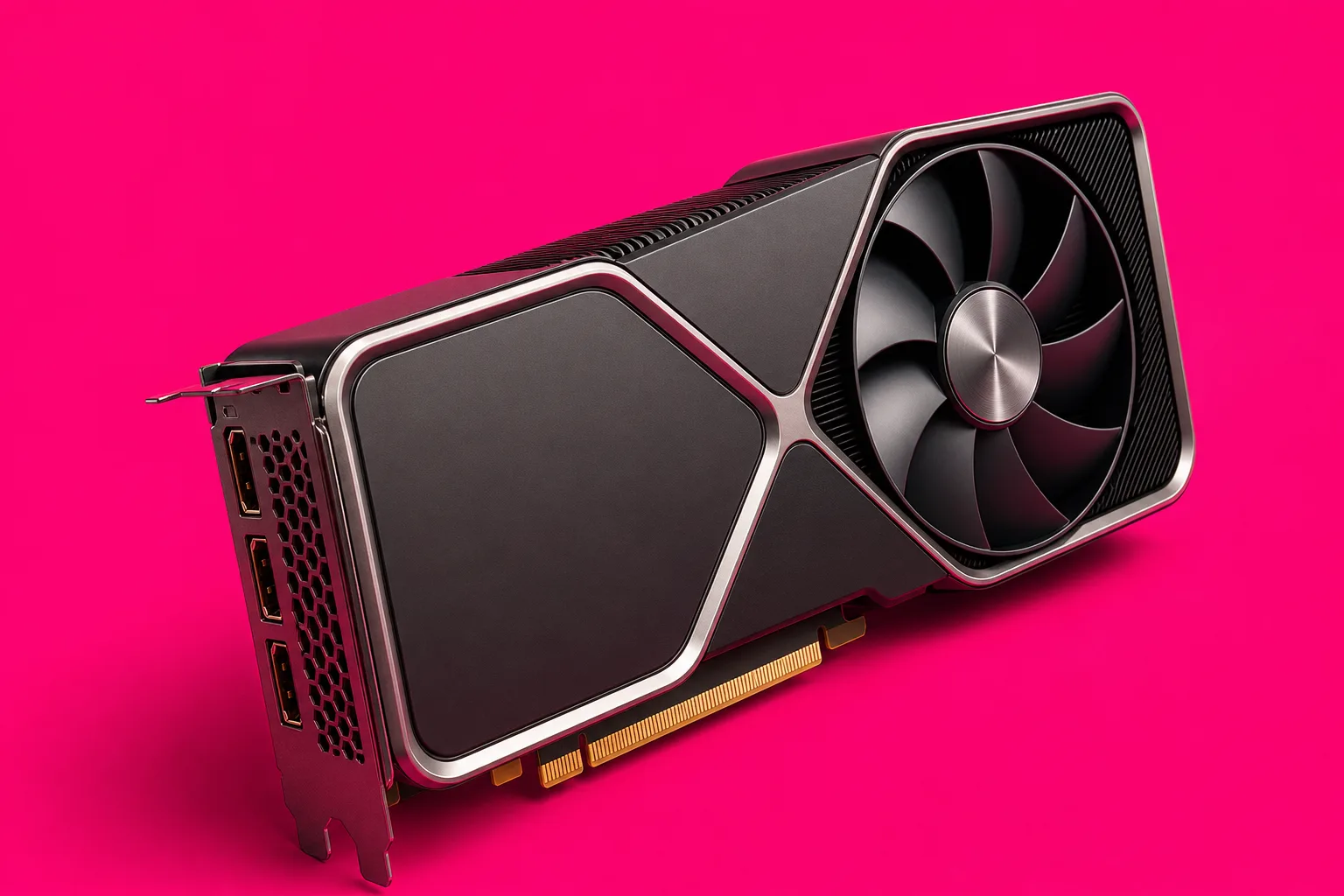
Nvidia and the broader chip sector drove U.S. equity futures lower at the start of the week, with Nasdaq 100 contracts falling far more sharply than Dow futures as investors reacted to leadership turmoil, regulatory questions and a crucial earnings report due on November 17.
By early premarket trading, Nvidia shares were down about 3.7% near $156.90 after closing at $162.85 on November 14. S&P 500 futures implied the benchmark near 7,538, below its prior 7,561.67 close, while Nasdaq 100 futures signaled another technology-led retreat.
The market message was clear: this was not a broad-based exit from risk assets, but a concentrated repricing of AI and semiconductor exposure at a moment when index concentration remains unusually high.
Key Facts
- Nvidia fell about 3.65% in premarket trading to roughly $156.90 after closing at $162.85 on November 14.
- S&P 500 futures implied a level near 7,538.01, or about 0.31% below the prior cash close of 7,561.67.
- Nasdaq 100 E-mini futures were down 273 points, or 0.97%, in early trading and briefly deepened toward a 1.5% loss.
- AMD was down 5.5% premarket, Intel 5%, and Broadcom and Micron each traded roughly 3.5% to 5% lower.
- Nvidia reports fiscal third-quarter results on November 17, with Wall Street expecting about $108.84 billion in revenue and earnings per share near $2.47.
Nvidia earnings and Nasdaq pressure
Nvidia sits at the center of this market move because it is both a company-specific event and an index-level risk. The stock has already fallen 12.75% over the past week and more than 30% over the past month, a slide tied to executive uncertainty after Jensen Huang’s resignation, questions over China-related compliance, and a rapidly shifting view of how much governance risk investors should price into one of the market’s most influential companies.
That matters well beyond a single ticker. Nvidia’s weighting in major benchmarks means an outsized post-earnings move can swing index performance on its own. Current estimates suggest that a 10% move in Nvidia could shift the S&P 500 by roughly 45 to 50 points and move the Nasdaq 100 by around 250 points. With the stock due to report after the bell on November 17, traders are positioning for a volatility event that could define the tone of the week.
The broader semiconductor complex is also under pressure because the market is reassessing whether Nvidia-specific risks could spread across peers. AMD, Intel, Broadcom and Micron all sold off in premarket trading. That suggests investors are no longer treating this as a contained management issue. Instead, they are considering the possibility of wider regulatory scrutiny, demand uncertainty and tighter funding conditions for the AI infrastructure trade.
Nvidia is no longer just an earnings story; it is a governance, regulation and index-concentration story all at once.
Why the selloff is concentrated, not systemic
The split between the major indices is important. Dow futures were roughly flat while the Nasdaq sank, indicating rotation rather than panic. Friday’s cash session already showed this pattern: the S&P 500 fell 0.40%, but the equal-weight version of the index rose 0.20%, and advancers outnumbered decliners 314 to 185. In other words, the median stock held up better than the benchmark because the heaviest technology names did most of the damage.
Credit markets also remained relatively orderly. High-yield spreads stayed near 320 basis points and investment-grade spreads around 89 basis points, while major junk-bond ETFs moved only modestly. When credit does not confirm an equity decline, investors typically read the move as a positioning reset rather than the beginning of a wider market dislocation. That distinction is especially relevant with Treasury yields still elevated and sector leadership shifting toward energy, financials, staples and health care.
Implications for Investors
For portfolio managers, the immediate issue is concentration risk. Nvidia’s influence on passive benchmarks means even diversified index investors are exposed to a single earnings release in an unusually direct way. Investors should watch not only the headline numbers, but also management commentary on gross margin, China exposure, governance and succession. In this setup, narrative may matter more than a modest revenue beat.
The second issue is sector rotation. Recent trading shows that money has not left equities altogether; it has moved away from the most crowded AI and chip trades toward parts of the market with lower valuation pressure and less event risk. Energy, industrials, financials and equal-weight strategies have been more resilient. That does not guarantee outperformance, but it does suggest investors may continue rewarding balance-sheet strength and less concentrated earnings exposure if semiconductor volatility persists.
The third issue is the macro backdrop. The 10-year Treasury yield climbed above 5.15% last week, raising the hurdle rate for high-multiple growth stocks. This week’s Fed minutes, along with upcoming retail sales and industrial production data, could either reinforce or ease that pressure. A higher-rate environment tends to be least forgiving for long-duration growth assets, which helps explain why AI infrastructure names, server makers and crypto-linked stocks have been particularly sensitive.
Another event for investors to monitor is the planned Nasdaq debut of Anthropic later in the week. A very large AI-focused IPO can absorb liquidity from existing technology holdings, especially if institutional buyers need to fund allocations by trimming current positions. That dynamic may add short-term pressure to megacap tech and semiconductor names already contending with Nvidia-driven uncertainty.
The next 72 hours could determine whether this becomes a contained technology reset or a broader challenge to index leadership. If Nvidia stabilizes guidance and addresses governance concerns, the market may regain footing quickly; if not, the Nasdaq’s weakness could deepen even as the rest of the market remains comparatively resilient.