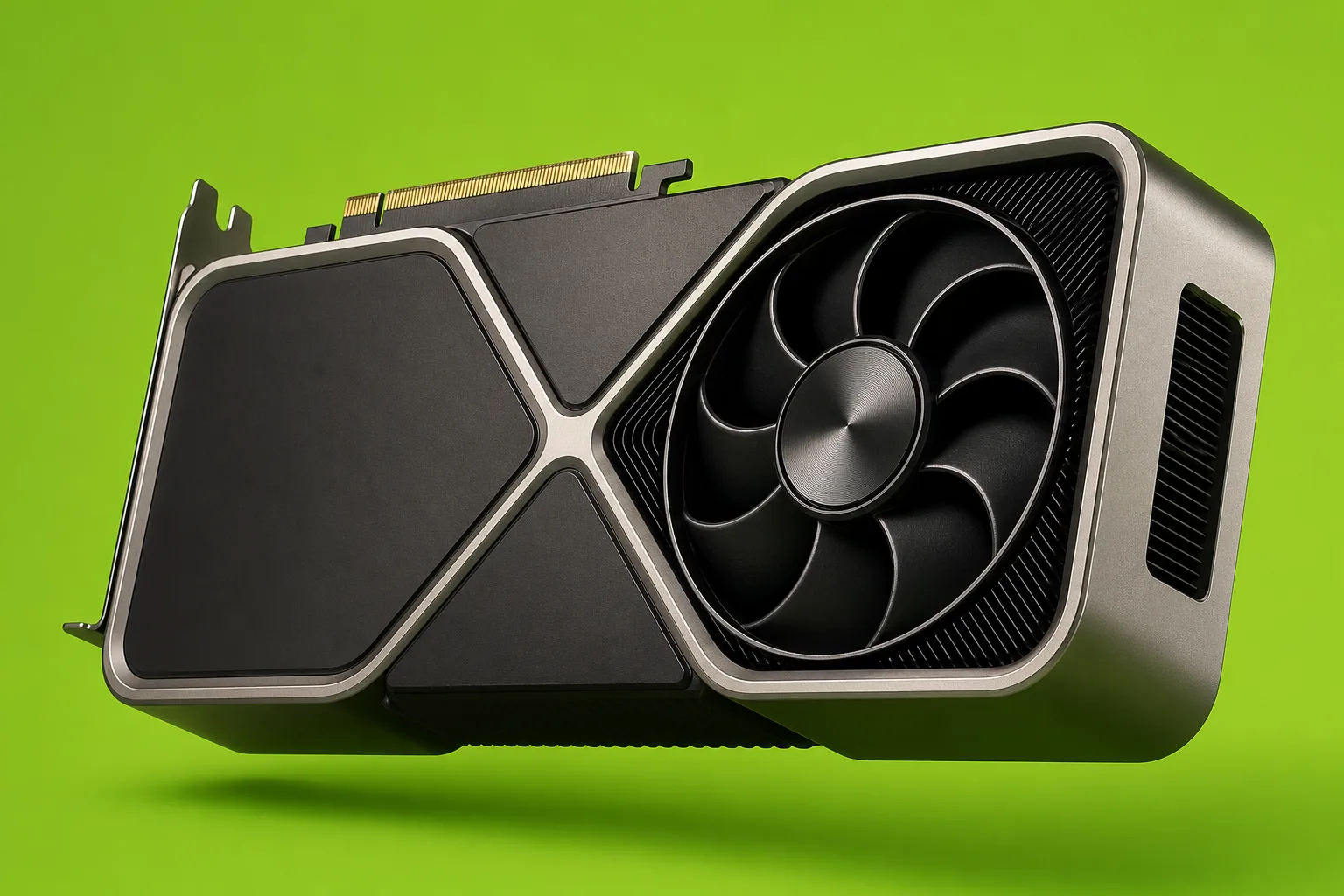
Nvidia stock moved sharply higher after the company unveiled its new N1X processor for Windows PCs, a product launch that broadens its artificial intelligence strategy beyond the data center. Shares traded near $220.67, up more than 4%, putting the stock within reach of its $236.54 all-time high.
The N1X debut arrived alongside renewed attention on Nvidia’s core business, where data center revenue reached $75.2 billion in the latest quarter. For investors, the combination of a powerful existing engine and a newly targeted PC market is the central reason the stock’s growth story is being reassessed.
The latest move also matters because Nvidia is no longer being valued only as a supplier of AI accelerators for cloud providers. By entering the Windows PC processor market with Microsoft collaboration and a fall launch window for RTX Spark laptops, the company is making a direct push into a category long dominated by traditional x86 players.
Key Facts
- Nvidia shares traded around $220.67 after rising more than 4%, versus an intraday range of $215.10 to $222.17.
- Data center revenue reached a record $75.2 billion in the latest quarter, up 92% year over year and 21% sequentially.
- Total quarterly revenue came in at $81.6 billion, while GAAP earnings were $1.87 per share versus a $1.77 consensus expectation.
- Free cash flow rose to $49 billion, and the company authorized an additional $80 billion in share repurchases.
- The stock remains about 7% below its all-time high of $236.54, with a 52-week range of $135.40 to $236.54.
Nvidia stock and the N1X PC chip launch
The immediate catalyst for Nvidia stock was the N1X reveal at Computex in Taipei, where Chief Executive Jensen Huang positioned the chip as a major shift in personal computing. The processor is designed to sit at the center of a Windows PC, extending Nvidia’s reach from AI infrastructure into endpoint devices where AI workloads can run locally.
That matters because the PC market is far larger in unit terms than the high-end AI server market, even if margins and average selling prices differ. A successful entry gives Nvidia access to a new total addressable market while reinforcing demand for its software, graphics, and AI ecosystem. It also places direct pressure on Intel and AMD, whose x86 architecture has defined mainstream Windows computing for decades.
The strategic value is not just hardware volume. Nvidia is trying to create a more vertically integrated AI platform spanning cloud training, inference, networking, CPUs, and now AI-enabled PCs. If that approach gains traction, the company could deepen customer lock-in across consumer, enterprise, and developer environments, making its ecosystem more durable than a single-product story.
Nvidia is no longer just defending its leadership in AI servers; it is trying to extend that leadership into the Windows PC market and reshape the next upgrade cycle around on-device AI.
Why the data center business still drives the story
Even with the N1X launch drawing headlines, the foundation of the bull case remains Nvidia’s data center franchise. Revenue in that segment hit $75.2 billion, including $60.4 billion from compute and $14.8 billion from networking. The networking figure, up 199% from a year earlier, suggests customers are buying broader systems rather than isolated chips.
That distinction is critical for margins and competitive positioning. Nvidia is selling a platform that includes GPUs, interconnect, software, and increasingly CPUs. Non-GAAP gross margin held near 75% even as Blackwell products scaled, easing fears that newer product ramps would pressure profitability. For a company of Nvidia’s size, maintaining that level of margin while delivering 85% revenue growth is highly unusual and central to its premium valuation.
Implications for Investors
For investors, the most important takeaway is that Nvidia now has two visible growth levers operating at the same time. The first is the data center business, which continues to expand at a pace that remains exceptional even against already elevated expectations. The second is the company’s attempt to open a new market in AI PCs, which could add another layer of growth optionality if adoption is strong.
There are also reasons to remain disciplined. Nvidia’s valuation already reflects very high expectations, and execution risks remain meaningful. Investors will need to monitor whether the N1X translates into commercial momentum, whether the Blackwell ramp stays on schedule, and whether the future transition to Rubin in 2026 proceeds smoothly. Any disruption in product cadence could affect estimates across the semiconductor supply chain.
Geopolitical risk is another watch point. China remains an overhang after the quarter included no data center Hopper shipments there, versus $4.6 billion in the comparable period a year earlier. Yet the company’s ability to produce record growth despite that lost business also underscores how strong demand is elsewhere, particularly from hyperscalers, enterprises, AI cloud providers, and sovereign AI projects.
From a portfolio perspective, Nvidia remains both an opportunity and a concentration risk. The stock’s beta of 1.42 and volatility near 6.3% indicate that gains can be significant, but pullbacks can be equally sharp. Investors considering exposure may want to focus on position sizing, upcoming product milestones, margin trends, and whether the shares can hold above recent breakout levels as they approach the $226 area and potentially retest the $236.54 peak.
The next phase for Nvidia will depend on whether it can convert product ambition into sustained revenue streams across both cloud and client computing. If the N1X launch gains traction while data center demand remains intact, the company’s growth narrative could extend well beyond its current record-setting run.