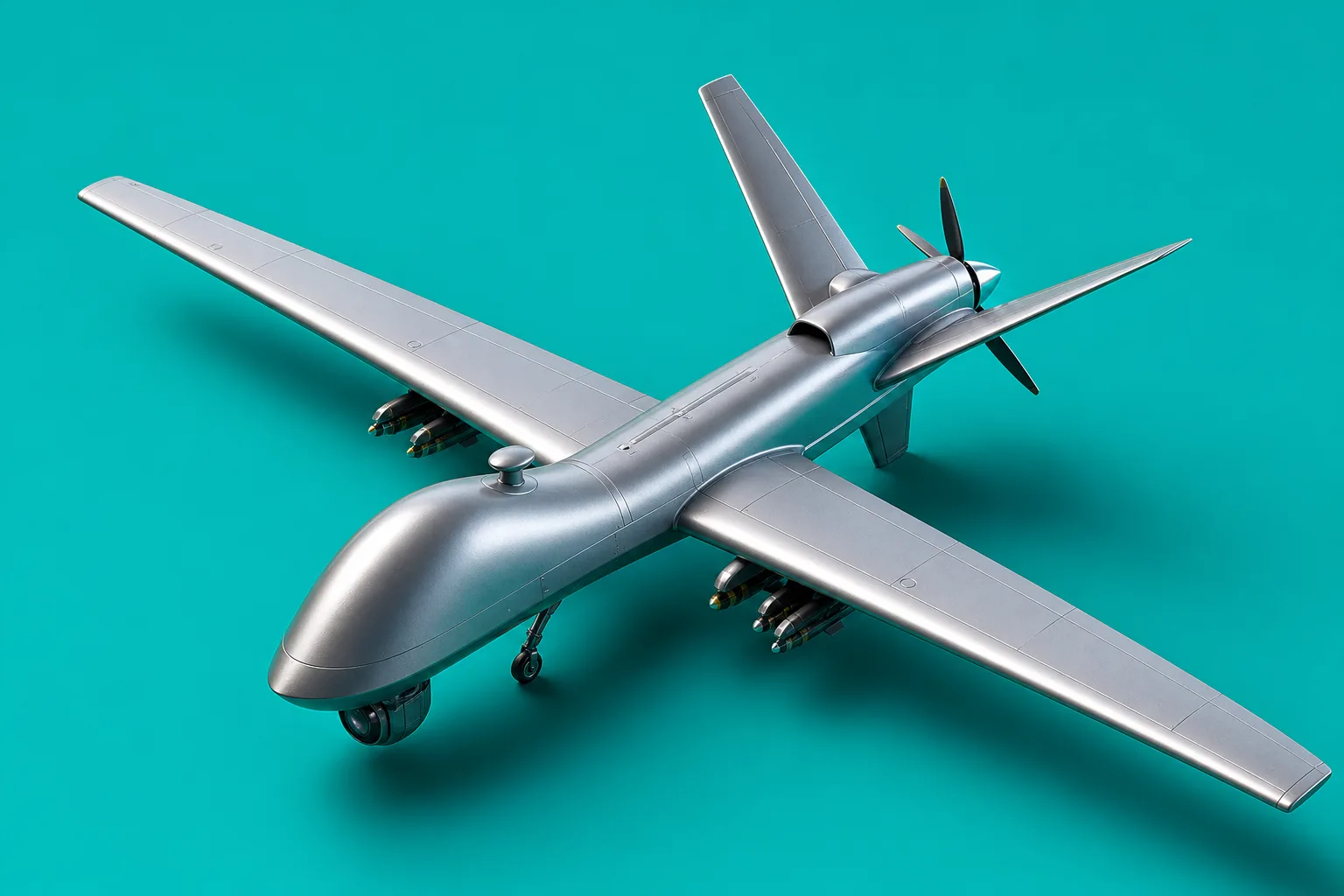
Ondas is drawing fresh investor attention after the U.S. Air Force more than doubled the value of a key contract tied to DZYNE Technologies’ ULTRA drone program. A $46.1 million contract modification increased the total award to about $85.6 million, underscoring growing military interest in long-endurance uncrewed aircraft.
The enlarged award matters because ULTRA is emerging as a potential lower-cost platform for intelligence, surveillance, and reconnaissance missions that have long been associated with the MQ-9 Reaper. With defense planners emphasizing scalable and more affordable autonomous systems, the program now carries broader significance for both defense procurement and Ondas’ growth outlook.
The contract expansion also arrives as investors reassess the market opportunity for Group 5 drones, particularly platforms that can be fielded faster and at lower cost than traditional manned aircraft or larger uncrewed systems.
Key Facts
- The Air Force awarded DZYNE Technologies a $46,087,217 contract modification, lifting the total contract value to $85,643,057 from $39,555,840.
- The work is scheduled to continue through March 26, 2031, with performance taking place in the United States and at overseas locations.
- At the time of the award, $12,288,390 in fiscal 2025 research, development, test, and evaluation funds were obligated.
- The contract is tied to the operational assessment of an uncrewed long-endurance tactical reconnaissance aircraft, widely seen as aligning with the ULTRA platform.
- Ondas shares recently closed around $7.64, while the stock carried a short interest near 41% of float.
ULTRA drone contract
The contract increase signals that the Air Force is committing additional resources to evaluating and potentially scaling a long-endurance surveillance drone that could fill important mission gaps. DZYNE, now part of Ondas, has been developing the ULTRA aircraft with support from the Air Force Research Laboratory. The aircraft has attracted attention because it appears aimed at persistent ISR missions, a role that is strategically important and operationally demanding.
For Ondas, the significance goes beyond the dollar value of a single contract action. A larger funded runway through 2031 gives the company a stronger position in a defense market that increasingly favors autonomous systems able to deliver lower operating costs, modular payload flexibility, and reduced risk compared with manned platforms. If ULTRA performs well in assessment and deployment settings, the program could move from a development story to a production and sustainment story.
The broader defense context also matters. Military planners have made clear that future force design will emphasize more numerous, lower-cost and potentially attritable aircraft. In that environment, a platform like ULTRA could appeal not only as a supplement to legacy ISR fleets, but also as part of a wider transition toward distributed autonomous operations.
The Air Force’s larger commitment suggests that low-cost, long-endurance ISR drones are moving from experimental capability to a more central role in future force planning.
Why the Air Force interest is increasing
Senior Air Force leadership has recently highlighted the need to accelerate unmanned aircraft modernization over the next several years. Public comments at a major defense conference pointed to the value of ISR strike platforms and referenced both MQ-9 and ULTRA aircraft in operational use. The same remarks outlined a broader plan to field 100 Mass Modular Aircraft in 2029 and expand that number to 500 operational platforms by 2032.
That roadmap is important because it frames ULTRA within a larger procurement philosophy. The military is no longer focused only on a few exquisite systems; it is also seeking aircraft that can be produced at scale and deployed affordably. If ULTRA can demonstrate endurance, mission reliability, and acceptable operating economics, it could benefit from this shift in acquisition priorities.
Implications for Investors
For investors, the immediate takeaway is that Ondas now has a stronger defense-program catalyst than it did before the contract modification. An award growing from roughly $39.6 million to $85.6 million is not a routine incremental change; it indicates deeper customer engagement and extends visibility into future work. That can matter for revenue expectations, backlog quality, and market perception of the DZYNE acquisition.
The opportunity, however, should be weighed against execution risk. Defense contracts can expand further, but they can also be slowed by budget negotiations, testing milestones, procurement reviews, or shifting Pentagon priorities. Investors should watch whether the operational assessment leads to follow-on production orders, whether additional funding is appropriated, and whether Ondas can convert technical momentum into a repeatable defense revenue stream.
There is also a market-structure angle. With short interest around 41% of float, the stock could be volatile around any new contract announcements, program milestones, or signs that ULTRA is moving closer to wider deployment. High short interest can amplify upside if positive news forces bearish positions to unwind, but it can just as easily intensify downside if expected follow-on awards do not materialize on schedule.
The next phase for Ondas will hinge on proof points: program execution, additional funding, and evidence that ULTRA can secure a durable place in the Air Force’s evolving unmanned fleet. Investors will be watching closely for whether this enlarged award becomes the foundation for a broader multi-year drone procurement story.