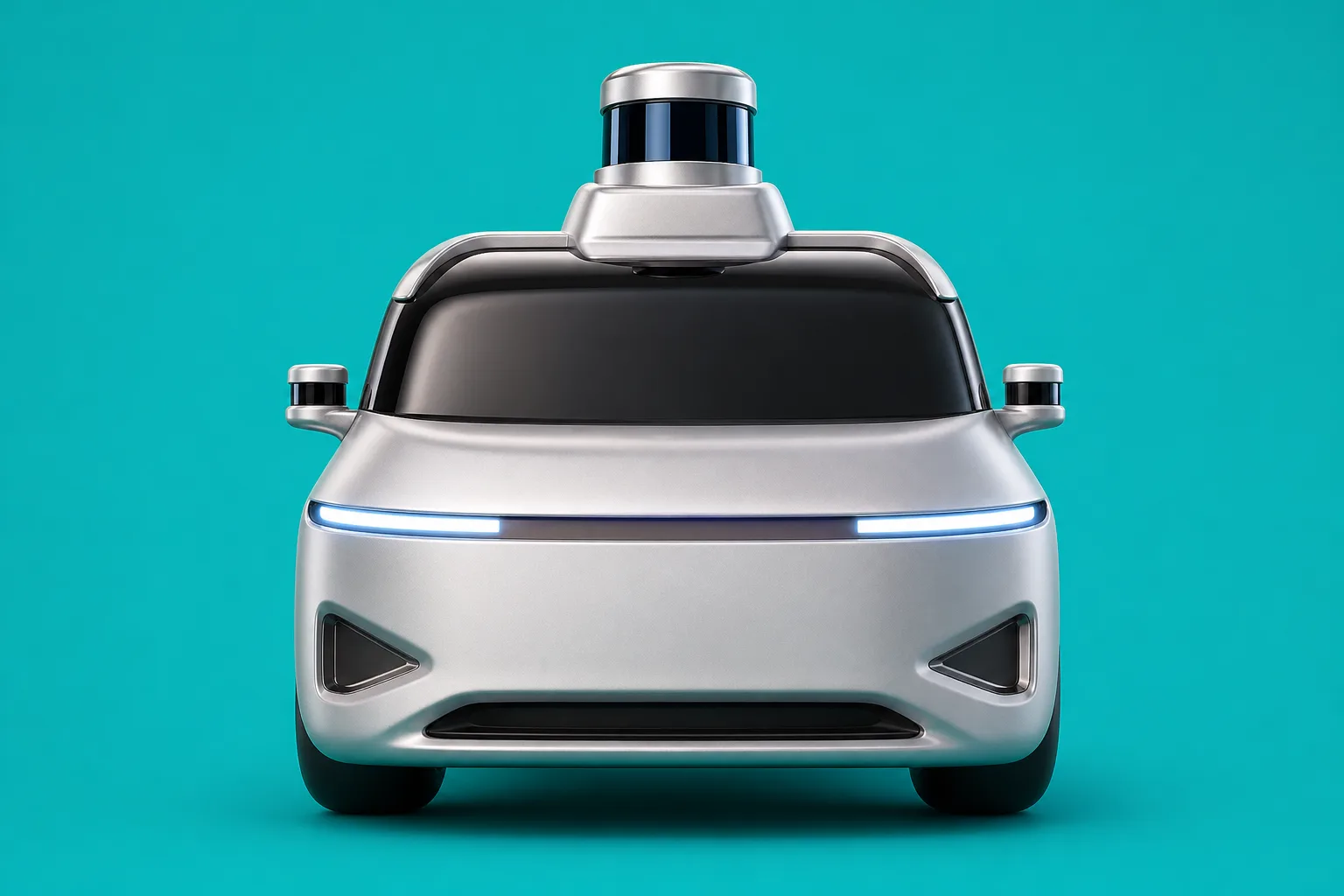
Pony AI and Toyota have launched fully driverless commercial robotaxi service in Guangzhou, marking a significant step in China’s race to commercialize autonomous transport at scale. The service uses the companies’ jointly developed seventh-generation bZ4X robotaxi and is available to passengers around the clock.
The Guangzhou debut matters beyond a single city. It is tied to a broader plan to deploy about 1,000 bZ4X robotaxis across major Chinese urban markets as production increases, shifting the partnership from testing and pilot operations toward larger commercial deployment.
For investors, the key question is whether robotaxi deployment can move from a capital-intensive technology story to a repeatable operating model. Fleet availability, utilization, regulation, and manufacturing scale will determine whether this launch becomes a meaningful revenue driver for Pony AI over time.
Key Facts
- Pony AI and Toyota launched fully driverless commercial robotaxi service in Guangzhou on Sunday using the seventh-generation bZ4X robotaxi.
- The companies plan to deploy approximately 1,000 bZ4X robotaxis across major Chinese cities as production ramps up.
- In 2023, Pony AI, Toyota Motor China, and GAC Toyota agreed to form a joint venture with investment exceeding 1 billion yuan.
- The first mass-produced bZ4X robotaxi rolled off the production line in February 2026.
- Pony AI shares traded at $4.40 in premarket action on Monday, with key support at $4.27 and resistance at $4.82.
Pony AI robotaxi launch
The launch in Guangzhou expands Pony AI’s fully driverless commercial fleet and gives Toyota a visible role in one of the most important real-world autonomous mobility markets. The companies have worked together on autonomous driving technology since 2019, and their cooperation has already extended robotaxi operations to Beijing, Shanghai, Guangzhou, and Shenzhen.
What changes with the new bZ4X robotaxi is the degree of industrialization behind the service. The vehicle was designed specifically for Level 4 autonomous driving, meaning it can operate without human intervention under defined conditions. That distinction matters because commercial viability depends not only on the software stack but also on whether vehicles can be built, serviced, charged, and redeployed efficiently in dense city environments.
Passengers in Guangzhou can book rides through the PonyPilot app as well as through major digital platforms including WeChat and Alipay. That broad access could improve customer acquisition and ride frequency. Pony AI expects the larger fleet to increase vehicle availability and operating efficiency, which are critical metrics for any robotaxi business trying to spread fixed costs across more paid trips.
Scaling robotaxis is no longer just a technology challenge; it is a manufacturing, operations, and infrastructure challenge.
Why the Guangzhou rollout stands out
The Guangzhou service is notable because it links software maturity with production readiness. The first mass-produced bZ4X robotaxi came off the line in February 2026, giving the partnership a clearer path from prototype fleets to standardized commercial vehicles. Mass production can reduce unit costs over time and create more consistency in maintenance, safety validation, and component sourcing.
The in-vehicle experience also shows how robotaxi offerings are being packaged as consumer products rather than experimental rides. The seventh-generation vehicle includes Bluetooth-enabled unlocking, voice assistance, in-car entertainment, and personalized climate controls. Pony AI also says the upgraded autonomous driving system enables smoother acceleration, braking, and cornering, features that can directly influence rider comfort and repeat usage.
The infrastructure buildout is just as important. Pony AI and Toyota are working on charging, maintenance, and fleet servicing alongside vehicle production. Without that support network, scaling to hundreds or thousands of autonomous vehicles would be difficult, even if the underlying driving technology performs well.
Implications for Investors
For investors following autonomous driving, the Guangzhou launch offers a concrete sign that Pony AI is moving deeper into commercialization. The company is not merely testing technology; it is putting fully driverless vehicles into 24-hour service in a major Chinese city and preparing for expansion elsewhere. That can strengthen the long-term investment case if ride volume, safety performance, and unit economics improve with scale.
At the same time, near-term financial risk remains elevated. Pony AI is scheduled to report earnings on Nov. 18, with analysts expecting a loss of $0.41 per share compared with a loss of $0.14 a year earlier. Revenue is projected to rise sharply to $83.38 million from $25.44 million, suggesting strong top-line growth but continued pressure on profitability as the company invests in deployment and infrastructure.
The stock’s technical picture shows that sentiment is still cautious. Shares were 8.7% below the 20-day simple moving average and 49.4% below the 200-day average, indicating persistent weakness despite the commercial progress. Support stands at the 52-week low of $4.27, while resistance is identified at $4.82. Investors will likely watch whether operational milestones can begin to outweigh broader market pressure on high-growth, cash-burning technology names.
There is also a strategic angle for Toyota. A successful robotaxi rollout can give the automaker a stronger foothold in next-generation mobility while leveraging its manufacturing and engineering scale. For Pony AI, Toyota’s involvement may help reduce execution risk in vehicle production and fleet operations, two areas where many autonomous startups have historically struggled.
Looking ahead, the central issue is whether Pony AI and Toyota can convert localized driverless service into a repeatable multi-city platform. Investors should watch expansion beyond Guangzhou, fleet utilization trends, regulatory developments, and whether rising revenue can begin to narrow losses as the 1,000-vehicle deployment plan advances.