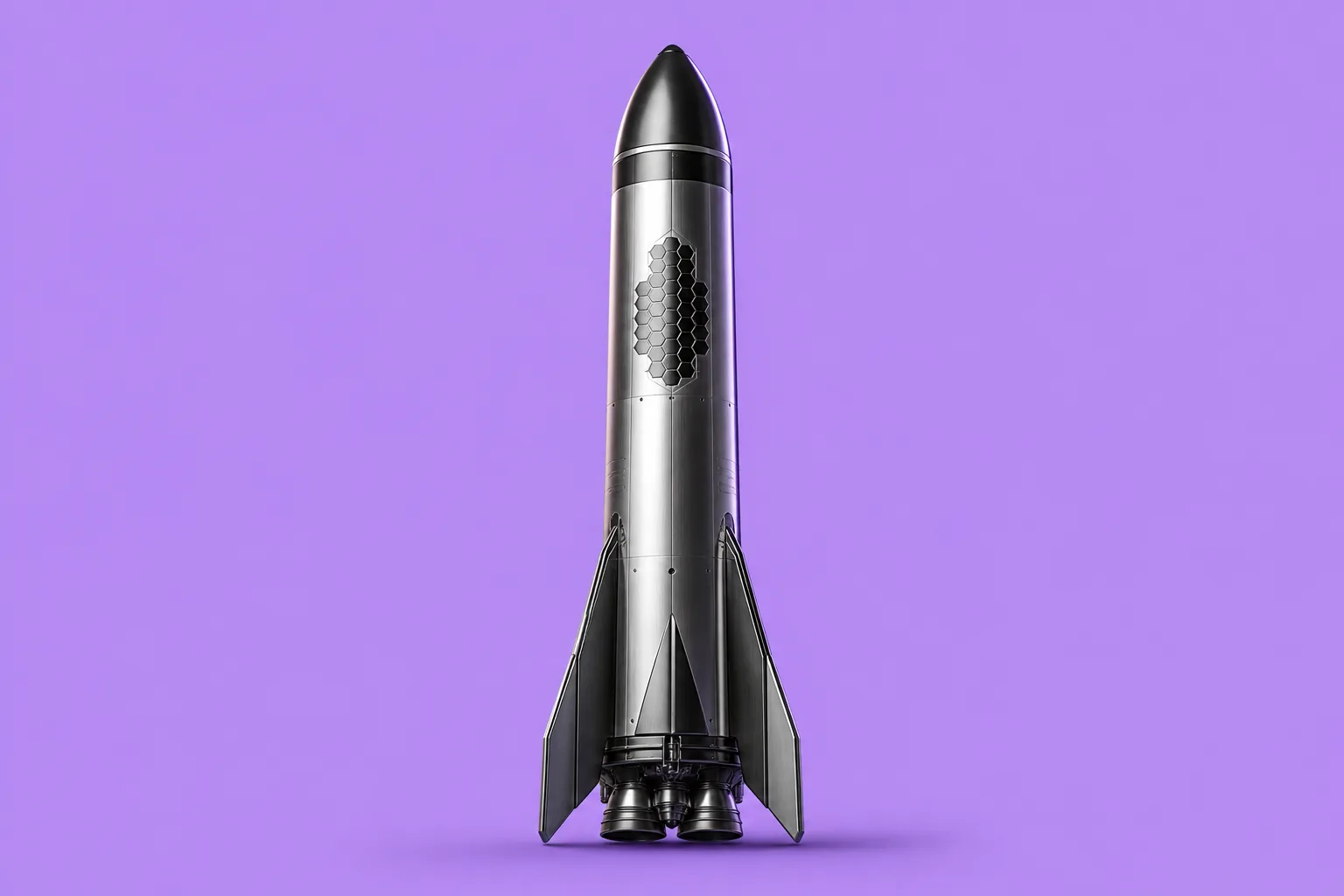
Rocket Lab’s Neutron delay has abruptly reset the market’s timeline for one of the most closely watched growth stories in the space sector. Shares of Rocket Lab fell 17.5% over two trading sessions, dropping from $64.22 at Tuesday’s close to about $53.00 by late Thursday morning after the company moved Neutron’s first launch target to 2027 from the fourth quarter of 2026.
The selloff triggered an outsized move in the Defiance Daily Target 2X Short RKLB ETF, ticker RKLZ, which rose to $25.10 in extended trading from $18.54 a day earlier. The jump highlighted both the speed of sentiment reversal around Rocket Lab and the amplified risks tied to leveraged single-stock ETFs.
For investors, the key issue is not just the one-day shock. The bigger question is whether the Neutron setback delays a major future revenue engine long enough to pressure valuation, funding needs, and confidence in Rocket Lab’s long-term execution.
Key Facts
- Rocket Lab said after the market close on Wednesday that Neutron’s first launch is now expected in 2027, versus a prior fourth-quarter 2026 target.
- RKLB fell 17.5% over two sessions, declining from $64.22 on Tuesday to around $53.00 by late Thursday morning.
- RKLZ climbed to $25.10 in extended trading, up 35.38% from $18.54, as the inverse ETF benefited from RKLB’s drop.
- Rocket Lab has raised $1.53 billion through at-the-market stock sales in the first half of 2026, increasing focus on possible future dilution.
- The company reported a $2.2 billion backlog across launch and space systems, providing an operational cushion while Neutron remains in development.
Rocket Lab Neutron Delay
The immediate catalyst was a manufacturing issue in a first-stage propellant tank dome for Neutron, Rocket Lab’s reusable medium-lift rocket. Engineers identified microscopic gaps between layers of carbon fiber, forcing the company to rework its process and build a replacement part. Management indicated the fix has been identified, but the revised schedule still pushes the launch milestone into 2027.
That matters because Neutron sits at the center of Rocket Lab’s long-term expansion strategy. The company’s current business is built around the Electron small-lift rocket, HASTE suborbital missions, and a growing space systems operation. Neutron is meant to open a larger addressable market and compete more directly in medium-lift launches, a segment with greater strategic and financial importance.
The latest delay also revives a recurring concern: schedule slippage. Since Neutron was unveiled in 2021, its first-flight target has moved from 2024 to mid-2025, then to 2026, and now to 2027. Each delay extends development spending while postponing potential launch revenue. For equity holders, that shifts more of the company’s valuation back onto future execution rather than near-term cash generation.
Neutron remains the core of Rocket Lab’s growth story, but every launch delay pushes that story further into the future while investors bear the cost in the present.
Why RKLZ reacted so sharply
RKLZ is built to deliver minus two times the daily move in Rocket Lab shares, before fees and expenses. That means a 10.45% daily drop in RKLB implies a targeted gain of about 20.9% for the ETF on that session alone. Because the fund resets daily, consecutive declines in the stock can generate compounded gains for the inverse product over very short periods.
Still, RKLZ is a tactical instrument rather than a conventional investment. The fund had a market capitalization of just $2.43 million, making liquidity a meaningful issue. Thin trading can widen bid-ask spreads during volatile sessions, and multi-day returns can diverge sharply from the simple inverse of Rocket Lab’s cumulative move because of daily rebalancing effects.
Implications for Investors
For Rocket Lab shareholders, the first implication is a higher execution premium. Investors now need to assess whether the 2027 target is a manageable engineering delay or another sign that development timelines remain difficult to pin down. If the market believes the issue is isolated and solvable, shares may stabilize. If confidence weakens further, attention could shift quickly to lower technical levels, including the $50 area and then roughly $47.
The second implication is financing risk. Rocket Lab’s $1.53 billion in at-the-market equity issuance during the first half of 2026 already underscored how capital-intensive Neutron’s buildout has become. A longer development runway raises the possibility of additional share sales, which can dilute existing holders and cap near-term upside. In a market still sensitive to rates and long-duration growth assets, that risk carries more weight than it might in a looser funding environment.
At the same time, the company is not without support. Rocket Lab’s $2.2 billion backlog provides a substantial base of contracted business, and its operational footprint extends beyond Neutron alone. That means the stock is unlikely to trade purely as a binary launch-date bet. Positive updates from Electron launches, defense-related work, or space systems contracts could help sentiment recover even before Neutron reaches the pad.
Investors considering RKLZ should be especially cautious. Leveraged inverse single-stock ETFs can produce dramatic gains during a sharp, directional selloff, but they are structurally vulnerable in volatile, range-bound trading. A rebound in RKLB of 10% could translate into roughly a 20% hit to RKLZ in a single day. With a small asset base, relatively high costs, and path-dependent returns, the product is better viewed as a short-term trading vehicle than a portfolio holding.
Macro conditions also remain relevant. Rocket Lab’s initial weakness came during a broader retreat in growth stocks, and companies with high capital needs and profits further out in time tend to be hit hardest when rates rise. If bond yields remain elevated or central bank policy stays restrictive, investors may continue to apply pressure to speculative aerospace and space-technology names.
From a portfolio perspective, Rocket Lab now presents a more complex balance of risk and reward. The selloff has reduced some valuation optimism, but it has not removed the need for flawless future execution. Investors should watch for updates on Neutron manufacturing progress, any new capital-raising activity, and whether RKLB can defend the psychologically important $50 level.
The next phase for Rocket Lab will likely be defined by proof, not promise. If management can demonstrate steady progress on Neutron and maintain commercial momentum elsewhere, the stock may rebuild trust; if delays deepen or funding pressures rise, the market may demand a steeper discount.