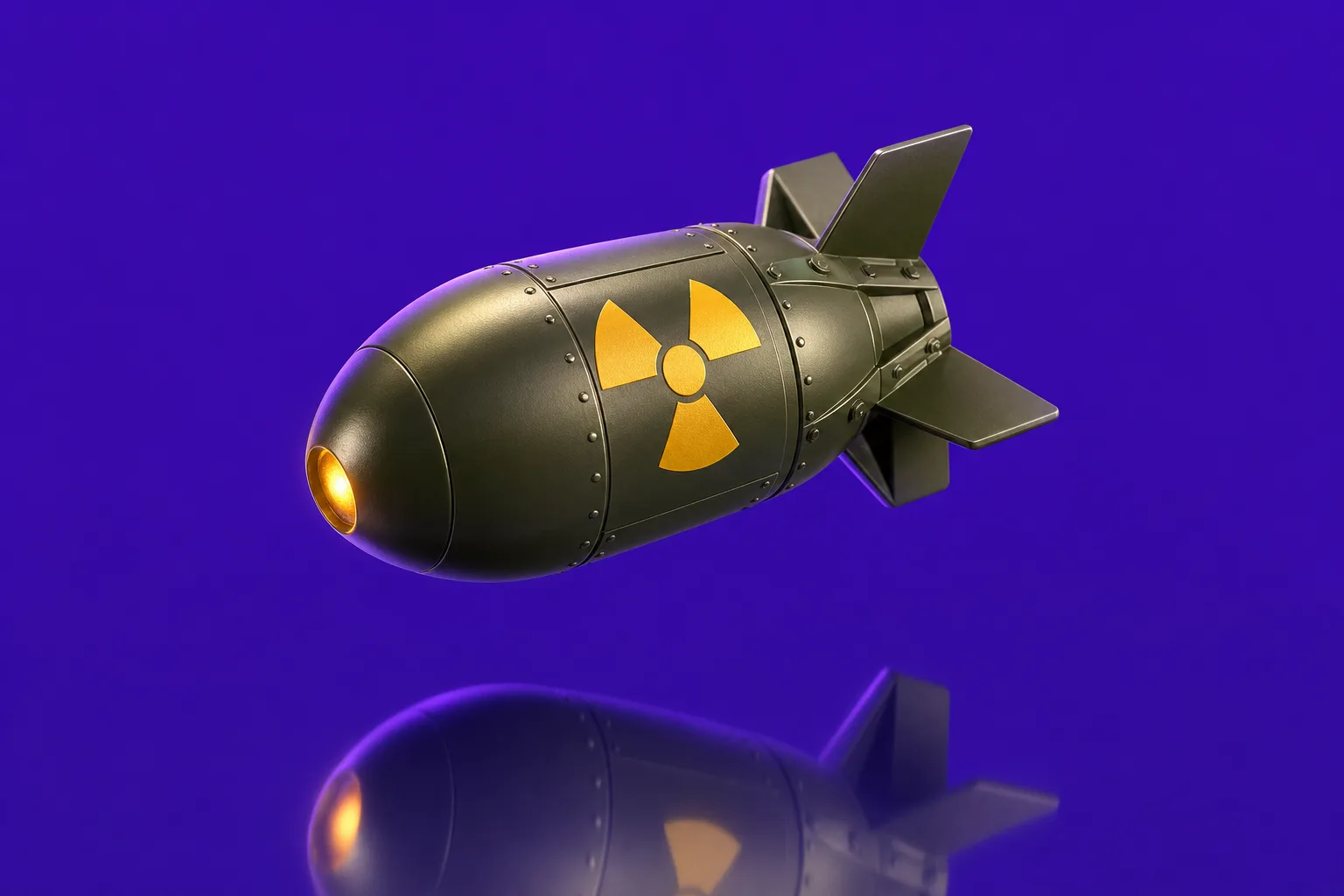
Russia-Europe nuclear risk has re-emerged as a serious market concern after a cluster of military and diplomatic signals underscored how far the war in Ukraine has broadened into a wider security confrontation. The central issue is not a confirmed shift to nuclear use, but the normalization of public nuclear messaging by major European and Russian officials.
Recent events have intensified that concern. Military representatives from all 32 NATO members gathered in Kyiv, France conducted a submarine-launched ballistic missile test, and Moscow renewed warnings that Russian territory, including Kaliningrad, falls under its nuclear umbrella.
For investors, the significance lies in how strategic rhetoric can affect risk assets long before any battlefield change occurs. Defense spending expectations, regional energy pricing, sovereign spreads, and safe-haven flows can all react when deterrence language becomes more explicit.
Key Facts
- NATO has 32 member states, and military representatives from all 32 were reported to have gathered in Kyiv during the latest show of support for Ukraine.
- France test-fired a submarine-launched ballistic missile over the Atlantic, with President Emmanuel Macron describing the launch as proof of deterrence credibility.
- Russia has warned that its nuclear doctrine applies to defense of its territory, including the Kaliningrad exclave between Lithuania and Poland.
- Russia’s population is roughly 150 million, while Europe’s population is about three times larger, a gap that shapes Moscow’s emphasis on strategic deterrence.
- Crimea has been under Russian control since 2014, remaining one of the core territorial disputes blocking a negotiated end to the war.
Russia-Europe Nuclear Risk
The latest escalation in rhetoric reflects a war that has hardened into a prolonged strategic contest with few obvious off-ramps. Ukraine continues to insist on restoring all territory claimed by Russia, including Crimea. Moscow has made clear that such a demand is unacceptable. That gap leaves both sides anchored to objectives the other rejects, increasing the value each places on deterrence and political signaling.
The European dimension has also deepened. NATO members increasingly frame the war as central to continental security, while Russian officials and policy voices depict the conflict as existential for Russia’s long-term survival. In that setting, symbolic actions carry more weight. A high-profile NATO presence in Kyiv and a French strategic missile test are read in Moscow not as isolated moves, but as indicators of sustained Western resolve.
Kaliningrad has become a particularly sensitive pressure point. The Russian exclave, wedged between Lithuania and Poland, is strategically important because it gives Russia direct access to the Baltic region. Any suggestion that the enclave could be militarily isolated or threatened risks triggering stronger Russian warnings. That matters beyond politics: investors tracking European transport, shipping, defense procurement, and energy logistics have to consider how quickly local tensions can feed into broader market volatility.
When nuclear signaling becomes routine in Europe, markets must price not just military risk, but the shrinking margin for policy error.
Why Kaliningrad and Deterrence Matter
Kaliningrad is more than a geographic anomaly. It sits at the intersection of Russian security planning and NATO’s eastern defense posture. Because the enclave is separated from mainland Russia, any crisis involving access routes, Baltic Sea operations, or neighboring NATO territory could escalate faster than a comparable dispute elsewhere in Europe.
That is why Russian warnings tied to Kaliningrad deserve close attention. Even if they are intended primarily as deterrent messaging, they raise the perceived cost of miscalculation. For markets, this creates a premium on assets linked to security resilience: missile defense, munitions production, cybersecurity, satellite systems, and critical infrastructure protection.
Implications for Investors
The first implication is continued support for the European defense trade. Governments across the region are likely to sustain or increase procurement plans as the security environment deteriorates. That trend can benefit defense contractors, suppliers of ammunition and missile systems, and firms involved in intelligence, surveillance, and logistics. Investors should still differentiate between companies with funded order books and those trading mainly on sentiment.
The second implication is renewed geopolitical sensitivity in European assets. Nuclear rhetoric does not need to translate into action to move markets. It can widen risk premiums in Central and Eastern Europe, strengthen demand for dollar and gold exposure, and add pressure to sectors that depend on stable cross-border energy flows or consumer confidence. Insurance, transport, and industrial names with Baltic or Eastern European exposure may face sharper headline-driven swings.
Third, energy remains a key watch-point. Even without a direct supply shock, strategic escalation can keep natural gas and power markets nervous, especially during periods of seasonal demand stress. Investors should monitor storage levels, LNG flows, infrastructure security, and policy decisions on emergency reserves. In fixed income, any rise in defense spending combined with slower growth could complicate fiscal trajectories for several European sovereigns.
The broader portfolio lesson is that geopolitical tail risk in Europe is no longer remote enough to ignore. Hedging strategies, sector diversification, and selective exposure to defense and safe-haven assets may become more relevant if strategic messaging continues to intensify through late 2026.
The next phase will depend less on a single headline than on whether military signaling keeps outrunning diplomatic engagement. If deterrence messages grow sharper while negotiation channels remain weak, investors should expect elevated volatility across European equities, bonds, currencies, and energy markets.