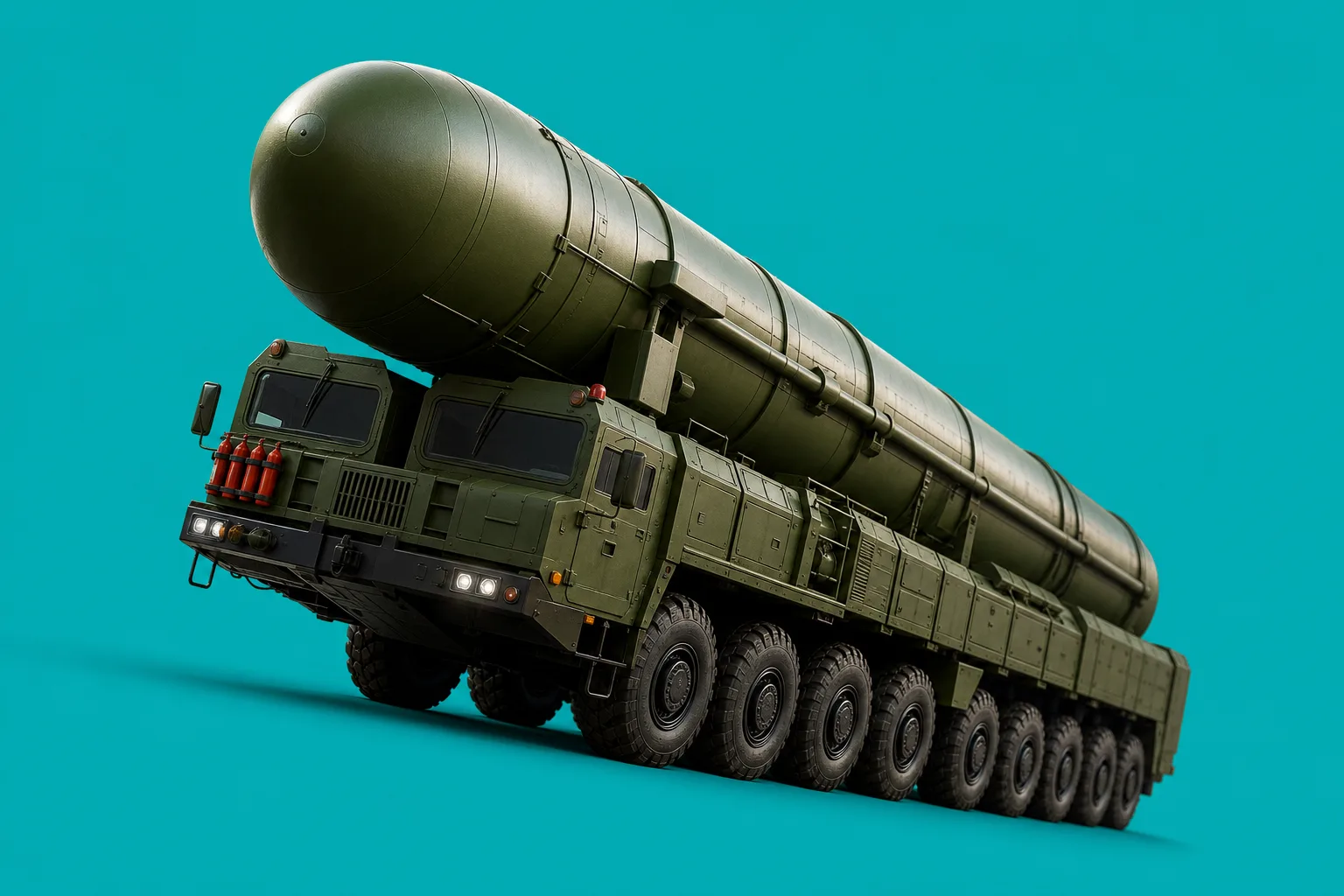
Russia announced on August 28, 2026 that it had completed a successful test launch of a mobile intercontinental ballistic missile, sending the weapon more than 6,700 kilometers from the Plesetsk Cosmodrome in the Arkhangelsk region to the Kura test range on the Kamchatka Peninsula.
The Russia ICBM test is significant not because a launch was unexpected, but because it highlights the continued readiness of the country’s mobile nuclear deterrent at a moment of sustained military confrontation with Ukraine and sharper rivalry with NATO.
Officials stated that the missile followed its planned trajectory and that the designated training warheads reached their intended impact area, indicating that the launch met its stated technical and operational objectives.
Key Facts
- Russia said the missile traveled more than 6,700 kilometers from Plesetsk to the Kura range in Kamchatka.
- The launch took place on August 28, 2026 from the Plesetsk State Testing Cosmodrome in northwestern Russia.
- Authorities described the weapon as a mobile, solid-fuel intercontinental ballistic missile but did not identify the exact model.
- A previous launch from the same site to the same range in May 2026 was identified elsewhere as a Yars ICBM test.
- Separate military reporting this week linked an upgraded Iskander-type ballistic missile to a strike in Kyiv on August 27, 2026.
Russia ICBM Test
The core development is straightforward: Russia’s strategic missile forces conducted a combat training launch of a road-mobile ICBM and declared the test successful. In military terms, mobile solid-fuel systems are especially important because they can be dispersed, moved quickly and maintained at high readiness, making them harder to track and target than silo-based missiles.
Although the defense ministry did not name the missile, the launch profile has led to speculation that it may have involved the RS-24 Yars, one of Russia’s best-known mobile ICBM systems. That matters because the Yars is central to the country’s nuclear deterrent modernization program and is designed to preserve second-strike capability under high-stress conflict scenarios.
For markets, the immediate financial effect is less about direct revenue or earnings and more about geopolitical risk. Strategic weapons tests can alter threat perceptions, influence defense procurement priorities, and reinforce higher security spending across Europe and the broader NATO alliance. They can also affect risk appetite in currency, energy and aerospace-linked equities when they occur alongside active battlefield developments.
Russia’s latest long-range missile test is a reminder that strategic deterrence remains an active pillar of military competition, not a Cold War relic.
Why the launch matters beyond symbolism
The Plesetsk-to-Kura route is a standard long-range test corridor used to validate missile performance over intercontinental distances. A successful flight along that corridor supports confidence in propulsion, guidance and reentry systems, even when authorities release only limited technical detail.
The timing is also notable. The launch came as attention was already focused on reports of an upgraded ballistic missile variant, provisionally referred to as the Iskander-1000, allegedly being used in combat. That juxtaposition suggests Russia is signaling strength across both strategic and theater-level missile categories, from battlefield reach to nuclear deterrence.
Implications for Investors
Investors should view the Russia ICBM test as part of a broader security backdrop that can sustain elevated defense spending trends. Companies exposed to missile defense, radar, command-and-control systems, satellite surveillance and munitions supply chains may continue to benefit from stronger government procurement pipelines, especially in Europe and North America.
At the same time, strategic weapons events can inject volatility into broader markets. Safe-haven assets, energy prices and regional currencies may react if military signaling escalates into fresh diplomatic or operational responses. That is particularly relevant when missile developments coincide with active strikes, sanctions debates or new force posture decisions by NATO members.
Portfolio managers should watch three areas closely: any official identification of the missile system used, follow-on announcements tied to Russia’s strategic modernization plans, and policy reactions from Western governments. For aerospace and defense investors, the key question is whether episodes like this accelerate already-rising budgets for missile defense and long-range deterrence programs.
Further disclosures on the missile type, test objectives and international response will determine whether this remains a routine readiness demonstration or becomes a more material geopolitical market catalyst in the weeks ahead.