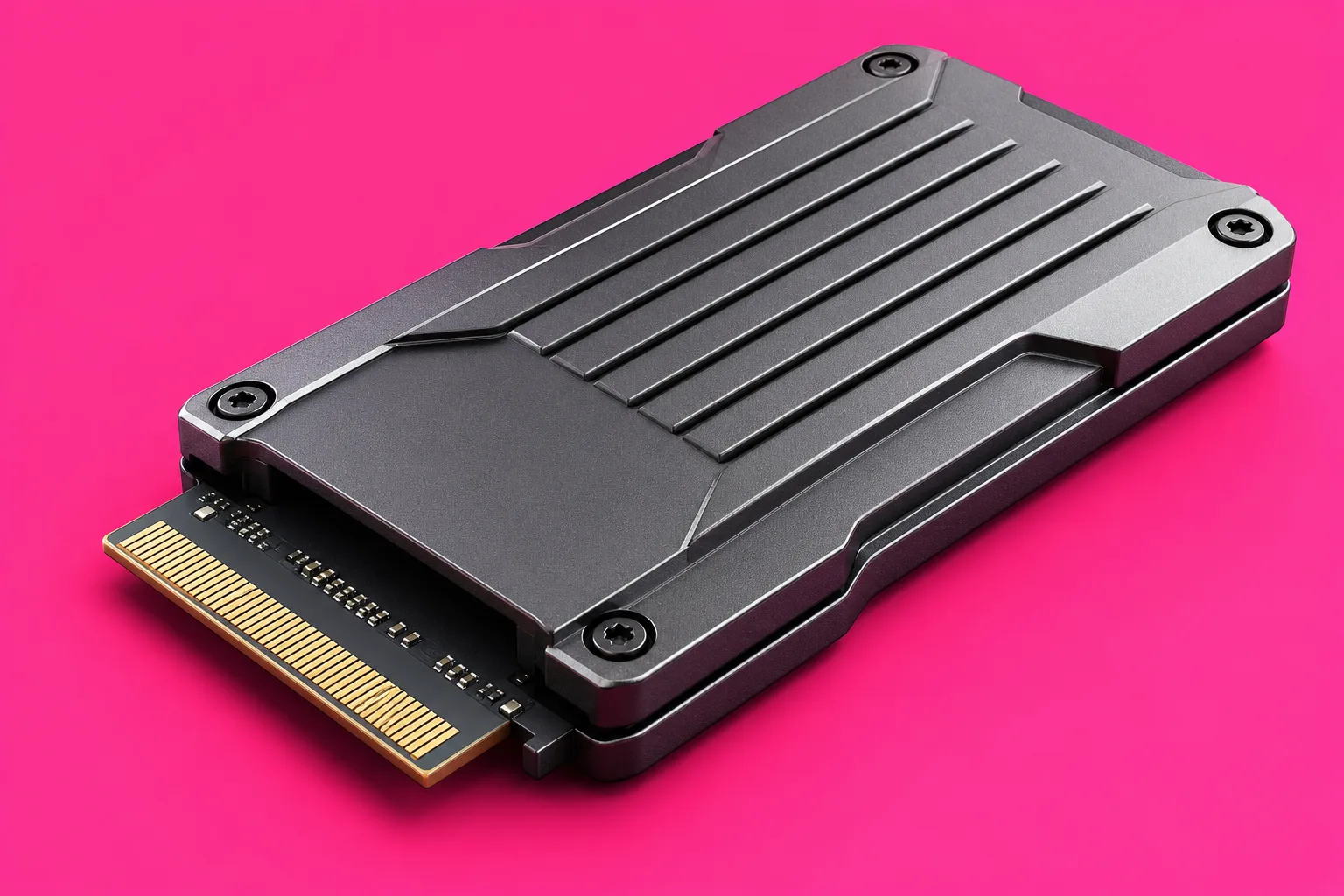
SanDisk stock moved higher on August 12 after July 2026 U.S. inflation data came in as expected, easing some of the pressure that had weighed on high-valuation semiconductor names. Shares traded around $1,279.26 intraday, up 3.34% from the prior close of $1,237.92.
The bounce in SanDisk stock followed a broad rally in technology and memory shares after headline CPI slowed to 3.4% year over year and core CPI held at 2.5%. For investors, the immediate takeaway was macro-driven: stable inflation reduced near-term rate fears and helped support richly valued growth stocks.
Yet the larger SanDisk story remains more complicated. Even after posting a 13.47% earnings-per-share beat and a 6.53% revenue beat, the company’s shares fell roughly 12% across regular and after-hours trading following its latest quarterly report, highlighting how elevated expectations still dominate the name.
Key Facts
- SanDisk traded at $1,279.26 intraday on August 12, up 3.34% from the prior close of $1,237.92.
- July 2026 CPI showed headline inflation at 3.4% and core inflation at 2.5%, both in line with consensus expectations.
- SanDisk reported non-GAAP EPS of $39.25 on revenue of $8.97 billion, ahead of estimates of $34.59 and $8.42 billion.
- The company has signed 10 New Business Model agreements representing $93.9 billion in minimum contracted revenue and $16.5 billion in financial guarantees.
- Shares remain 45.7% below the June 22 intraday high of $2,354.39 despite fiscal 2026 revenue of $20.25 billion.
SanDisk stock
The latest move in SanDisk stock was driven less by company-specific news than by the broader macro backdrop. An in-line inflation reading helped lift Nasdaq futures and supported semiconductor shares, particularly in segments where valuation sensitivity to interest rates is high. SanDisk, which has become one of the market’s most volatile memory names, benefited alongside peers tied to AI infrastructure and storage demand.
Still, the stock’s recent trading pattern shows that macro relief alone has not resolved investors’ bigger debate. SanDisk delivered exceptional operating results in its latest quarter, including non-GAAP gross margin of 84.6%, GAAP net income of $6.90 billion, and sequential revenue growth of 51%. But management’s guidance for fiscal first-quarter 2027 revenue of $10.30 billion to $10.80 billion and non-GAAP EPS of $44 to $46 appears to have fallen short of the market’s most aggressive assumptions.
That disconnect matters because SanDisk is no longer being priced like a conventional storage company. Since its February 24, 2025 separation from Western Digital at $52 per share, the stock has surged more than 3,000% at its peak. Such a rapid repricing has left little room for even strong results to exceed expectations decisively, especially in a memory cycle where pricing, margins and sentiment can reverse quickly.
SanDisk’s challenge is no longer proving that growth is real, but proving that extraordinary pricing and margins can last long enough to justify extraordinary expectations.
Why the contract book matters
The most important part of the long-term bull case is SanDisk’s contracted business model. The company says it has 10 New Business Model agreements with eight datacenter and edge customers, representing $93.9 billion in minimum contracted revenue at floor pricing. Those deals are backed by $16.5 billion in financial guarantees, while remaining performance obligations stand at $91.1 billion including post-quarter agreements.
That level of visibility is unusual for a memory producer. More than 50% of fiscal 2027 bits and about two-thirds of fiscal 2028 bits are already committed, giving SanDisk stronger demand coverage than the sector has historically enjoyed. For investors, the key question is whether these agreements merely protect volumes or whether they can also preserve margins if NAND pricing starts to normalize.
Implications for Investors
For portfolios, SanDisk offers both unusually high upside potential and unusually high execution risk. On one hand, fiscal 2026 revenue reached $20.25 billion, up 175% year over year, and trailing non-GAAP EPS totaled $70.88. The company also authorized a large share repurchase program, with $15.5 billion remaining after prior buybacks, which could help support the stock during periods of volatility.
On the other hand, a large portion of recent growth has been driven by pricing rather than unit volume alone. Company disclosures indicate that roughly two-thirds of the latest sequential revenue increase came from higher pricing. That creates sensitivity to any slowdown in NAND contract price gains. If pricing weakens materially, margins could compress much faster than investors in high-multiple names are willing to tolerate.
Investors should also watch the datacenter mix shift. Datacenter revenue rose 103% sequentially to $2.977 billion and accounted for 38% of the portfolio, up from 12% a year earlier. If SanDisk continues to evolve into an AI-linked enterprise storage supplier rather than a cyclical consumer flash business, the stock may sustain a valuation premium. If that transition stalls, the recent drawdown from the June peak may not be the last reset.
The next phase for SanDisk stock will likely depend on three variables: whether inflation remains tame enough to support growth multiples, whether NAND pricing stays above contractual floors, and whether datacenter demand continues to absorb supply. For now, the rebound shows macro pressure can ease quickly, but the stock still needs operating proof to regain investor conviction.