The S&P 500 ended November 18 at 7,340.53, its lowest close in five months, after falling 1.03% in a session marked by unusually broad selling. The benchmark has now dropped 221.14 points, or 2.9%, in two trading days, underscoring how quickly recent gains have faded.
What stood out was not just the size of the decline, but its breadth. Only 75 S&P 500 stocks advanced while 426 fell, and the equal-weight version of the market lagged the cap-weighted index, a sign that weakness spread far beyond a handful of megacaps.
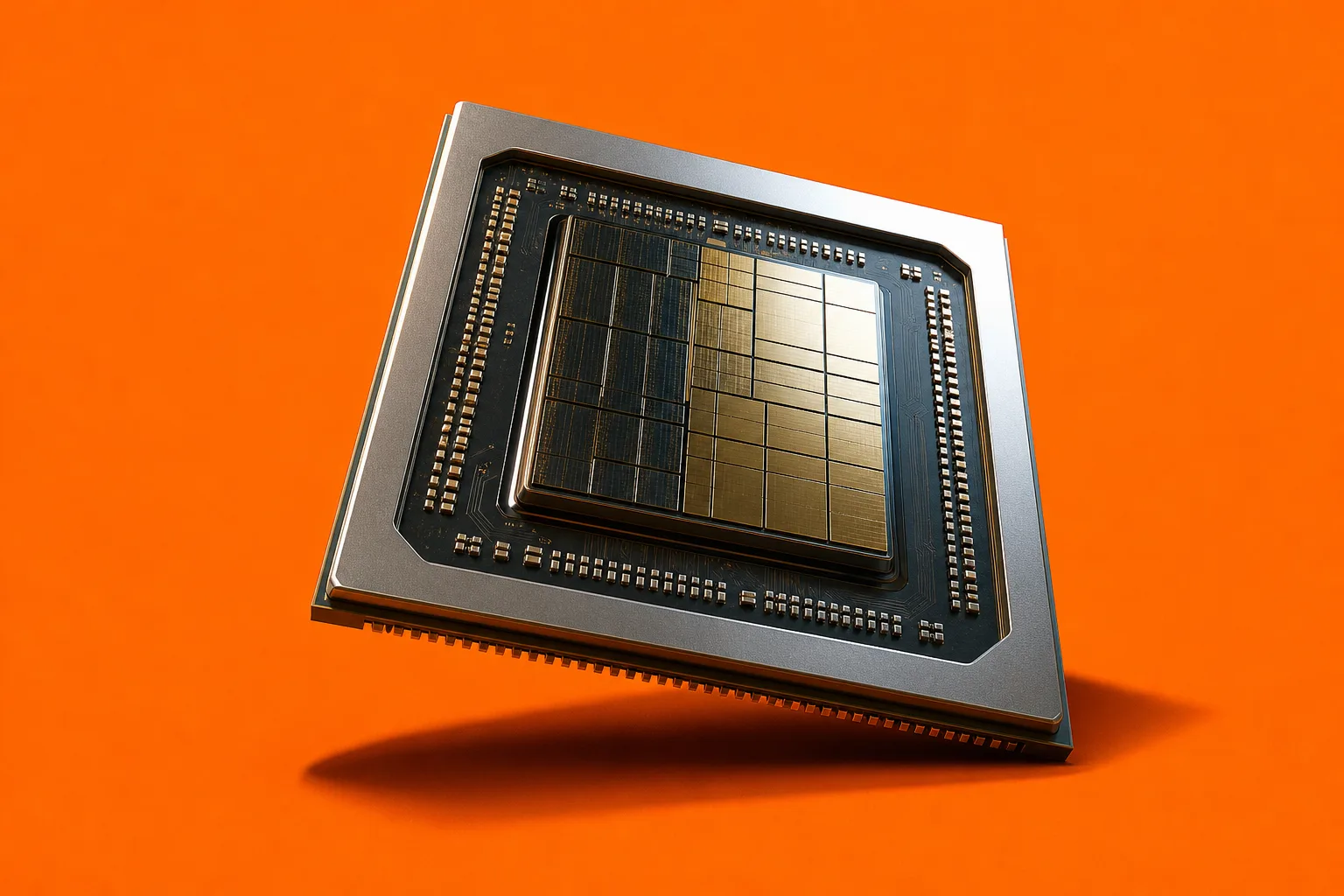
After the close, Nvidia helped shift the tone. The chipmaker posted stronger-than-expected fiscal third-quarter revenue and earnings, sending its shares higher in after-hours trading and lifting Nasdaq and S&P 500 futures, even as investors remained cautious about rates, market breadth and the durability of the AI trade.
Key Facts
- The S&P 500 closed at 7,340.53, down 76.06 points, or 1.03%, its lowest finish in five months.
- The Dow Jones Industrial Average dropped 848.75 points, or 1.64%, to 50,759.42, while the Nasdaq Composite fell 181.37 points, or 0.74%, to 24,328.38.
- The Invesco S&P 500 Equal Weight ETF fell 1.45%, worse than the benchmark index, indicating broad-based liquidation across sectors.
- Nvidia reported fiscal third-quarter revenue of $115.84 billion and adjusted earnings of $2.68 a share, both above consensus estimates.
- S&P 500 futures rose to about 7,406 after hours, while Nvidia shares climbed to $162.94, up 4.81% from the regular-session close.
S&P 500 five-month low
The market’s retreat on November 18 was notable because nearly every corner of the equity market weakened at once. All 11 major S&P sectors closed lower, including traditional defensive groups such as utilities, consumer staples and real estate. That pattern suggests investors were not simply rotating out of high-growth stocks into safer areas; they were reducing overall equity exposure.
The breadth data reinforced that message. A near six-to-one ratio of decliners to advancers is severe for a day when the S&P 500 fell just over 1%. The equal-weight underperformance showed the average stock fared worse than the index itself, which often happens when broad risk appetite deteriorates and a few large names merely cushion the headline decline.
Pressure was visible across market caps as well. The Russell 2000 dropped 1.50% to 2,701.87, while the S&P MidCap 400 lost 1.31%. Higher interest-rate expectations appear to be hitting smaller and more rate-sensitive companies harder, especially with the 2-year Treasury yield near 4.80% and markets pricing high odds of another Federal Reserve hike in December.
The most important signal from this session was breadth: this was not a narrow pullback, but a market-wide repricing of risk.
Nvidia softened the blow, but did not erase the warning signs
Nvidia entered earnings under intense scrutiny after a steep share-price decline and leadership turmoil. The stock had closed at $155.46, down roughly 33.3% from its October 2 close, before delivering quarterly numbers that topped Wall Street estimates. Revenue rose 103% year over year to $115.84 billion, with data center sales reaching $107.6 billion, up 110%.
The company also guided for fourth-quarter revenue of $130 billion, plus or minus 3%, above consensus expectations of $125.1 billion. The report helped spark gains in semiconductor-related names and pushed Nasdaq-100 futures higher after the bell. Even so, investor enthusiasm was tempered by a gross margin outlook of 71% to 72%, rising receivables and large supply commitments that highlighted execution and demand risks.
Implications for Investors
For portfolio positioning, the key issue is whether Nvidia’s earnings strength can broaden into a wider market rebound. Futures suggested an initial relief move, but the market still needs to reclaim important technical levels. For the S&P 500, Monday’s close at 7,416.59 is the first hurdle. Above that, investors will watch 7,561.67 and then 7,619.38, the November 11 close that now stands as a meaningful resistance zone.
Investors should also pay attention to leadership quality. If semiconductors and AI infrastructure stocks rally while software, financials, small caps and defensives continue to weaken, that would point to a narrow market rather than a healthy recovery. Such conditions can support tactical trades but tend to be less durable for long-term risk assets.
Rate expectations remain the other major constraint. With the 10-year Treasury yield near 5.10% and December hike odds above 90%, equity valuations face pressure unless earnings growth can clearly offset the higher cost of capital. That backdrop favors selectivity: companies with strong cash generation, pricing power and visible demand may continue to outperform, while rate-sensitive and highly valued segments could stay vulnerable to further multiple compression.
The next few sessions will test whether Nvidia’s earnings can stabilize sentiment or merely produce a temporary bounce inside a broader correction. Investors should watch breadth, Treasury yields and participation beyond chip stocks for confirmation of any sustainable turn.