The S&P 500 rose 0.63% in early trading on June 9, extending a rebound led by semiconductor stocks after last week’s sharp unwind erased roughly $1 trillion in value across the chip complex. The Dow Jones Industrial Average gained 0.67%, while the Nasdaq Composite added 0.69%.
The bounce came as Treasury yields eased from their post-payrolls spike and oil prices retreated, giving risk assets room to recover. But the recovery remains fragile with investors focused on a May Consumer Price Index reading expected at 4.2%, a level that could reshape rate expectations again.
For markets, the immediate issue is whether this is the start of a durable reset higher or only a tactical rally in overheated AI and chip names before inflation data reintroduces pressure on valuations.
Key Facts
- The S&P 500 gained 0.63%, the Dow rose 0.67%, the Nasdaq added 0.69%, and the Russell 2000 advanced 0.77% in early June 9 trading.
- The S&P 500 fell to 7,383.74 on June 5 from a record 7,599.96 on June 1 before recovering to 7,405.73 on June 8.
- May nonfarm payrolls rose 172,000, far above consensus estimates near 80,000, prompting a sharp repricing in Federal Reserve expectations.
- The 10-year Treasury yield climbed to 4.532% on June 5 before easing back as traders positioned ahead of inflation data.
- Economists expect May CPI to rise 4.2% year over year, up from 3.8% in April and the highest reading since April 2023.
S&P 500 Rebound
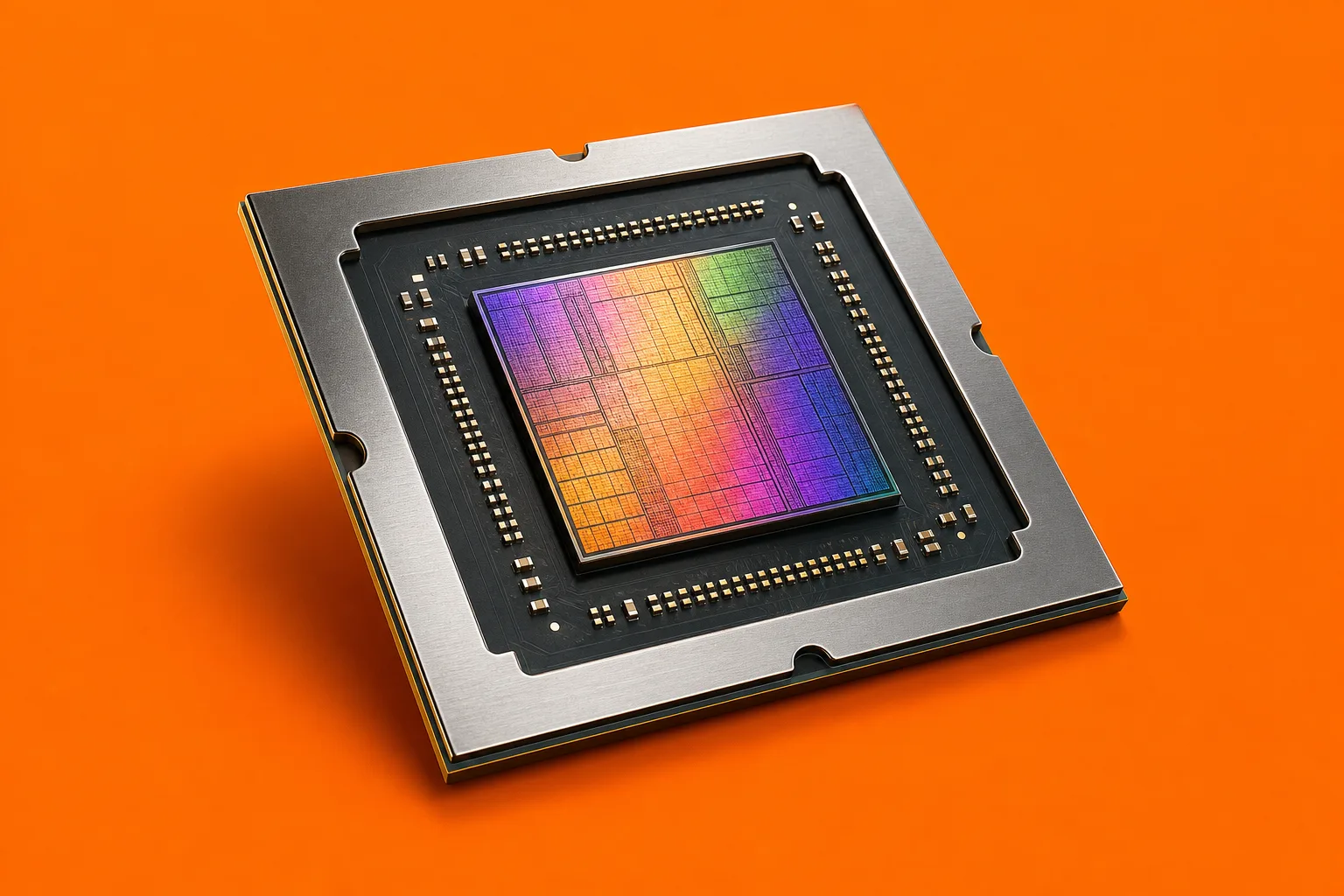
The June 9 advance was driven first and foremost by semiconductors, the same group that triggered the broader market break days earlier. Micron, Nvidia, Broadcom, AMD and Intel all steadied or moved higher after a violent de-rating that hit the sector on June 4 and June 5. That stabilization mattered because chips remain the market’s highest-beta expression of the AI investment cycle.
The immediate catalyst for the prior selloff was Broadcom’s guidance posture. Investors had expected another upward revision to AI-related forecasts, and a more cautious message punctured momentum across the semiconductor trade. By June 5, the downturn had broadened into a market-wide repricing as stronger-than-expected payrolls data pushed Treasury yields higher and revived concern that the Federal Reserve may need to stay restrictive for longer.
That is why the rebound, while notable, has not yet resolved the underlying tension. Equity investors are still balancing two powerful forces: robust AI infrastructure spending that supports earnings expectations for major chipmakers, and a macro backdrop of firmer inflation, elevated yields and fading hopes for rate cuts. The sectors most affected are long-duration growth stocks, but the impact extends across the index because the largest technology names remain its center of gravity.
The market has repaired part of the semiconductor shock, but the durability of the S&P 500 rebound now depends less on dip-buying and more on whether inflation allows yields to stay contained.
Why chip stocks bounced so quickly
The speed of the recovery suggests investors still believe the AI spending cycle remains intact. That view is supported by hyperscaler capital expenditure plans and by expectations that memory pricing will remain strong. Earlier forecasts for 2026 DRAM and NAND pricing had already been revised sharply upward, reinforcing the view that data center demand is not a short-lived theme.
There was also a technical component. After Micron lost about 17% over two sessions, AMD dropped 12.6% and Intel fell about 9%, parts of the sector had become oversold in the eyes of fast-money traders. Once yields stopped rising and oil pulled back, buyers returned quickly to the group that had led the 2026 bull market.
Implications for Investors
For investors, the next market move may hinge on inflation rather than earnings. A CPI reading near or above 4.2% would likely reinforce the recent jump in rate-hike expectations and pressure the 10-year Treasury yield back toward, or above, 4.53%. That would be particularly difficult for expensive growth equities whose valuations depend on lower discount rates.
At the same time, the June 9 rally showed that risk appetite has not disappeared. The Roundhill Magnificent Seven ETF rose 0.47% to $66.80 in premarket action, while smaller-cap stocks outperformed the major large-cap benchmarks. That combination hints at improving breadth, which would be healthier than a rally driven solely by a handful of mega-cap names. Investors should watch whether leadership remains concentrated in AI beneficiaries or starts to broaden into financials, industrials and select cyclicals.
There are also cross-asset signals worth monitoring. Bitcoin fell to $62,533.89, highlighting that risk sentiment outside equities remains cautious. Small-business optimism weakened to 95.3 in May, below its long-term average of 98.0, while the uncertainty index climbed to 91. Those figures suggest the real economy is not uniformly strong, even after the 172,000 payroll gain. For portfolios, that means balancing selective exposure to AI-linked winners with sensitivity to rates, inflation and cyclical slowdown risks.
Other single-stock moves also underline the importance of execution. SailPoint fell 12.2% after a sharp earnings miss, while Corning jumped 9.31% after securing a multibillion-dollar optical fiber supply agreement tied to U.S. data center expansion. Marvell rose 9% after confirmation it will join the S&P 500 on June 22. These moves show that stock selection still matters even in a macro-dominated tape.
Looking ahead, the market’s path will likely be set by the interaction between CPI, Treasury yields and oil prices. If inflation surprises on the downside, the S&P 500 may have room to retest its June 1 high; if inflation runs hotter, the recent rebound could prove to be only a pause in a broader valuation reset.