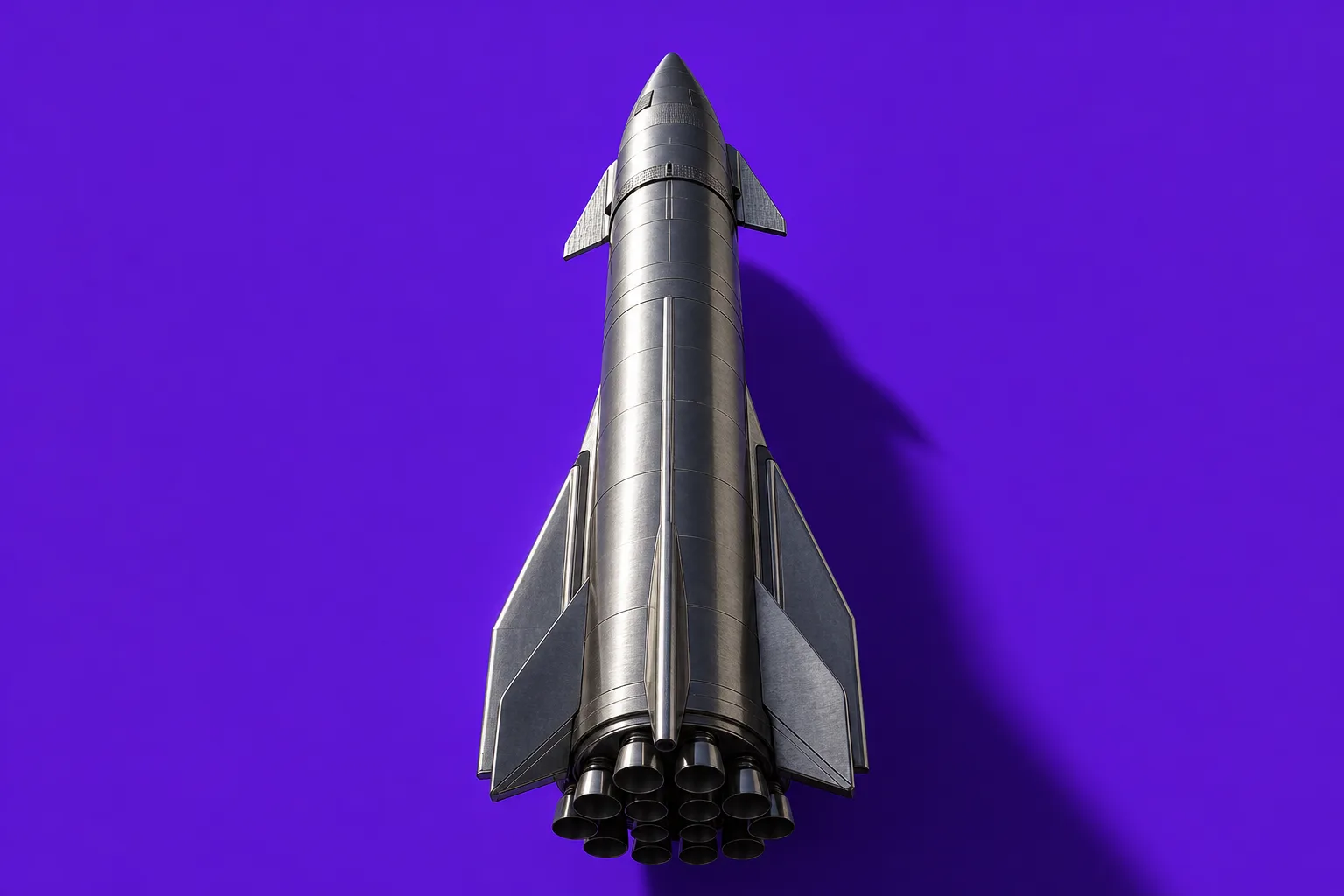
SpaceX delivered a landmark moment in launch technology on November 14, 2026, when its Starship upper stage was successfully caught by tower-mounted mechanical arms at Starbase, Texas. The recovery marked the first time an orbital-class rocket upper stage had been recaptured after reaching space.
Less than 24 hours later, the commercial launch market absorbed a very different signal. A United Launch Alliance Vulcan rocket failed minutes after liftoff from Florida on November 15, destroying 40 satellites for Amazon’s broadband network and handing ULA its first total mission failure since the joint venture was formed in 2006.
Taken together, the two events sharpen the contrast between SpaceX’s push toward rapid reusability and the operational pressure facing legacy rivals still trying to scale newer launch systems.
Key Facts
- SpaceX recovered the Starship upper stage on November 14, 2026, using its launch tower’s “chopstick” arms at Starbase, Texas.
- The Starship mission also deployed 26 third-generation Starlink satellites into orbit.
- ULA’s Vulcan rocket failed on November 15, 2026, and lost all 40 Amazon broadband satellites on board.
- ULA had completed four successful Vulcan missions over roughly three years before the anomaly.
- SpaceX has flown nearly 500 missions over the same period, highlighting a major launch cadence gap.
SpaceX Starship Catch
The Starship catch is more than a dramatic engineering demonstration. It is a direct step toward SpaceX’s long-stated goal of full and rapid reusability, in which both major elements of a launch system can be recovered, inspected quickly, and flown again with minimal downtime. Although the company had initially aimed for a dual recovery, including the Super Heavy booster, the booster landing was diverted after a guidance anomaly. Even so, prior flights had already demonstrated booster recovery, leaving the upper-stage catch as the standout achievement.
That matters because upper-stage reuse has been one of the hardest barriers in orbital launch economics. Recovering the first stage is already transformative, but capturing the upper stage could lower mission costs further, reduce manufacturing needs, and improve launch cadence. If SpaceX can turn Starship into a routinely reusable heavy-lift vehicle, it could expand the economics of satellite deployment, deep-space missions, and large-scale in-orbit infrastructure.
The milestone also has strategic implications for customers across telecommunications, defense, and cloud infrastructure. SpaceX’s own Starlink network benefits directly from lower launch costs and high deployment tempo, but the broader market may also feel the effect through pricing pressure, tighter competitive standards, and rising expectations for reliability combined with reusability.
SpaceX’s Starship catch is a vivid sign that the race in launch is no longer just about reaching orbit, but about doing it repeatedly, cheaply, and at industrial scale.
Why the ULA setback matters
The contrast became sharper when Vulcan failed to reach low Earth orbit on November 15. The loss of 40 satellites was a meaningful setback for Amazon’s broadband ambitions, which are intended to compete with Starlink in low-Earth-orbit connectivity. Amazon acknowledged the risks that come with launch, particularly on early missions, and signaled continued support for ULA’s long-term Vulcan plans.
For ULA, however, the failure lands at a sensitive point. Vulcan was conceived in 2015 as the company’s next-generation vehicle and as part of its transition away from Russian engines. ULA remains an important national security launch provider, backed by Boeing and Lockheed Martin, but its pace and execution are under far greater scrutiny in a market increasingly defined by volume, cost efficiency, and demonstrated reuse rather than occasional high-value launches alone.
Implications for Investors
For investors, the weekend’s outcomes reinforce a central reality in the space sector: execution now matters as much as vision. SpaceX remains privately held, but its progress has consequences across listed aerospace, satellite, defense, and supply-chain names. A successful Starship recovery strengthens the case that reusable heavy launch can compress industry margins, pressure incumbents, and reshape procurement decisions for both commercial and government customers.
ULA’s failure could ripple into the public equities tied to the launch ecosystem. Boeing and Lockheed Martin, as ULA’s parents, may not see a material financial shock from a single mission loss alone, but repeated delays or reliability concerns could influence future contract confidence and competitive positioning. Suppliers linked to Vulcan also face headline risk if investigations point to hardware, integration, or quality-control issues.
Amazon investors may view the satellite loss as a schedule issue rather than a thesis-breaking event, but deployment timing for its broadband constellation bears watching. Delays can affect service rollout, capital intensity, and competitive distance versus Starlink. At the same time, SpaceX’s growing lead may pressure regulators and customers to think harder about market concentration in launch services, especially if one provider becomes structurally cheaper and more dependable than the rest.
The next phase to watch is whether SpaceX can repeat Starship recovery reliably and whether ULA can identify the cause of the Vulcan anomaly without significant schedule slippage. Launch frequency, recovery consistency, and satellite deployment timelines will likely be the clearest indicators of who gains leverage in the commercial space economy in 2027.