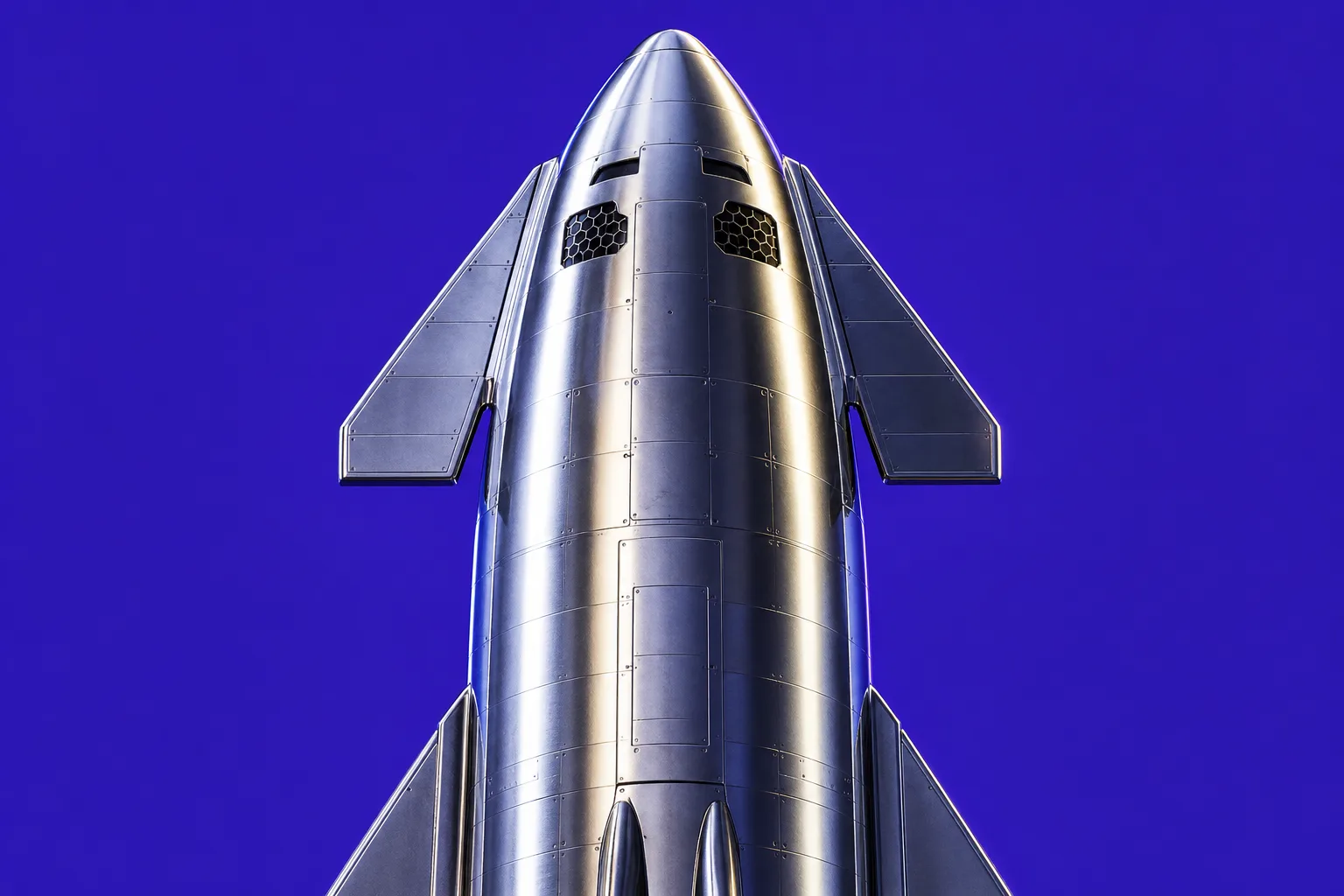
SpaceX used the 13th test flight of Starship on July 24, 2026 to achieve its clearest commercial milestone yet: the successful deployment of 20 next-generation Starlink V3 satellites. For investors, that payload result mattered as much as the flight itself, coming in the company’s first Starship mission since its public listing.
The mission was not flawless. The Super Heavy booster separated roughly two minutes after liftoff but failed to complete a full engine relight sequence before splashdown in the Gulf of Mexico. Still, the upper stage delivered the satellites and completed a soft splashdown in the Indian Ocean, remaining intact and giving engineers their first detailed look at an undamaged heat shield after reentry.
That combination of partial setback and meaningful progress is central to the Starship investment case. The rocket is still experimental, but each successful subsystem moves SpaceX closer to lowering launch costs, expanding Starlink capacity and supporting higher-value missions tied to lunar exploration and orbital infrastructure.
Key Facts
- Starship completed its 13th test flight on July 24, 2026 and deployed 20 Starlink V3 satellites.
- The Super Heavy booster separated about two minutes after liftoff before suffering engine relight failures ahead of splashdown in the Gulf of Mexico.
- The upper stage made a soft splashdown in the Indian Ocean and came to rest intact.
- The flight provided SpaceX with its first detailed post-reentry views of an intact Starship heat shield.
- The mission was the first Starship test flight since SpaceX’s IPO.
SpaceX Starship
The July 24 test underscored why Starship remains the company’s most important long-term program. Unlike Falcon-class vehicles, Starship is designed around full reusability and much larger payload capacity, a combination that could materially reshape launch economics if reliability improves. By placing 20 Starlink V3 satellites in flight 13, SpaceX showed that Starship is beginning to connect engineering progress with direct commercial utility.
The significance extends beyond a single launch. Starlink V3 satellites are expected to play a major role in boosting network capacity and performance across SpaceX’s broadband business. A larger, cheaper-to-launch satellite platform could support stronger subscriber growth, more bandwidth per user and wider enterprise and government adoption. In effect, Starship is not just a rocket program; it is an enabling asset for one of the company’s most important revenue engines.
At the same time, the booster’s failed relight sequence is a reminder that the path to routine operations is still uneven. Investors should separate mission layers rather than judge the flight as simply success or failure. Payload deployment and upper-stage survival were meaningful wins. Booster recovery remained a weak point. For a capital-intensive vehicle intended to become rapidly reusable, closing that gap is essential to the economics that underpin the broader Starship thesis.
“This was a commercially meaningful Starship test: 20 Starlink V3 satellites reached deployment, and the intact upper stage delivered data that could accelerate reusability.”
Why the heat-shield result matters
The intact splashdown of the upper stage may prove to be one of the most valuable technical outcomes from flight 13. Reentry is among the hardest parts of building a fully reusable heavy-lift system, and heat-shield durability directly affects turnaround time, refurbishment cost and mission cadence. Seeing the vehicle survive reentry and remain intact in the Indian Ocean gives engineers a cleaner diagnostic baseline than a fragmented or heavily damaged return would have allowed.
That matters because Starship’s business case depends on flying often and refurbishing quickly. If the heat shield can be validated and improved with fewer invasive repairs between missions, SpaceX moves closer to the operating model needed for dense Starlink deployments, deep-space missions and NASA-related lunar work.
Implications for Investors
For shareholders evaluating SpaceX after its IPO, flight 13 offered a more constructive signal than a binary reading would suggest. The ability to deploy 20 Starlink V3 satellites demonstrates that Starship is beginning to support the company’s revenue ecosystem, not merely consume research and development spending. That is a notable shift because the market tends to reward visible monetization milestones more than incremental engineering claims.
The biggest opportunity remains launch-cost compression tied to reusability. If Starship can reliably deploy larger batches of satellites while eventually recovering both stages, SpaceX could improve margins on internal Starlink launches and potentially reshape pricing across the broader commercial launch market. That scenario would strengthen the company’s competitive moat against launch rivals and support additional business lines such as in-space data infrastructure and government missions.
The key risk is execution. The booster relight problem shows that hardware maturity is still incomplete, and repeated issues in recovery operations could delay the cadence and cost benefits investors are expecting. Watch for three markers over the next several flights: whether booster landing burns become more reliable, whether upper-stage reentry remains stable, and whether Starship continues carrying commercially relevant payloads rather than pure test mass. Progress on those fronts would offer a stronger basis for valuing Starship as an earnings driver rather than a long-dated technical option.
Flight 13 did not resolve every question around Starship, but it moved the program forward where it matters most: payload capability, reentry survivability and data collection for reuse. The next tests will determine whether this mission was an encouraging step or the start of a more durable post-IPO operating rhythm.