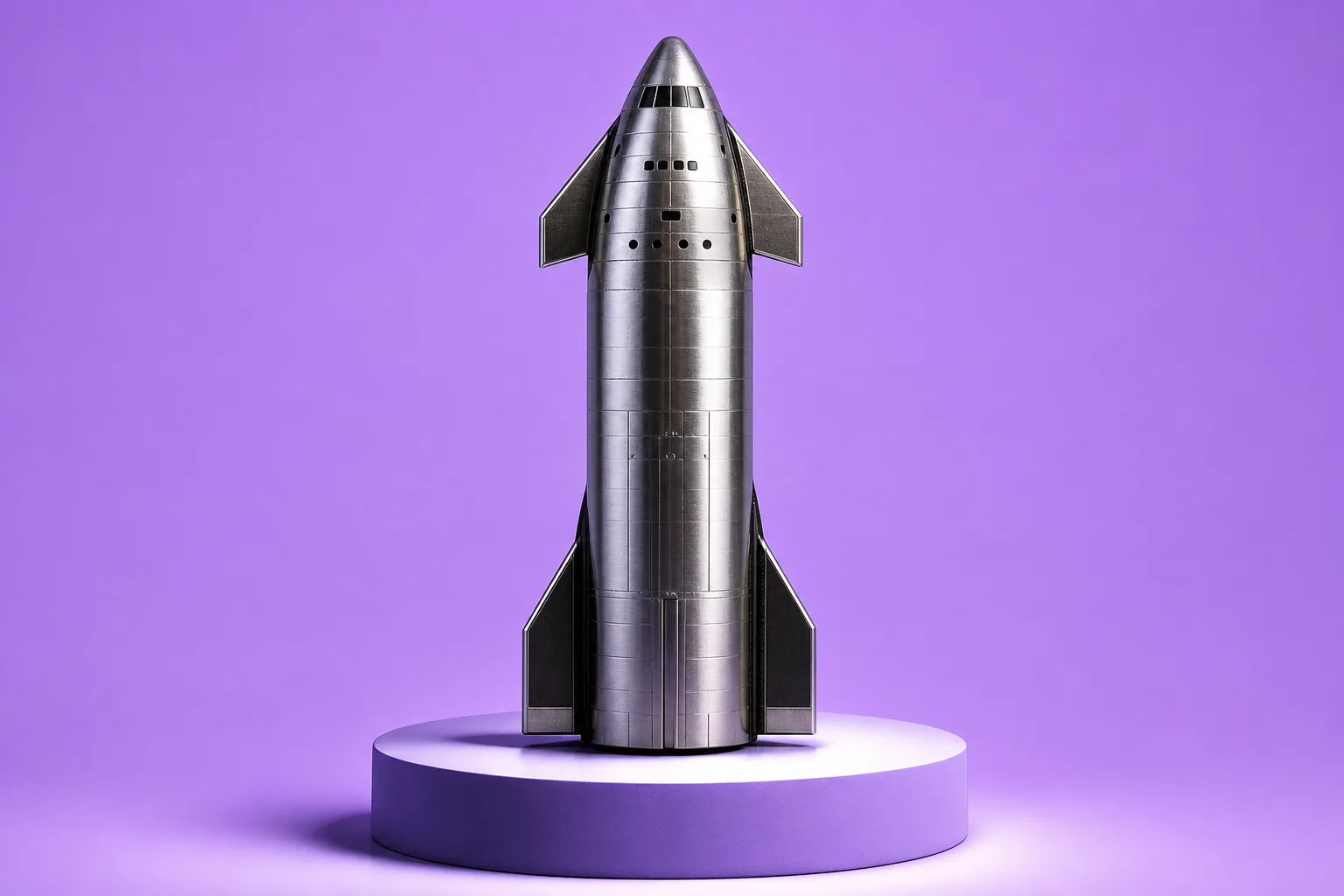
Starship moved closer to commercial service on September 28, 2026, after deploying 26 next-generation Starlink V3 satellites into low Earth orbit. The mission marked the first time the heavy-lift vehicle delivered SpaceX’s newest broadband satellites, a milestone with direct implications for launch economics and network capacity.
The achievement was especially notable because the flight initially raised concern over an engine issue during ascent. Despite the scare, Starship ultimately reached orbit and began a satellite deployment sequence expected to take about 30 minutes, underscoring progress in turning the system from an experimental platform into a commercially relevant launch vehicle.
For investors watching the private space sector and the broader satellite economy, the key number was the jump in satellite throughput: each Starlink V3 satellite is designed to deliver roughly 1,000 gigabits per second of download capacity, versus about 96 Gbps for the V2 generation currently operating in low Earth orbit.
Key Facts
- Starship launched from Starbase in South Texas at 7:49 a.m. local time on September 28, 2026.
- The mission deployed 26 Starlink V3 satellites, the first orbital delivery of this next-generation model.
- Each Starlink V3 satellite is designed for about 1,000 Gbps of download capacity, compared with roughly 96 Gbps for V2 satellites.
- The mission profile was expected to last nearly 10 hours, with satellite deployment taking about 30 minutes.
- SpaceX’s first commercial Starship service is targeted for 2028.
Starship and Starlink V3 Deployment
The successful Starlink V3 deployment matters because it connects two of SpaceX’s most important long-term ambitions: building a fully reusable super-heavy launch system and expanding a global satellite internet network with much higher bandwidth. Starship is central to both. Its size and lift capacity are intended to lower the cost per kilogram to orbit, while enabling the company to place larger, more capable satellites into service at scale.
That combination is what gives this mission outsized significance. A single V3 satellite, based on the figures released around the launch, offers more than ten times the download capacity of a V2 satellite. If SpaceX can deploy these satellites reliably and at high cadence, the result could be a meaningful increase in Starlink network performance, improved economics per launch, and stronger competitive positioning in satellite broadband.
The mission also highlighted how narrow the line remains between breakthrough and setback. An engine failure concern during ascent briefly clouded the outcome and created uncertainty around whether orbital insertion and payload deployment would proceed. The fact that Starship still reached orbit and completed the deployment strengthens the case that the system is maturing, but it does not eliminate questions around reliability, certification, and execution before regular commercial service begins.
Starship’s first deployment of Starlink V3 satellites is a turning point: it shows the rocket is moving beyond testing and starting to prove its value as a commercial launch system.
Why the V3 Satellites Matter
The V3 generation could reshape the economics of the Starlink constellation. Higher-capacity satellites mean more throughput per launch, potentially reducing the number of missions needed to add meaningful network capacity. That can improve capital efficiency across both the satellite manufacturing and launch sides of the business.
It also matters for end markets. Greater bandwidth in orbit can support faster service, more customers, and broader enterprise or government applications. In practical terms, this mission was not just about proving Starship can carry payloads; it was about demonstrating that Starship can support deployment of the next phase of a revenue-generating space infrastructure business.
Implications for Investors
For investors, the biggest takeaway is that Starship is becoming more relevant as a commercial asset rather than a pure research and development program. If the vehicle continues to demonstrate orbital capability and payload deployment reliability, it could materially lower launch costs and expand the addressable market for satellite services, in-space logistics, and future deep-space missions.
The opportunity side is clear. A launch system capable of carrying and deploying larger batches of high-capacity satellites could accelerate growth in broadband revenue, strengthen network quality, and reinforce barriers to entry in low Earth orbit connectivity. It may also influence valuations and sentiment across adjacent aerospace, satellite manufacturing, communications infrastructure, and launch service companies, even for publicly traded peers and suppliers rather than SpaceX itself.
The risk side remains equally important. Engine anomalies, even on flights that achieve core objectives, are a reminder that technical setbacks can still delay commercialization timelines. Investors should watch for evidence of repeatability: successful reflight cadence, clean engine performance, regulatory progress, and confirmation that the 2028 commercial service target remains achievable. Future missions will need to show that this was not just a milestone, but the start of a dependable operating pattern.
With Starship now showing it can place Starlink V3 satellites into orbit, the next phase will be defined by consistency rather than spectacle. If upcoming flights build on this result, the commercial space economy could move one step closer to lower launch costs and much higher orbital bandwidth.