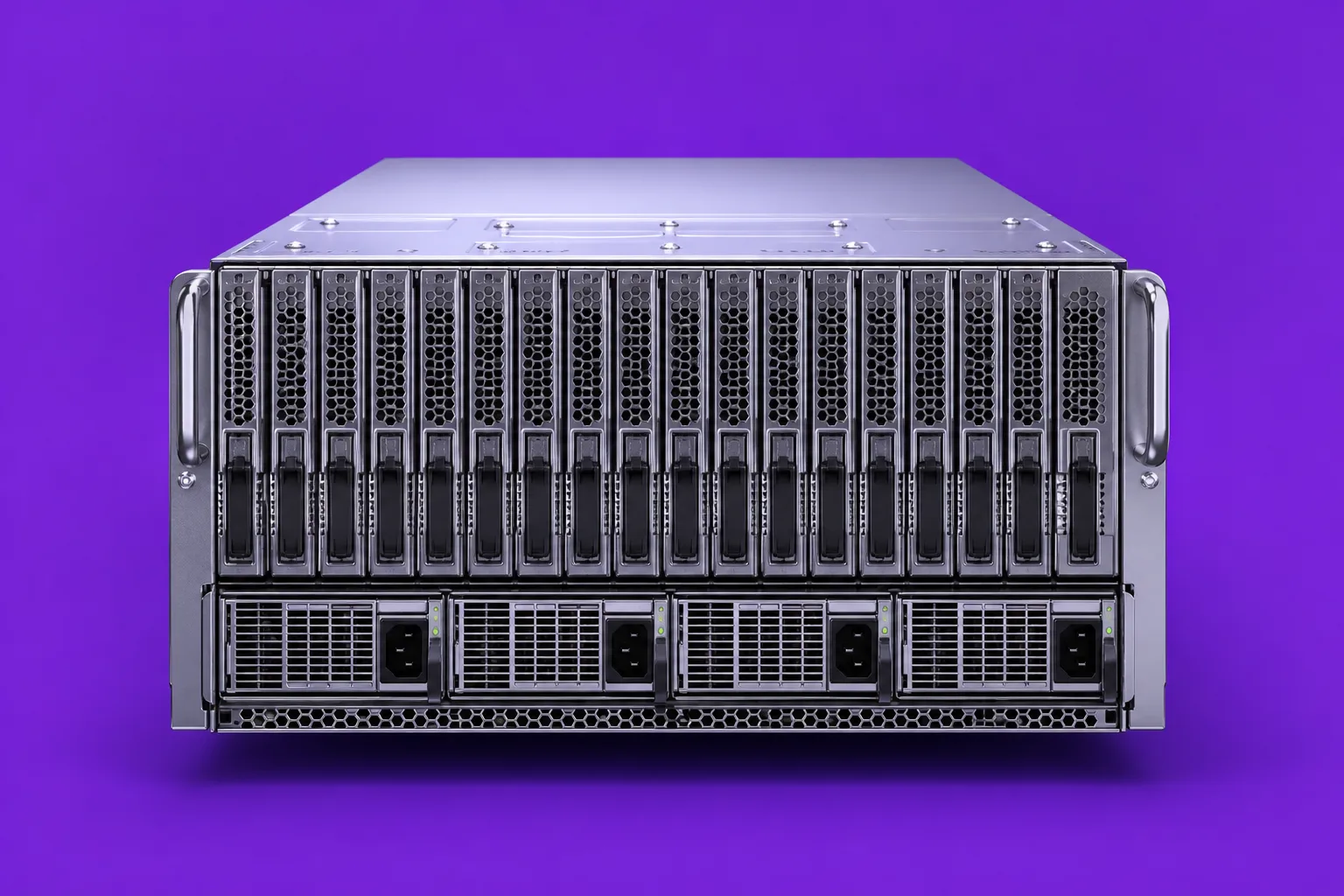
Super Micro Computer shares rallied sharply on October 21 after the company disclosed a major preliminary revenue and margin upgrade for its fiscal first quarter of 2027. The new sales range of $18.5 billion to $19.5 billion is roughly $4 billion above the midpoint of its prior forecast, signaling that AI server demand remained stronger than expected through September 30.
The stock traded at $35.55 by midday, up 9.49% from the prior close of $32.47, after opening at $36.42 and touching an intraday high of $37.45. The move added urgency to the debate around Super Micro’s valuation, backlog strength, and whether booming sales can finally convert into sustained positive cash flow.
That cash-flow question matters because the company has already shown it can grow rapidly. What the market still wants to see is whether revenue growth can be financed more efficiently as fiscal 2027 unfolds.
Key Facts
- Super Micro raised preliminary fiscal first-quarter 2027 net sales to $18.5 billion to $19.5 billion from prior guidance of $14.5 billion to $15.5 billion.
- Preliminary gross margin is now expected at 12.0% to 12.5%, up from the previous 10.4% to 10.8% range.
- Shares traded at $35.55 at 12:07 p.m. ET on October 21, up 9.49%, with volume reaching 50.5 million shares by midday.
- The company is scheduled to report full quarterly results, including cash-flow details, on November 3, 2026.
- Super Micro ended fiscal 2026 with $39.1 billion in annual revenue, negative operating cash flow of $6.8 billion, and inventory of $12.9 billion.
Super Micro revenue outlook
The preliminary update changes the near-term narrative around Super Micro. In August, management projected fiscal first-quarter revenue of $14.5 billion to $15.5 billion. The revised range of $18.5 billion to $19.5 billion implies a midpoint beat of 26.7% versus the original outlook and sits well above the market expectation of $15.23 billion.
Margins are moving higher at the same time. At the midpoint of the old forecast, gross profit would have been about $1.59 billion. At the midpoint of the revised outlook, gross profit climbs to roughly $2.33 billion. That is an increase of about $740 million, showing that stronger sales were not won purely through aggressive pricing. Mix appears to have improved as well, a critical factor in a business where margin volatility has shaped investor sentiment.
The update also reinforces the broader thesis that hyperscale and enterprise AI infrastructure spending remains robust. Super Micro has become one of the clearest listed proxies for AI server demand because of its concentrated exposure to accelerated computing systems and rack-scale deployments. When a company with that profile materially lifts revenue after a quarter has already closed, investors tend to read it as evidence that customer spending did not stall during the recent AI hardware selloff.
Super Micro has shown that AI server demand is stronger than expected; the next test is whether that growth starts producing cleaner cash flow.
Why November 3 matters
The company’s preliminary release answered one question but left another unresolved. Revenue and gross margin are now pointing well above prior expectations, but the filing did not include updated earnings-per-share guidance or fresh details on working capital. That omission is important because Super Micro’s recent growth came with heavy financing needs.
For fiscal 2026, the company reported $39.1 billion in sales but negative operating cash flow of $6.8 billion and free cash flow of negative $6.97 billion. Inventory nearly tripled year over year to $12.9 billion, while receivables rose to $6.1 billion. Investors will be watching the November 3 earnings release for evidence that inventory is turning into revenue without requiring another large step-up in external funding.
Implications for Investors
For investors, the opportunity is straightforward: if Super Micro can sustain something close to its new first-quarter run rate, the current fiscal 2027 revenue guidance of $65 billion to $72 billion may prove conservative. A $19 billion quarter represents 26% to 29% of that annual range, which raises the possibility of a guidance increase if demand remains strong in coming quarters.
Valuation is part of the appeal. At $35.55, Super Micro was trading at 10.92 times trailing earnings and 7.88 times forward earnings, with a price-to-sales ratio of 0.60 on trailing revenue. Those multiples remain low relative to several large technology infrastructure peers, reflecting persistent concerns about execution, governance overhangs, and cash conversion rather than a lack of top-line momentum.
The main risk is that revenue growth alone may not be enough to drive a durable re-rating. The company raised $9.5 billion during fiscal 2026, including $5.6 billion through equity and mandatory convertible preferred shares, to support its expansion. If the November 3 report shows that stronger sales still require heavy inventory investment or continued balance-sheet support, the stock’s rally could struggle to extend.
Investors should also watch sector read-throughs from major AI infrastructure buyers. Super Micro’s update helped lift other AI hardware names, including Dell, Hewlett Packard Enterprise and Vertiv, because it suggested demand remained healthy across the supply chain. But that correlation works both ways: any sign of softer capital spending from large cloud and platform companies could pressure the entire group, with Super Micro likely to remain among the most volatile names given its concentrated exposure and elevated short interest.
Technically, the stock’s intraday retreat from $37.45 back toward $35.55 suggests that some traders are waiting for more proof before chasing the move. Resistance remains near the after-hours peak around $37.93, while support starts near the session low of $35.27 and the gap area closer to $33.17. That setup points to continued volatility ahead of the earnings release.
Super Micro has delivered a powerful signal that AI infrastructure demand is still expanding at a rapid pace. The next phase for the stock will depend less on order momentum and more on whether November 3 confirms that scale is beginning to improve cash generation as well as revenue.