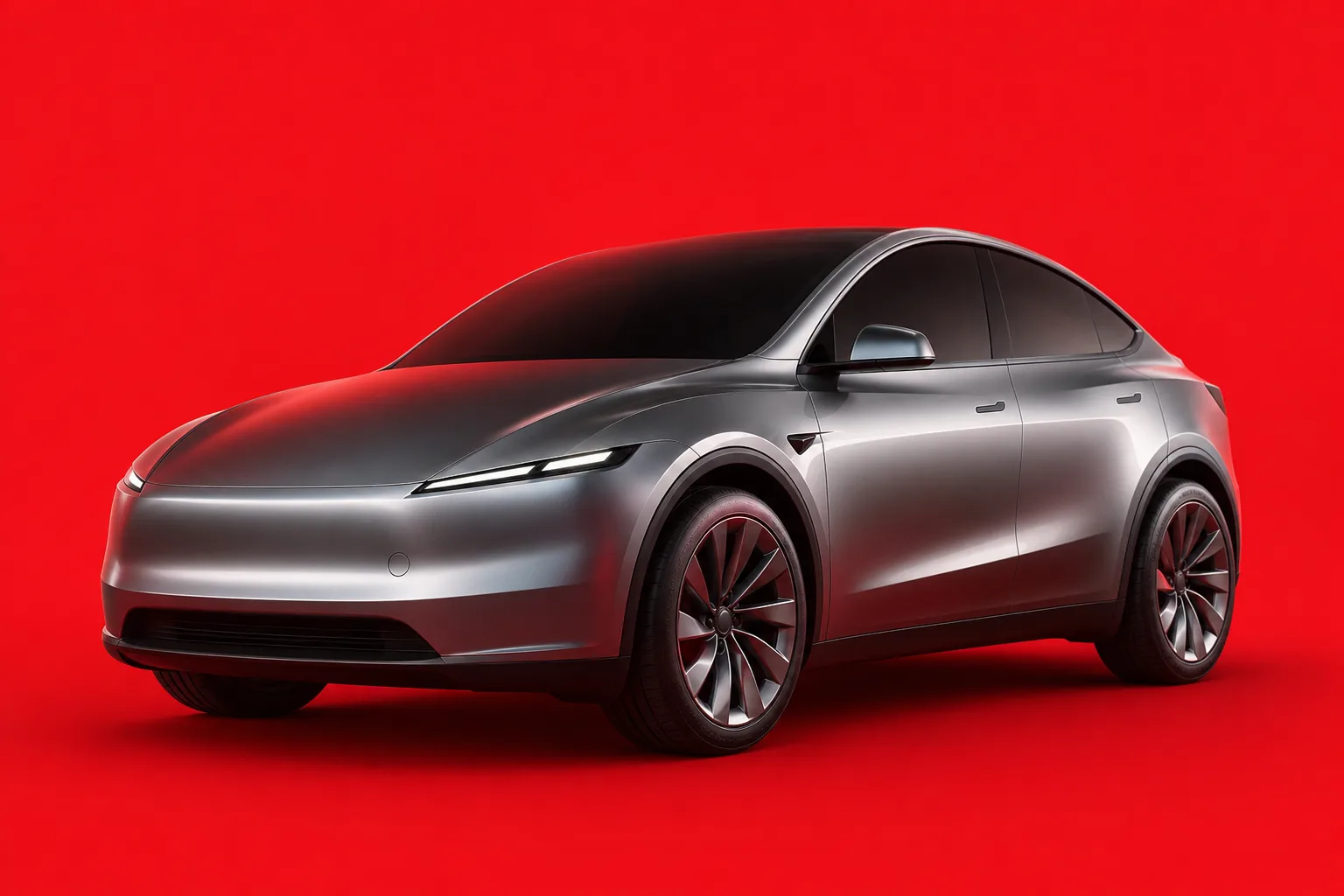
Tesla stock came under pressure after a fresh competitive threat emerged in humanoid robotics, a business many investors view as central to the company’s long-term valuation. Shares fell 4.6% to close at $415.88, wiping out roughly $75 billion in market value before stabilizing near $422 in subsequent trading.
The immediate catalyst was the announcement that OpenAI is launching a dedicated humanoid robotics division, a move that directly challenges Tesla’s Optimus ambitions. The timing mattered: Tesla is already trading on a lofty earnings multiple, meaning even modest changes in confidence around robotics and autonomy can move the stock sharply.
The reaction also highlighted a broader market debate. Tesla is no longer being valued primarily as an electric-vehicle maker; instead, investors are assigning substantial value to future businesses including robotaxis, physical AI and humanoid robots. When a credible rival enters that field, the valuation framework changes quickly.
Key Facts
- Tesla shares fell 4.6% to $415.88, erasing about $75 billion in market capitalization in a single session.
- The stock later rebounded to around $422, up roughly 1.33% from the selloff low.
- Tesla’s 52-week trading range spans from $273.21 to an all-time high of $498.83.
- Trading volume reached 37.44 million shares, below the 44.59 million average.
- Tesla is trading at a price-to-earnings ratio above 300, reflecting heavy reliance on future growth expectations.
Tesla Stock and the Optimus Valuation Debate
The latest selloff was not driven by a collapse in Tesla’s current financial results. Instead, it reflected investor concern that one of the company’s most important long-term narratives may be facing stronger competition than previously assumed. Tesla’s Optimus humanoid robot has been treated by many bulls as a major source of optionality, potentially justifying a large portion of the company’s premium valuation.
That assumption now looks less secure. OpenAI’s move into humanoid robotics adds a well-funded and technically credible competitor to a market that some investors had viewed as relatively open for Tesla to lead. At nearly the same time, Nvidia added to the pressure through robotics initiatives of its own, including a partnership with Unitree and the rollout of an open robotics development platform. Together, those developments suggest Tesla may not have the field to itself.
For shareholders, this matters because Tesla’s stock is priced far beyond what traditional auto-sector metrics would support on their own. The company’s vehicle business remains meaningful, but the market has increasingly focused on robotaxi deployment, AI infrastructure and robotics. If competition reduces the odds of Tesla dominating those categories, investors may revisit how much premium the stock deserves.
Tesla’s sharp decline showed that the market is valuing not just what the company earns now, but what investors believe Optimus and robotaxis could become.
Why the Market Reacted So Strongly
The magnitude of the move reflects the structure of Tesla’s valuation. A company trading at more than 300 times earnings is effectively being priced on future businesses, not just current cash flow. That makes the stock highly sensitive to announcements that alter the competitive outlook for robotics or autonomy, even if those developments do not immediately affect revenue.
The core auto business adds complexity. Tesla has shown some improvement in margins, with first-quarter 2026 automotive gross margin recovering to 21.1% and earnings per share coming in at $0.41, above expectations. But deliveries remain under pressure, average selling prices have fallen below $40,000, and BYD has moved ahead globally in EV unit sales with 2.26 million vehicles. In that environment, the robotics and robotaxi narrative remains critical to sustaining investor enthusiasm.
Implications for Investors
For investors, the key takeaway is that Tesla remains a high-conviction growth story with unusually high narrative risk. The company still has major advantages, including manufacturing scale, vertical integration, an installed software base and the ability to fund ambitious projects. Yet the investment case is becoming more dependent on execution at a time when credible competitors are multiplying.
Several near-term markers now look especially important. On the technical side, the $413 to $416 area has become a closely watched support zone after buyers stepped in around those levels. If Tesla can hold that range and reclaim $450, the market may interpret the recent decline as a temporary repricing rather than a lasting shift in sentiment. If support breaks, investors could begin assigning less value to the robotics premium embedded in the shares.
Fundamentally, investors should watch two catalysts. The first is Tesla’s robotaxi rollout, which appears further along and may be easier to assess through real-world operating data. The second is Optimus production progress, with management targeting late July or August 2026 for a meaningful milestone. Strong execution could help rebuild confidence that Tesla can defend a leadership position despite OpenAI and Nvidia entering the field more aggressively.
Portfolio positioning should reflect that Tesla is not a conventional automaker investment. It behaves more like a platform bet on autonomy, AI and robotics, with outsized upside if those bets succeed and meaningful downside if competition compresses future returns. Investors with exposure may want to track not only earnings and deliveries, but also capex trends, regulatory progress in autonomous driving and evidence that Optimus can move from concept to scalable product.
Tesla’s next phase will likely be defined by proof, not promise. If the company can translate its robotics and robotaxi ambitions into visible execution, the path back toward $450 and potentially $498.83 remains open; if not, the market may continue to narrow the premium it is willing to pay.